
A parks and recreation department explains why Conditional Access matters for remote city council briefings on Microsoft 365. Which purpose statement is best?
Select an answer to reveal the explanation.
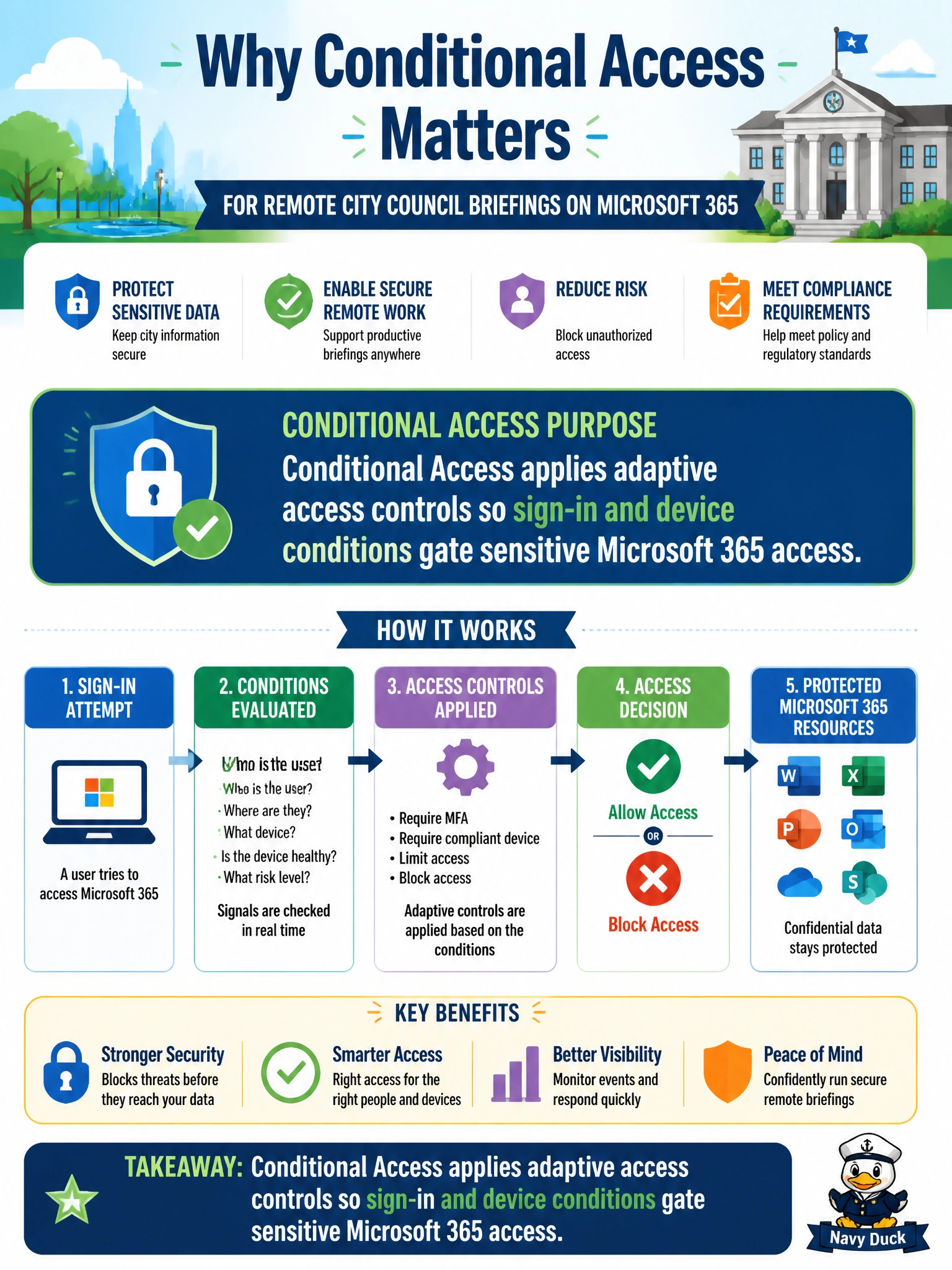
Short Explanation
Remote council briefings are high-stakes Zoom-with-homework—you want the right people on the right devices under the right conditions. Conditional Access is the rulebook that gates those conditions. It's not retention that keeps recordings for audit, it's not just-in-time elevation after approval, and it doesn't block sharing like DLP does.
Full Explanation
Conditional Access applies adaptive access controls so sign-in and device conditions gate sensitive Microsoft 365 access. A parks and recreation department explaining remote city council briefings should state that purpose clearly: evaluate user, location, device, and risk conditions before allowing access to briefing materials and related workloads. That adaptive gating is why Conditional Access matters for high-stakes municipal remote sessions—not preserving recordings for audit, elevating privileged roles after approval, or blocking external sharing of files.
Saying Conditional Access applies retention policies that preserve briefing recordings in Teams for council public audit requirements fails because preserving recordings for audit belongs to retention and records management, not access enforcement; Conditional Access actively gates access rather than retaining content for later review. Claiming Conditional Access provides council members just-in-time admin roles that elevate briefing resource access after approval request fails because Conditional Access evaluates sign-in conditions to allow or block access; it does not assign or elevate just-in-time administrative roles after approval, which is a separate privileged access capability. Saying Conditional Access enforces data loss prevention rules that block external sharing of sensitive council briefing files fails because blocking external sharing belongs to data loss prevention policy, a separate information protection control from the sign-in and device conditions Conditional Access evaluates.
Exam caveat: AB-900 describe-level items ask why Conditional Access exists—adaptive conditions before access—especially for remote municipal briefings. You are not required to author complex policy sets in the exam item. Do not confuse Conditional Access with retention preservation for audit, just-in-time role elevation after approval, or data loss prevention for external sharing.
Operational check: Define a Conditional Access policy targeting council briefing users or groups with conditions such as compliant device or trusted location as organizationally appropriate, attempt access from a disallowed posture and confirm block or challenge, then succeed from an allowed posture. Document that retention policies, just-in-time role elevation, and data loss prevention for external sharing remain separate from access policy.
Prefer to study offline? Printable PDF study book + test engine ($7.50, unofficial). These questions stay free here.