
A new grants analyst benefits because Copilot already follows the office’s preferred narrative section order. What made that consistency possible?
Select an answer to reveal the explanation.
Short Explanation
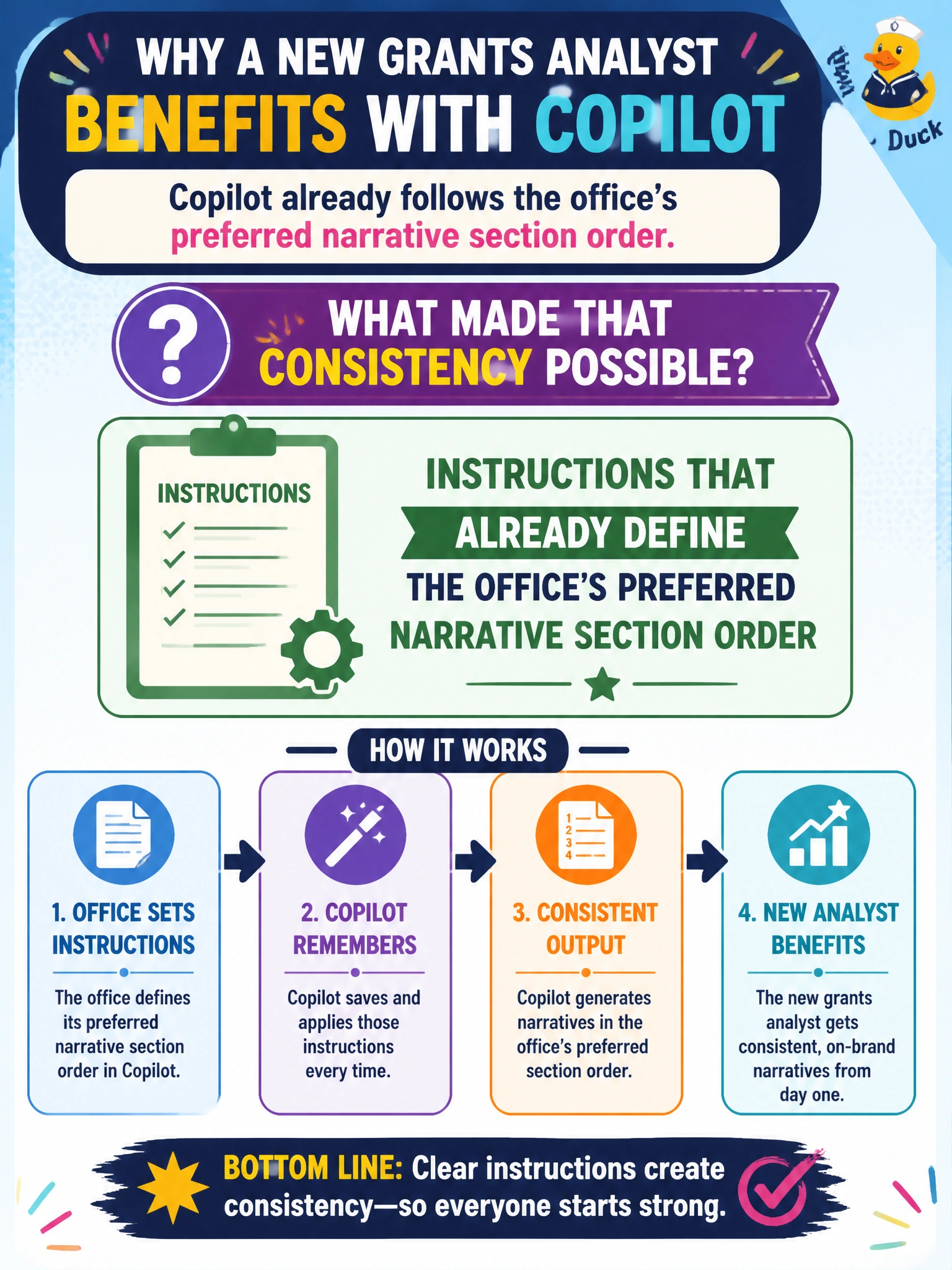
New analyst, same solid outline shape—that’s instructions doing the work. When Copilot already knows the grants office’s preferred section order, consistency comes from standing guidance.
Full Explanation
A new grants analyst seeing consistent narrative structure is usually the result of durable guidance already in place. Instructions that already define the office’s preferred narrative section order made that consistency possible because instructions teach Copilot how recurring municipal grant narratives should be organized—need, approach, outcomes, budget narrative, and so on—without reinventing structure each session. Consistency speeds onboarding and keeps applications aligned to office templates.
Random section order regenerated differently every time with no guidance fails usability and reviewer expectations. A requirement to ignore the office template and invent a new structure daily destroys institutional standards and wastes review cycles. Copying another city’s proprietary grant narrative without attribution or review fails integrity, originality, and often accuracy for the local program context.
Exam caveat: preferred section-order instructions improve structure but do not guarantee that content meets a specific NOFO’s mandatory headings—analysts must still map the office template to each solicitation’s requirements. Operational check: confirm the instructions list the preferred section order, generate a sample outline for the new analyst, compare it to the office template and the current NOFO, and revise instructions if a funder requires a different mandated structure.