
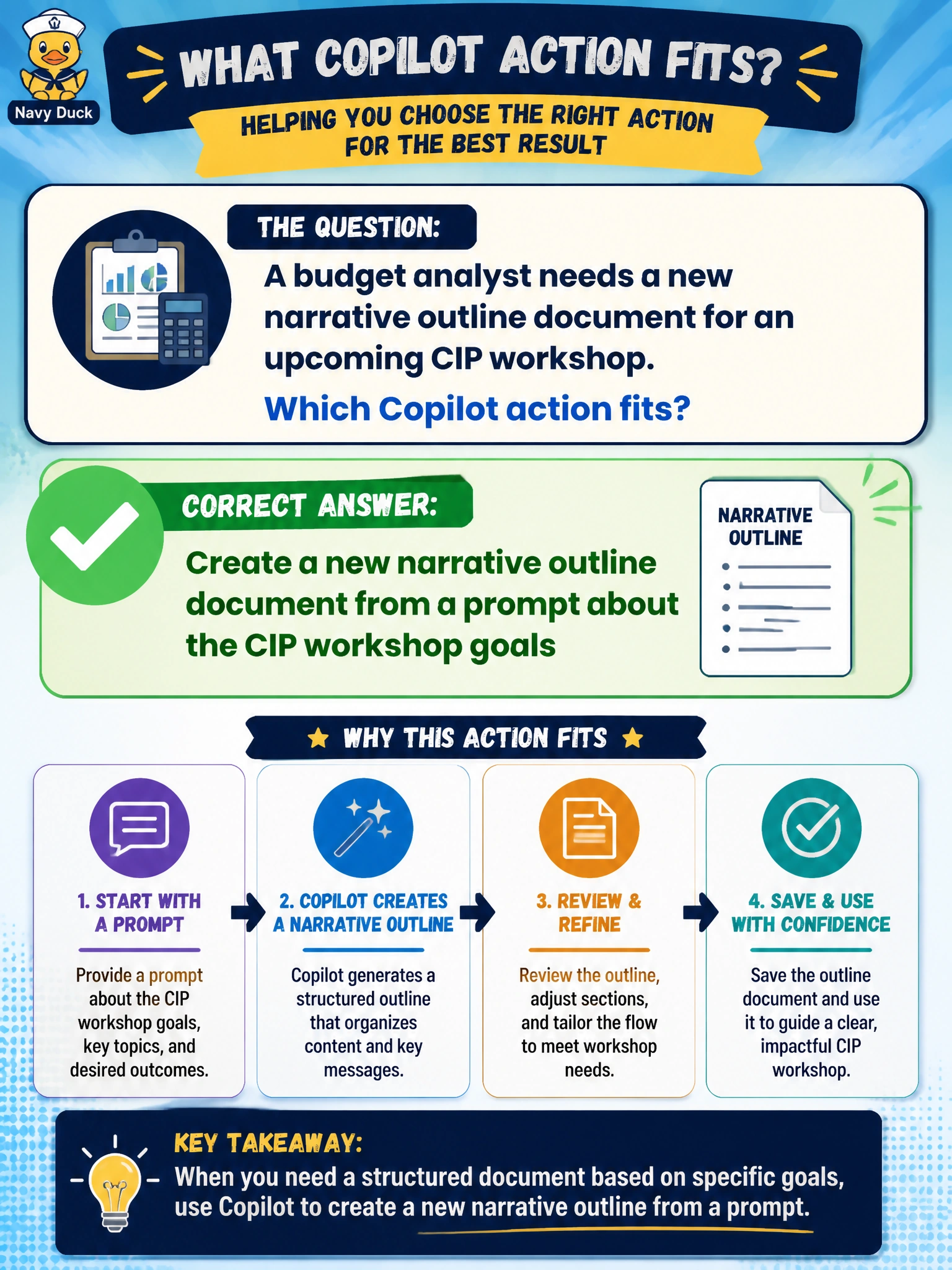
A budget analyst needs a new narrative outline document for an upcoming CIP workshop. Which Copilot action fits?
Select an answer to reveal the explanation.
Short Explanation
Workshop coming up—prompt Copilot for a new CIP narrative outline tied to the goals. Brainstorm text shouldn’t smash the adopted ordinance.
Full Explanation
Creating a new narrative outline document from a prompt about the CIP workshop goals is the Copilot action that fits a budget analyst’s need. Analytical municipal documents—workshop outlines, talking structures, narrative skeletons—can be drafted from prompts that state goals, audience (e.g., department heads), and sections to cover. The outline is a working product for the workshop, not a change to adopted law.
Overwriting the adopted budget ordinance with unverified workshop brainstorm text fails because brainstorming must not replace controlling ordinance language. Adopted budget text is a legal artifact; workshop outlines are preparatory.
Asking Copilot to hide all CIP project names so the outline cannot be reviewed fails transparency for an internal workshop document meant to be reviewed. Hiding project names obstructs the analytical purpose.
Generating the outline only as an encrypted personal note outside Microsoft 365 fails collaboration and records practice for a CIP workshop that finance colleagues must review inside the city’s tenant.
Exam caveat: AB-730 expects new analytical documents from prompts without disturbing adopted ordinances or sequestering work outside approved Microsoft 365 collaboration paths.
Operational check: Prompt with CIP workshop goals, generate the narrative outline in Word or a tenant document, share with budget reviewers, and confirm the adopted ordinance remains untouched.