
A 311 supervisor configures a resident-help agent. Which instructions setting best fits the desk?
Select an answer to reveal the explanation.
Short Explanation
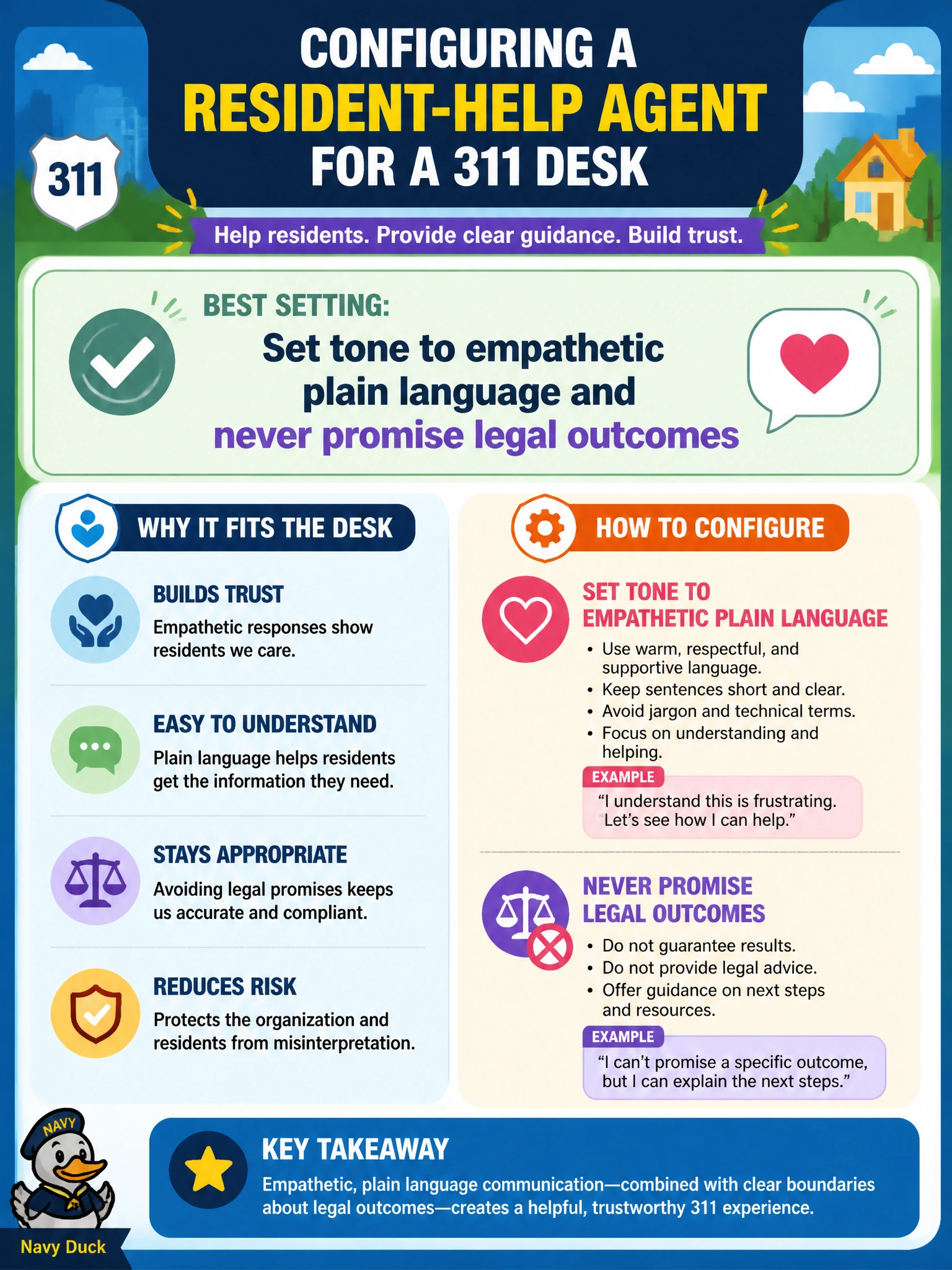
311 isn’t a courtroom—tell the agent to sound empathetic and plain, and never promise legal outcomes. Clear instructions keep the helper helpful, not reckless.
Full Explanation
Setting tone to empathetic plain language and never promising legal outcomes is the correct instructions configuration for a municipal 311 resident-help agent. 311 acknowledges service requests, explains process, and routes residents—it does not adjudicate cases or bind the city to courtroom results. Instructions that encode empathy, clarity, and a hard ban on promising legal outcomes keep the agent inside operational service work and reduce liability from overconfident claims.
Instructing the agent to threaten fines in every reply to speed compliance fails conceptually: default coercion is not customer service and often misstates enforcement authority. Many 311 topics (potholes, missed trash, noise tips) are not fine-first pathways; threatening language escalates residents and misrepresents the desk’s role.
Requiring legal jargon and courtroom citations in every 311 acknowledgment fails because the audience is the general public, not counsel. Dense legalese reduces comprehension, slows triage, and implies a judicial posture the channel does not have.
Telling the agent to invent guarantee dates for hearings it cannot schedule fails because fabricated scheduling creates false expectations and follow-up complaints when the invented date never appears on a docket. Instructions must forbid inventing commitments the system cannot fulfill.
Exam caveat: Agent instructions are standing behavior controls—tone, prohibited claims, and scope—not optional flavor text; AB-730 expects them to match the municipal channel’s real authority.
Operational check: After saving instructions, send sample 311 prompts (permit delay, citation question, hearing inquiry) and confirm replies stay plain and empathetic, cite process without legal outcome promises, and escalate when a human scheduler or attorney is required.