
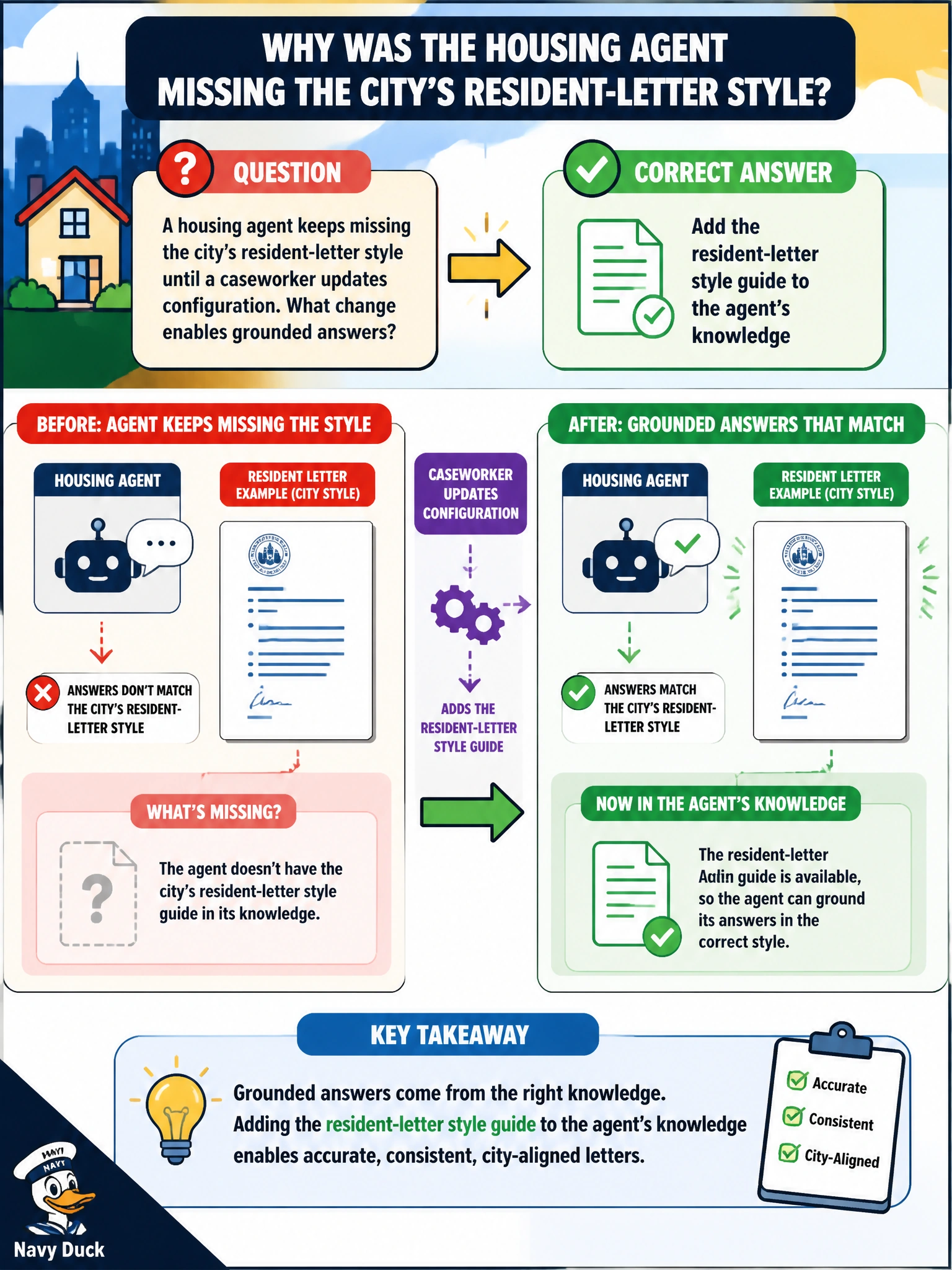
A housing agent keeps missing the city’s resident-letter style until a caseworker updates configuration. What change enables grounded answers?
Select an answer to reveal the explanation.
Short Explanation
Style guide missing? Add it to the agent’s knowledge. The agent can’t follow a letter style it was never given—same as a temp without the style sheet.
Full Explanation
Grounded answers require the right municipal documents in agent knowledge. When a housing agent misses the city’s resident-letter style, the enabling change is to add the resident-letter style guide to the agent’s knowledge. With the style guide available, drafts can align to city expectations for tone, structure, and required elements instead of improvising formatting and voice.
Removing all knowledge sources so the agent relies on generic guessing fails grounding and recreates the style-miss problem. Replacing knowledge with a random image gallery unrelated to letter style fails source relevance—images do not teach letter conventions. Turning off grounding and asking the agent to invent a new city letter style each time fails consistency and brand/policy control for housing communications.
Exam caveat: adding a style guide supports drafting consistency; final letters may still need human review for case-specific legal or equity language. Knowledge grounding is assistive, not automatic approval to send.
Operational check: add the resident-letter style guide to knowledge, generate sample housing letters, compare them to the guide’s required elements, and keep a caseworker review step before resident dispatch.