
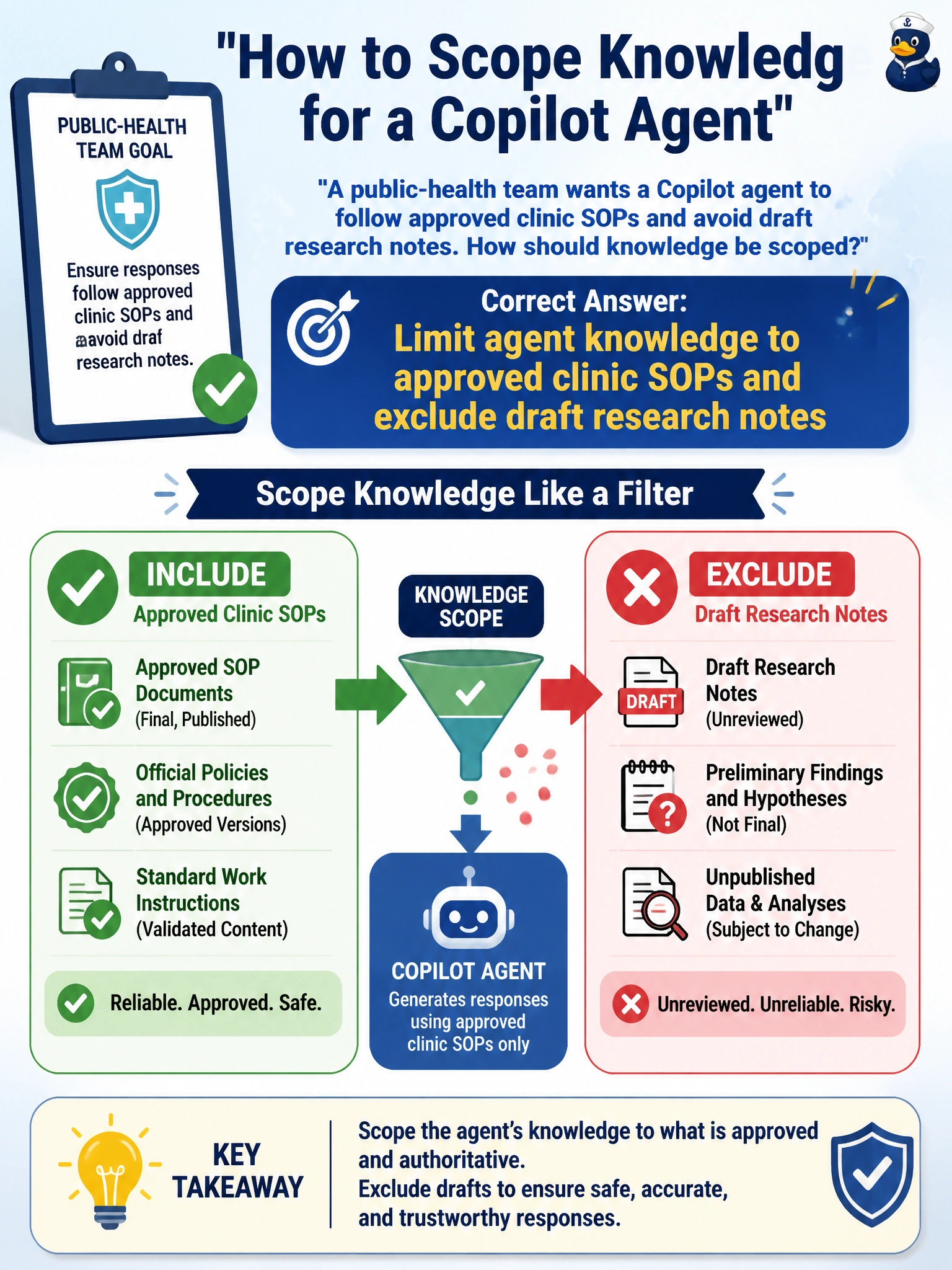
A public-health team wants a Copilot agent to follow approved clinic SOPs and avoid draft research notes. How should knowledge be scoped?
Select an answer to reveal the explanation.
Short Explanation
Approved SOPs in, draft research out—that’s how you curate agent knowledge. Keep the clean playbook on the clipboard, not the messy scratch pad.
Full Explanation
Curating agent knowledge means deliberately including approved municipal sources and excluding unsuitable drafts. A public-health team that wants the agent to follow approved clinic SOPs should limit knowledge to those SOPs and exclude draft research notes. Tight scope keeps operational answers tied to authorized procedures rather than speculative or unfinished materials that could mislead clinic staff or the public.
Including every draft research note while excluding approved SOPs inverts trustworthiness—drafts are not the operational standard. Adding personal staff chat logs as the only knowledge and ignoring SOPs fails both privacy judgment and source quality. Uploading speculative news clips instead of approved operational procedures fails municipal grounding; news speculation is not clinic SOP authority.
Exam caveat: approved SOPs can still change. Scope control at configuration time must be paired with update processes when public-health procedures are revised, or the agent will ground on yesterday’s approvals.
Operational check: configure knowledge to approved clinic SOPs only, verify draft research notes and personal logs are excluded, test operational questions against SOP sections, and schedule periodic knowledge reviews with public-health owners.