
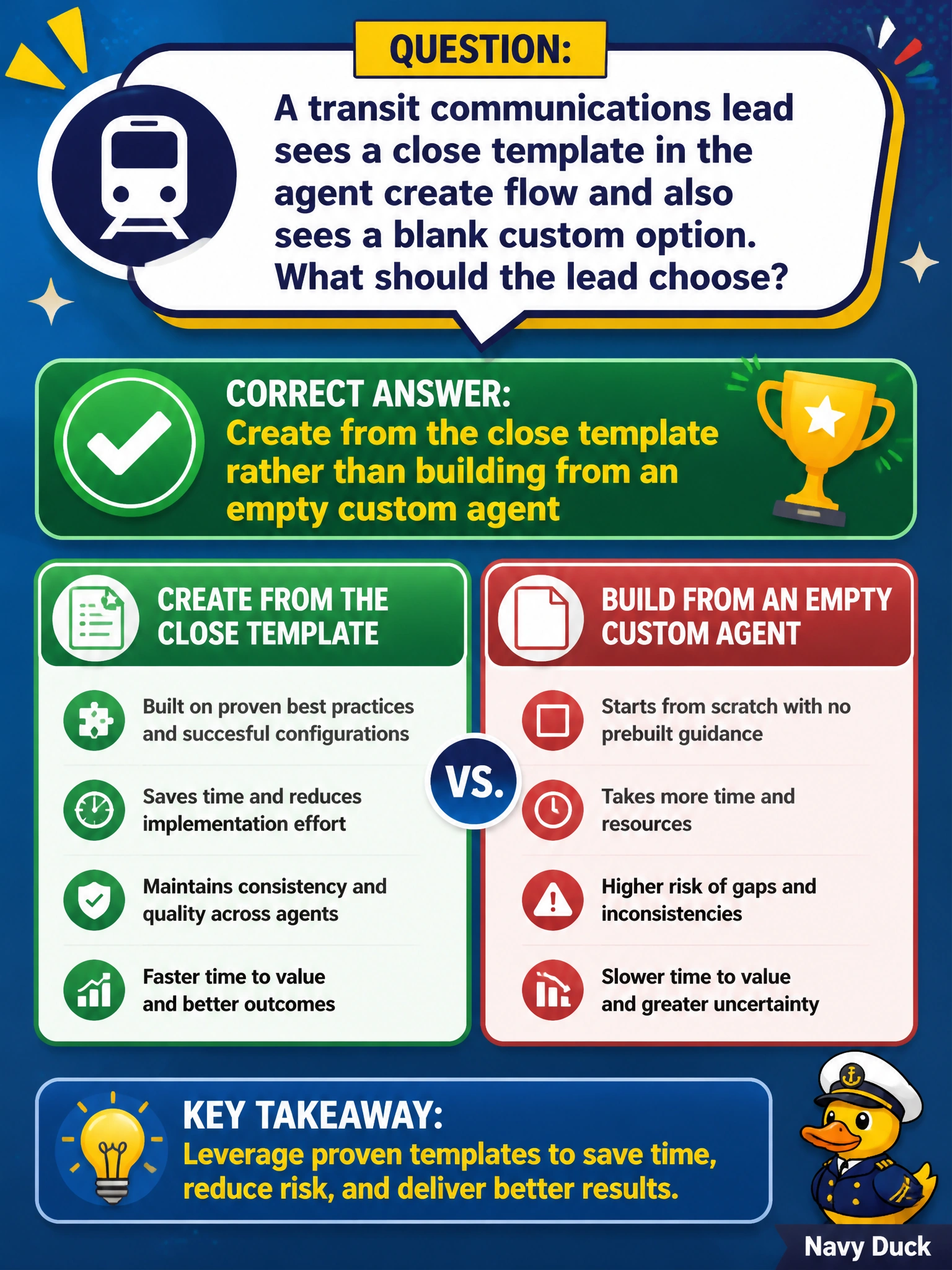
A transit communications lead sees a close template in the agent create flow and also sees a blank custom option. What should the lead choose?
Select an answer to reveal the explanation.
Short Explanation
Close template available? Take it instead of the empty custom path. No bonus points for starting from zero when a near-fit outline is right there.
Full Explanation
In the agent create flow, when a close template already exists, municipal users should create from that template rather than building from an empty custom agent. A transit communications lead benefits from near-fit scaffolding—instructions patterns, prompt starters, and capability structure—then tunes for transit messaging instead of reconstructing the same skeleton from blank. Choosing the close template reduces setup time and avoids unnecessary blank-agent friction.
Always choosing a blank custom agent even when a close template exists fails reuse of available scaffolding. Abandoning agent creation because both template and blank options appear fails decision-making—the create flow offers choices so staff can pick the better path, not quit. Selecting a blank agent and stripping any inherited communications structure before configuring fails by discarding useful structure the template path would have preserved.
Exam caveat: “close template” still requires transit-specific editing. Near-fit is not perfect-fit; verify tone, audiences, and knowledge for rider communications before release.
Operational check: select the close template in create, compare remaining blank fields to a blank-custom path, adapt transit communications details, and confirm the resulting agent retains helpful inherited structure rather than a stripped empty shell.