
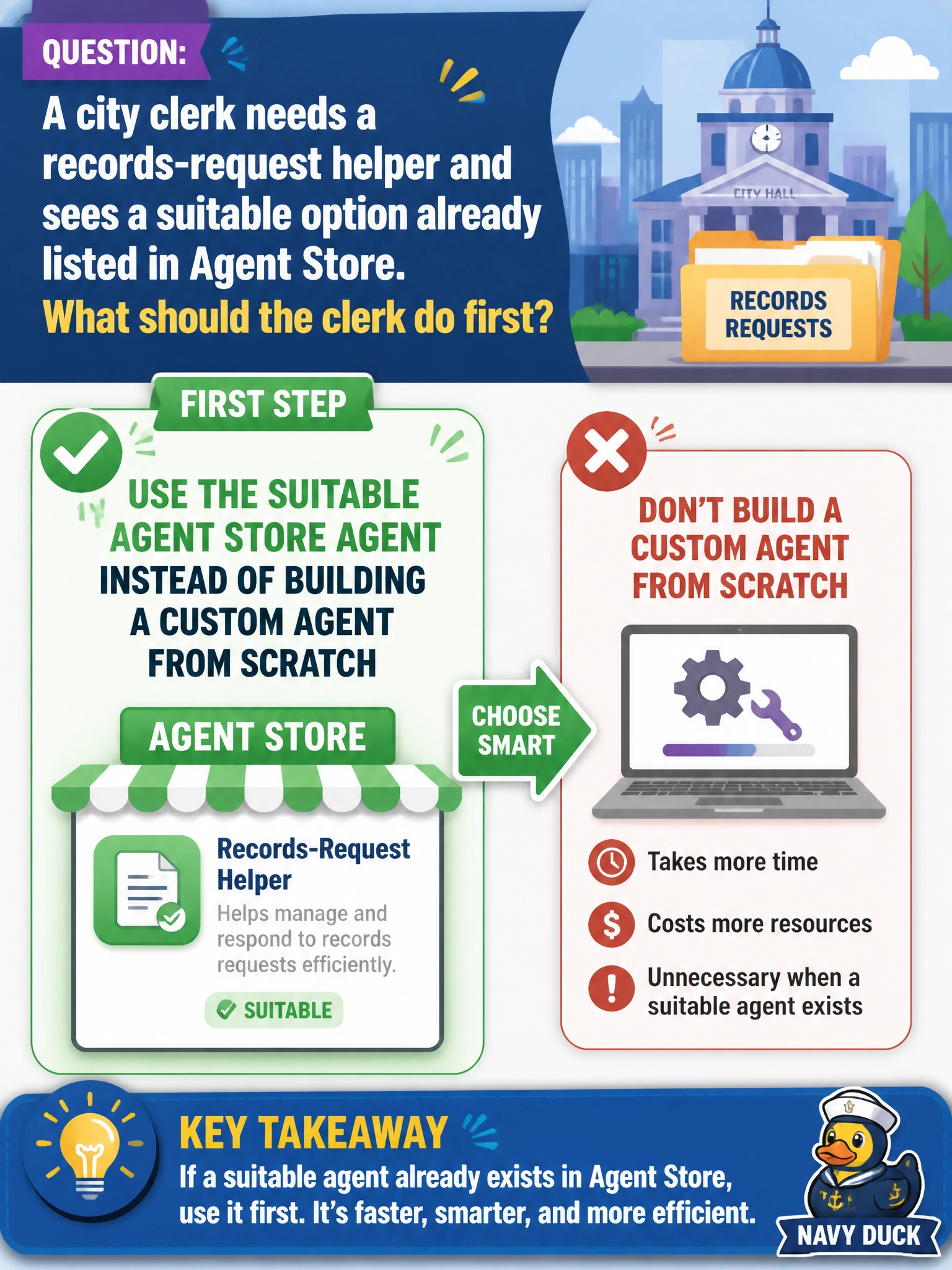
A city clerk needs a records-request helper and sees a suitable option already listed in Agent Store. What should the clerk do first?
Select an answer to reveal the explanation.
Short Explanation
Store already has a records-request helper that fits? Use it. Why build a new bike when a good one is already in the rack?
Full Explanation
AB-730 agent selection favors reuse when Agent Store already lists a suitable helper. A city clerk who needs a records-request agent and sees a fit in Agent Store should use that Store agent instead of building a custom agent from scratch. Store-first adoption reduces duplicate build effort, shortens time to value, and keeps municipal staff on supported agent patterns rather than reinventing common records-request workflows.
Ignoring Agent Store and always building blank custom agents fails efficiency and creates unnecessary maintenance burden for every records task. Disabling Agent Store citywide so every clerk recreates helpers manually fails by policy concept: it removes the reuse pathway the exam expects staff to prefer when a suitable option exists. Purchasing an unrelated consumer chatbot that cannot use the city’s Copilot agent options fails platform alignment and may bypass municipal governance, identity, and data controls.
Exam caveat: “use the Store agent” assumes suitability after a quick fitness check—purpose match, permissions, and knowledge needs. If the Store agent cannot meet local records requirements, custom creation may become appropriate; the stem here states a suitable option is already listed.
Operational check: open Agent Store, select the suitable records-request agent, confirm it appears for the clerk’s role, run a sample request workflow, and only then consider customization if gaps remain against city records procedures.