
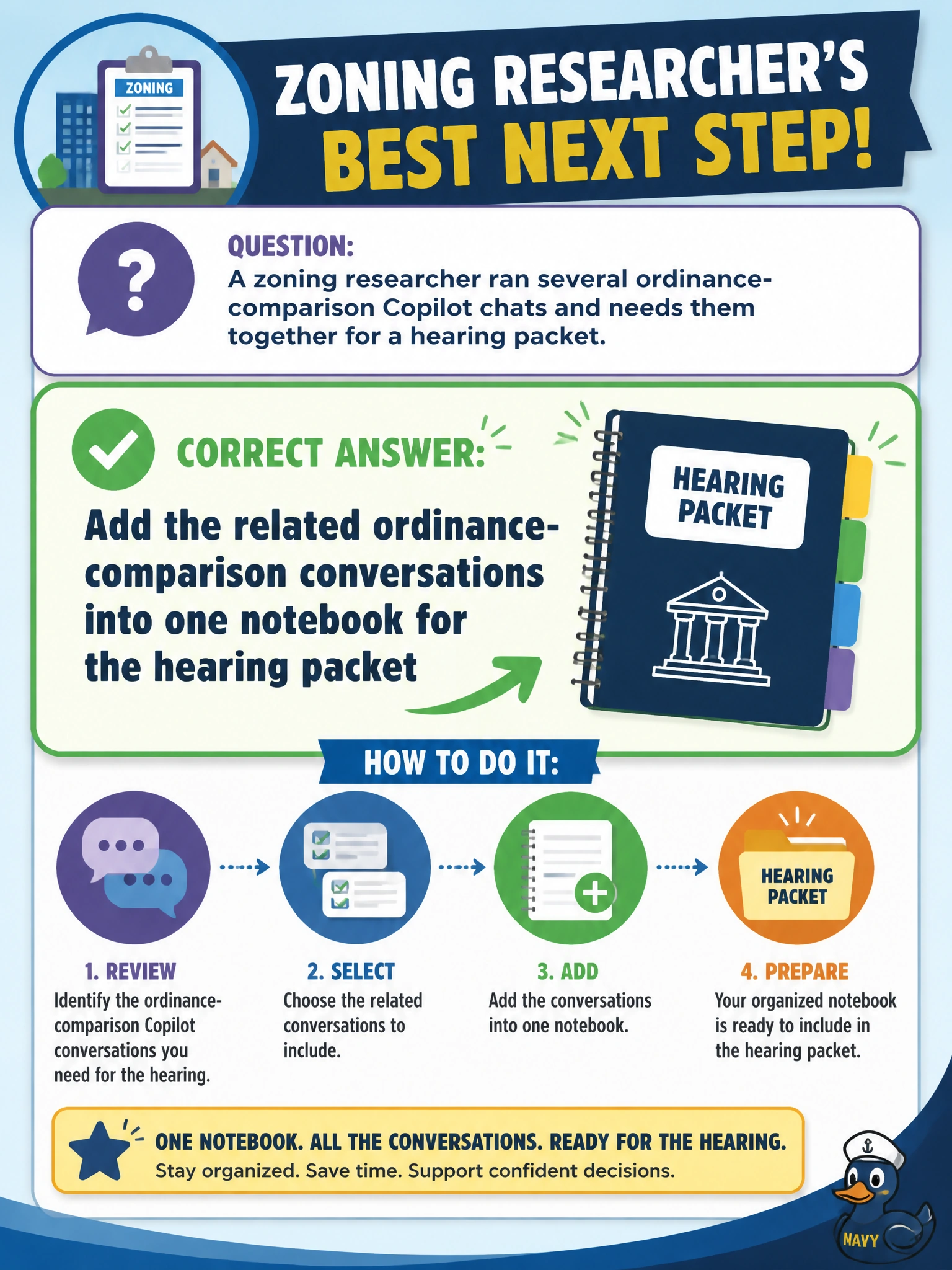
A zoning researcher ran several ordinance-comparison Copilot chats and needs them together for a hearing packet. What should the researcher do?
Select an answer to reveal the explanation.
Short Explanation
Several ordinance chats for one hearing? Scoop them into one notebook. It’s like putting all the exhibit tabs for the same case into a single binder.
Full Explanation
Hearing packets depend on assembling related ordinance analysis in one place. When a zoning researcher has run several ordinance-comparison Copilot chats, the correct step is to add those related conversations into one notebook for the hearing packet. Grouping comparison threads with packet materials makes cross-ordinance findings reviewable together for counsel, planners, and commissioners preparing municipal hearing materials.
Keeping each comparison chat isolated and never associating them in a notebook fails packet assembly because reviewers cannot traverse related comparisons as a set. Deleting all but the shortest chat fails completeness: useful longer comparisons are lost, leaving an orphan thread that underrepresents the research. Renaming every chat “Misc” without a notebook fails discoverability—generic titles plus isolation force packet reviewers to reconstruct comparisons manually.
Exam caveat: a notebook of comparison chats supports preparation; it is not itself the official hearing exhibit set unless local procedure says so. Final packet contents still need attorney or clerk review for what is filed or presented.
Operational check: add each ordinance-comparison Copilot chat to the hearing-packet notebook, confirm all intended threads appear there, open them from the notebook during a dry-run packet review, and remove any unrelated chats that do not belong in that hearing’s working set.