
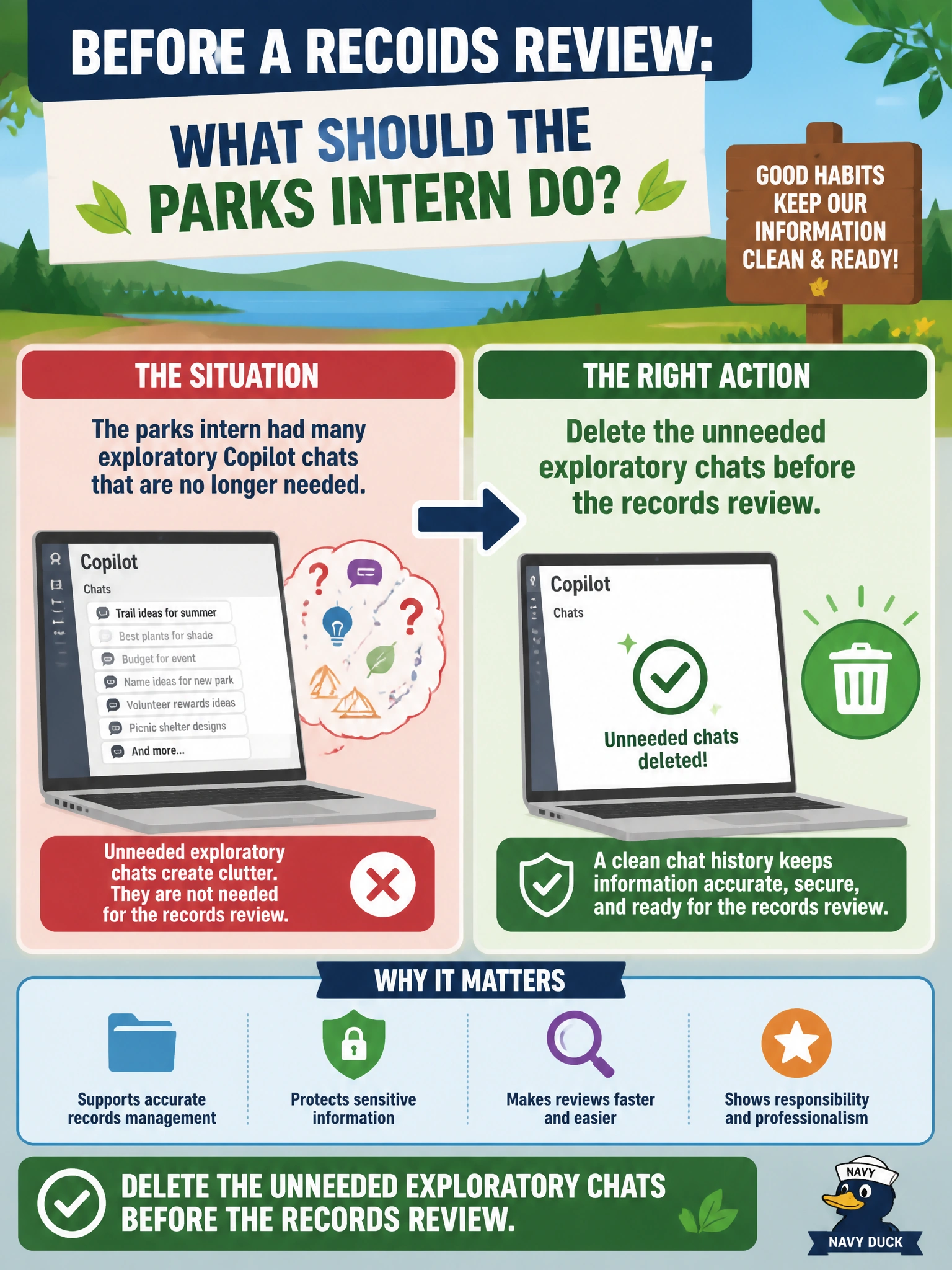
Before a records review, a parks intern has many exploratory Copilot chats that are no longer needed. What should the intern do?
Select an answer to reveal the explanation.
Short Explanation
Exploratory clutter isn’t a souvenir—delete the chats you don’t need before records review. Clean history is easier to work with, like clearing old drafts off the shared drive.
Full Explanation
Before a records review, a parks intern who has many exploratory Copilot chats that are no longer needed should delete the unneeded exploratory chats before the records review. Cleaning abandoned exploratory threads reduces clutter, lowers the chance of surfacing half-formed or inaccurate drafts during review, and keeps history focused on chats that still have operational value. Exploratory clutter is not automatically a permanent municipal record simply because it exists in a chat list.
Archiving every exploratory chat into the city’s permanent legal code without review fails records judgment—exploratory drafts are not legislation and should not be dumped into the legal code. Forwarding all exploratory chats to personal social media for safekeeping fails confidentiality and records control. Leaving abandoned chats forever so the history list stays cluttered and hard to use fails the prep goal for a usable, reviewable workspace.
Exam caveat: delete only what policy allows to be deleted; if a chat became a decision-support artifact tied to an official action, follow records retention guidance rather than casual deletion. Coordinate with the supervisor when unsure whether an exploratory thread was later relied upon.
Operational check: inventory chats with the supervisor, delete clearly disposable exploratory threads, keep any chats tied to published program decisions, and enter the records review with a history list that is navigable and defensible.