
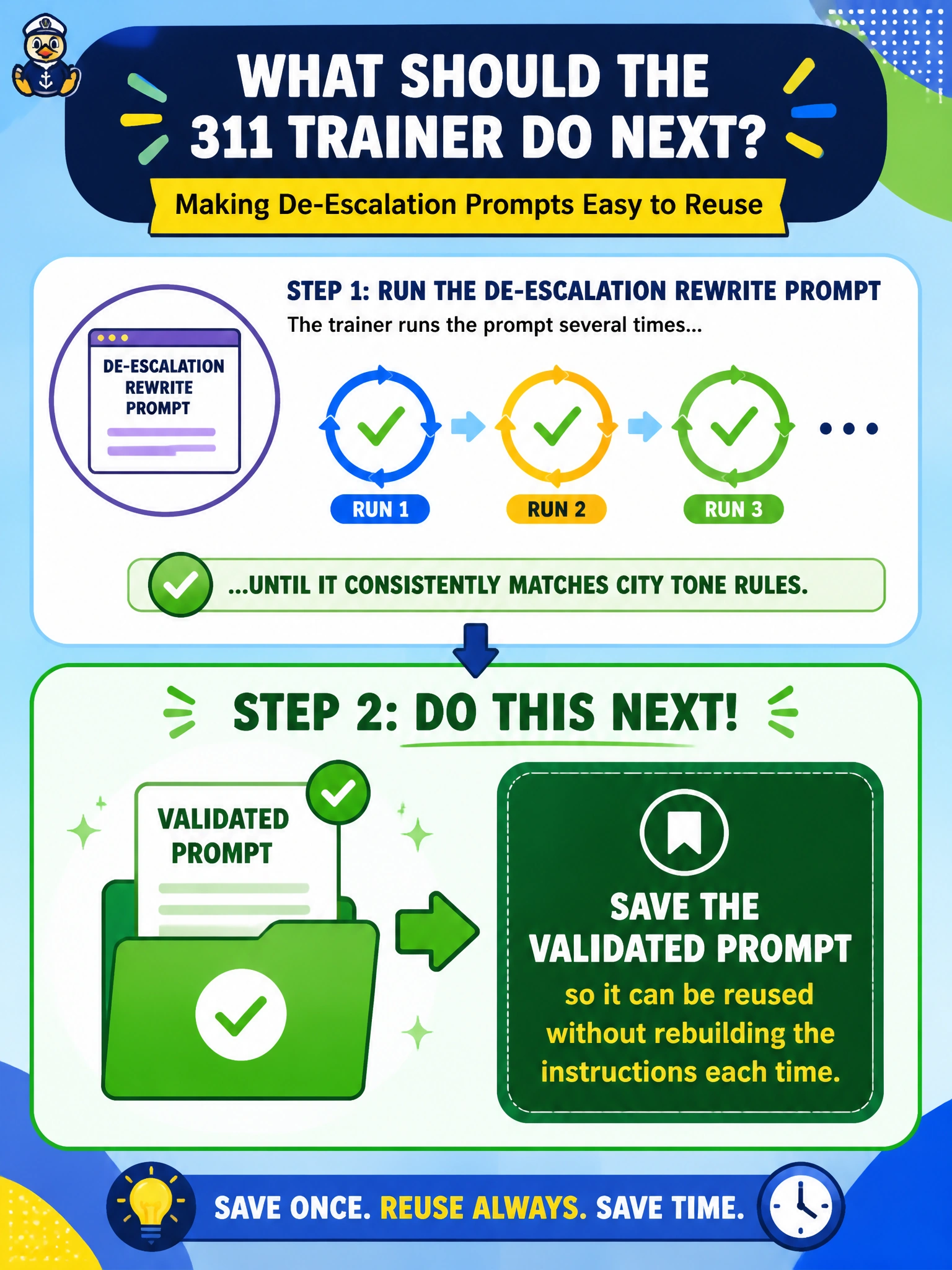
A 311 trainer runs a de-escalation rewrite prompt several times until it consistently matches city tone rules. What should the trainer do next to make that prompt easy to reuse?
Select an answer to reveal the explanation.
Short Explanation
Once your de-escalation prompt consistently matches city tone rules, save it so you can reuse it without rebuilding the instructions. That keeps a tested script ready when you need calm wording under pressure.
Full Explanation
After repeated testing confirms that a 311 de-escalation rewrite prompt reliably follows city tone rules, save the validated prompt so staff can reuse it without rebuilding its instructions under pressure. This preserves the tested tone constraints, prohibited language, escalation boundaries, and courtesy markers as a durable artifact in the municipal Copilot workspace. Agents can then use consistent, approved wording across heated calls and shifts. Deleting the prompt so staff must invent new wording discards validated work and invites inconsistency when de-escalation matters. Publishing raw prompt text on the public 311 website for residents to edit is inappropriate because internal tone and escalation rules are staff operational controls, not crowd-editable public content; public edits could undermine the approved voice. Converting the prompt into a sealed court record that Copilot can never open again defeats reuse, since litigation holds do not make a prompt available to agents. Exam caveat: saving does not make content permanently correct; review fee language, policy citations, and tone rules when department or council guidance changes. Saving a reusable prompt is also distinct from scheduling recurring runs, which are appropriate only when work repeats on a calendar. Practical check: open the saved prompt from another 311 workstation or an authorized second agent account, test it on two sample heated-call transcripts, and confirm both outputs meet the city tone checklist before making it the team standard.