
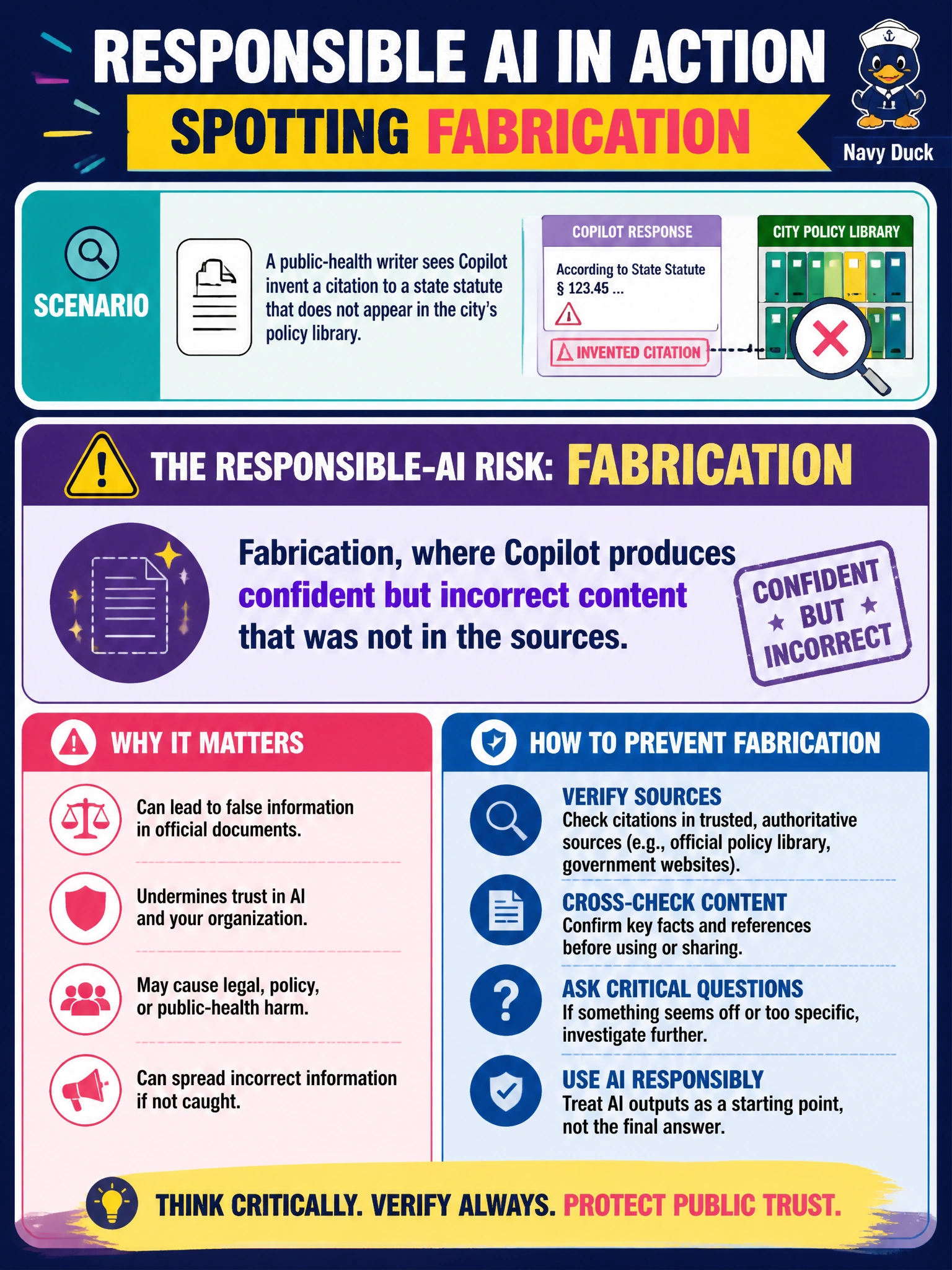
A public-health writer sees Copilot invent a citation to a state statute that does not appear in the city’s policy library. What responsible-AI risk is shown?
Select an answer to reveal the explanation.
Short Explanation
When Copilot invents a shiny-sounding statute that isn’t in the library, that’s fabrication, also called a hallucination. Treat it like a rumor typed in confident prose, and check the real policy shelf before you publish.
Full Explanation
The writer’s experience shows fabrication: Copilot produces confident but incorrect content—in this case, a citation to a state statute that was not present in the city’s policy library sources. Generative models can invent plausible-looking legal references, so responsible use in municipal public health means treating citations as unverified until you check them against authoritative city or state materials. Prompt injection, as described by the option about an outsider manipulating Copilot to alter the writer’s Outlook theme without authorization, does not explain the missing statute citation; an invented reference is fabrication, not an unauthorized theme change. The option about over-sharing tenant data to a public foundation model used by other cities describes data disclosure, but the scenario provides no evidence of tenant data being shared or of cross-city model leakage. The option about a successful DLP block that redacts every statute citation by design is also inconsistent: inventing a statute is not a DLP success, and DLP prevents sensitive disclosure rather than fabricating legal footnotes. Exam caveat: when distinguishing these listed risks, match the observed symptom—a confident citation absent from the sources—to fabrication rather than a security or data-protection event. Practical check: before publishing public-health guidance, open every Copilot-cited statute in the official policy library or state code; if the section is missing, discard the citation and rewrite from verified sources.