
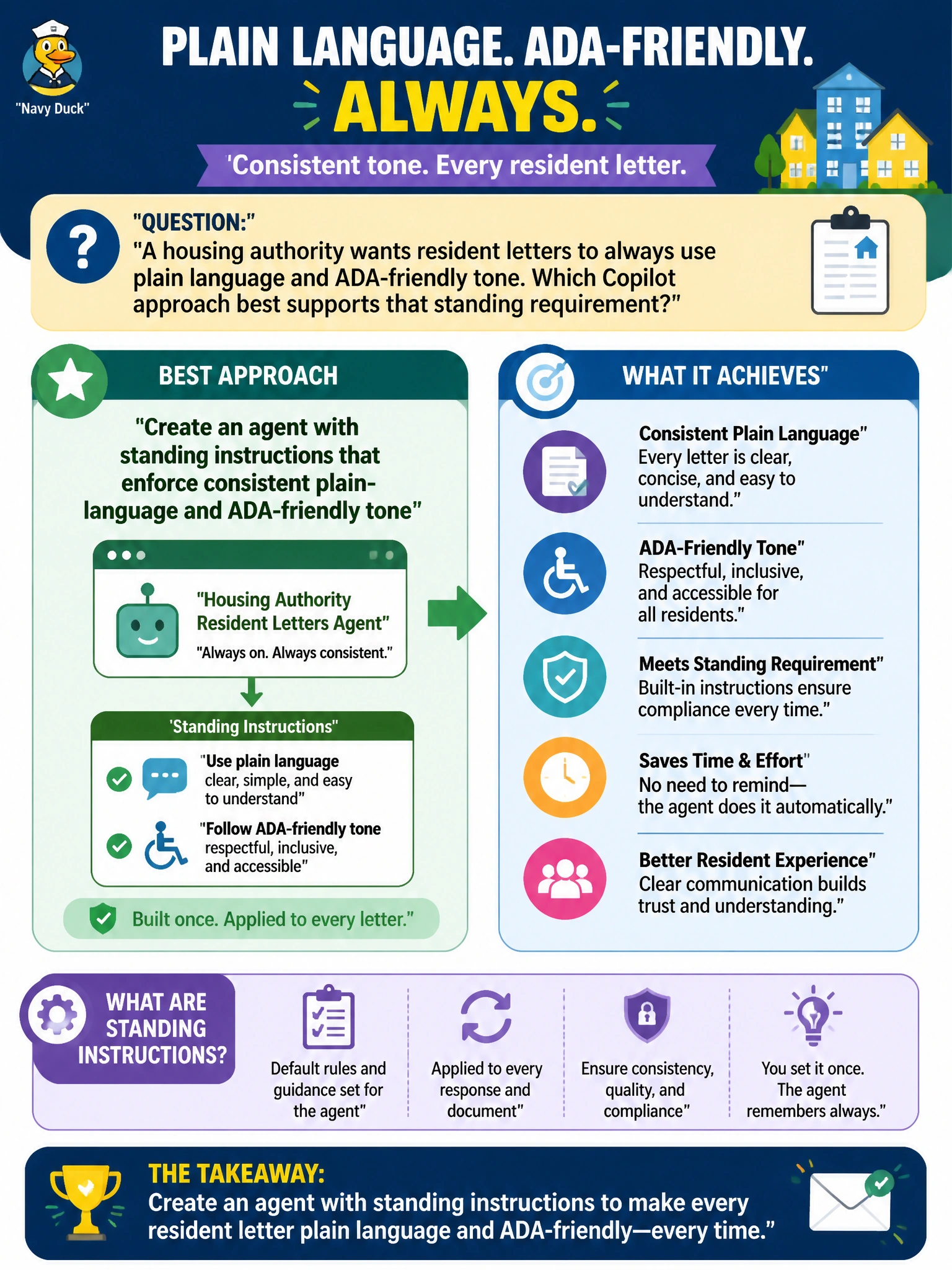
A housing authority wants resident letters to always use plain language and ADA-friendly tone. Which Copilot approach best supports that standing requirement?
Select an answer to reveal the explanation.
Short Explanation
If every resident letter must sound clear and ADA-friendly, don't leave it to luck in a fresh chat. Put those tone rules into an agent's standing instructions so they stick.
Full Explanation
Standing tone and accessibility instructions are a primary reason to create an agent that applies consistent guidance. A housing authority that wants resident letters to always use plain language and ADA-friendly tone should encode those requirements as agent instructions so every run starts from the same communication standard. Hoping each fresh chat remembers accessibility and plain-language rules is weaker than configuring them once.
Relying on a different one-off chat each time and hoping the tone matches fails because ad-hoc sessions drift and do not enforce standing requirements. Forbidding all tone guidance because agents cannot store instructions fails by denying a core agent capability—configured instructions. Exporting letters to a typewriter so generative AI never influences wording fails as an unnecessary abandonment of assistive drafting when instructions can shape AI output responsibly.
Exam caveat: Plain language and ADA-friendly tone help many residents but do not automatically satisfy every accessibility obligation (for example, alternate formats). Human review remains required for rights notices and adverse-action letters.
Operational check: Put plain-language and ADA-friendly rules into the agent's instructions, add approved phrase banks for common housing topics, sample letters for reading level and clarity, and route legally sensitive letters through housing counsel before sending.