
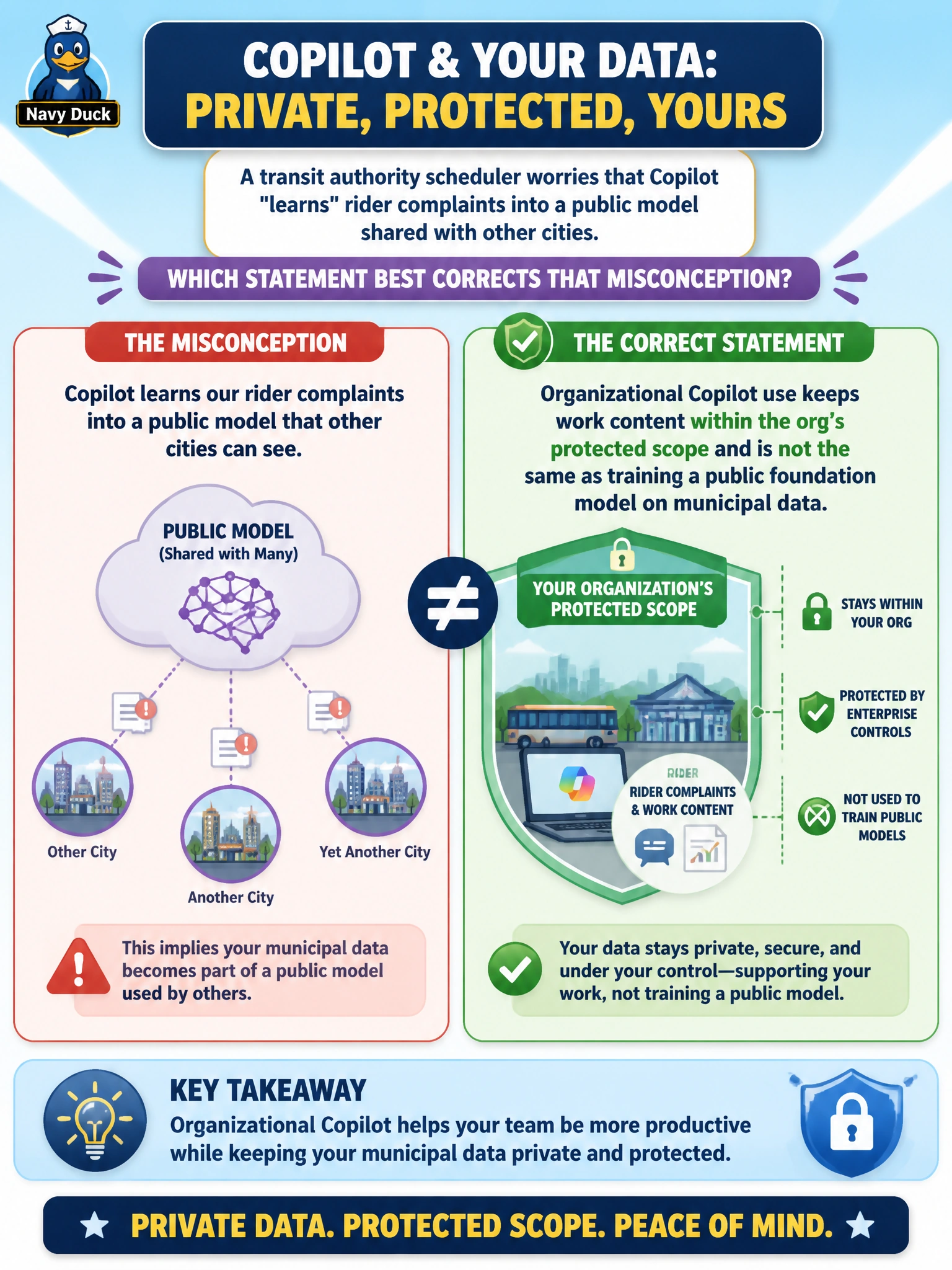
A transit authority scheduler worries that Copilot "learns" rider complaints into a public model shared with other cities. Which statement best corrects that misconception?
Select an answer to reveal the explanation.
Short Explanation
Using Copilot at the transit desk isn't the same as dumping rider complaints into a giant public AI textbook other cities study from. Org Copilot keeps that work content in the authority's protected world—it isn't free training fuel for a shared public model.
Full Explanation
Organizational Copilot use keeps work content—such as rider complaints handled by a transit authority scheduler—within the organization's protected Microsoft 365 scope. That productivity scenario is not the same as training a public foundation model on municipal data so other cities can "learn" from those complaints. Correcting the misconception means separating org-scoped grounding and drafting from public-model training narratives that staff often import from consumer AI headlines.
Nightly multi-city foundation-model uploads fail because that is not how organizational Copilot work content is characterized in this fundamentals framing; rider complaints are not portrayed as nightly training fuel shared across cities. Mandatory public-model retraining before any complaint question fails because Copilot does not require each city to retrain a public model as a precondition for answering work questions. Worldwide visibility to any Microsoft 365 user fails because access remains permission-bound within organizational boundaries; complaints are not globally readable merely because Copilot exists.
Exam caveat: Product guidance distinguishes customer data handling in Microsoft 365 Copilot from training public foundation models on customer content. For AB-730, focus on the business-user mental model: org Copilot is not dumping municipal data into a shared public AI textbook. Policy exceptions and contractual details belong to IT and legal, but the exam concept is the scope distinction.
Operational check: Keep rider complaints in systems of record with proper access controls, use Copilot inside the transit tenant for summarization or response drafting, and prohibit pasting complaint text into public consumer chatbots when confidentiality or privacy rules apply.