
Users at Graphic Design Institute are reporting that Microsoft 365 Copilot is responding slowly and occasionally returning errors in Teams and Outlook. The administrator needs to determine whether this is a service-side issue with Copilot infrastructure, check for any active service incidents, and review historical availability data to include in an incident report. Which tool in the Microsoft 365 ecosystem provides this AI-specific service health information?
Select an answer to reveal the explanation.
Short Explanation
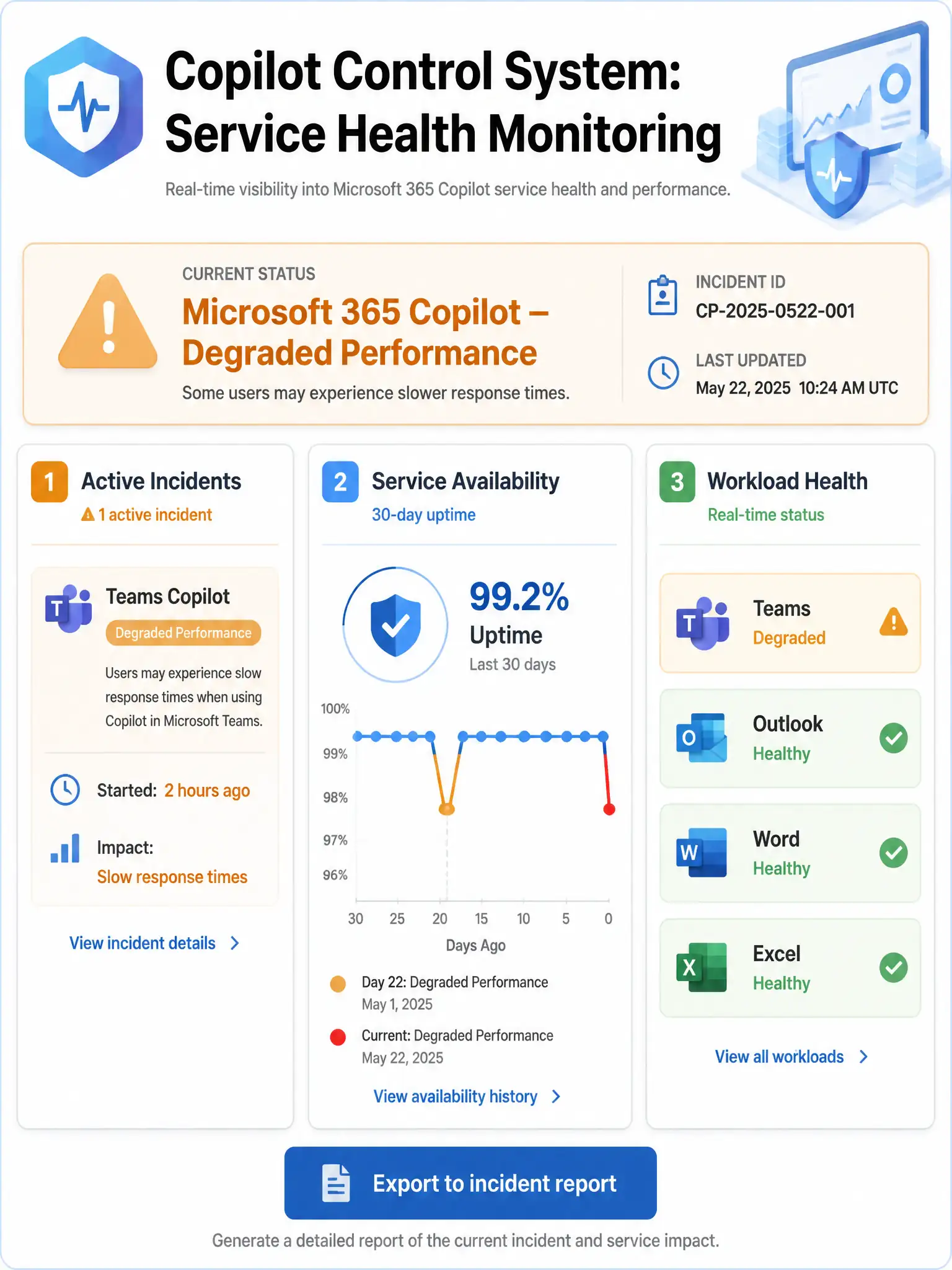
The Copilot Control System in the Microsoft 365 admin center is where you check Copilot-specific service health. It gives you active incidents and historical availability for Copilot across Teams, Outlook, and other apps.
Full Explanation
The correct tool is the Copilot Control System in the Microsoft 365 admin center, using the service health monitoring section. It provides AI-specific health status for Microsoft 365 Copilot services, including active incident notifications for Copilot service disruptions, historical service availability data useful for incident reports and SLA tracking, and workload-specific health signals for Copilot across Teams, Outlook, Word, and other applications. It consolidates this information in a Copilot-focused view, making it easier to distinguish Copilot-specific issues from broader Microsoft 365 service problems.
The Microsoft 365 admin center > Health > Service health view, filtered for Microsoft 365 Copilot incidents, is not the correct answer because it is a general Microsoft 365 service-health dashboard. Although it can list Copilot-related service advisories and incidents, it does not provide the Copilot-aware, AI-specific service health monitoring context required by the scenario, such as Copilot workload-specific health signals and Copilot-focused availability trends.
Azure Service Health in the Azure portal, filtered by Microsoft 365 Copilot resources, is wrong because it monitors Azure infrastructure resources and platform-level events. Microsoft 365 Copilot is a SaaS service, not an Azure resource consumed directly by the customer's subscription, so Azure Service Health does not surface Microsoft 365 Copilot service health events.
The Microsoft Defender portal > Incidents & alerts view, filtered for Copilot service degradation alerts, is wrong because it surfaces security incidents and threat detections. Service performance degradation and availability issues for Microsoft 365 Copilot are not the type of signal that appears in the Defender incidents queue, because that queue is for security events, not service health events.
Exam tip: The Copilot Control System is explicitly called out in the AB-650 exam objectives for monitoring service health of Copilot. While the standard Microsoft 365 Service health page also shows Copilot incidents, questions specifically mentioning the Copilot Control System for health monitoring should be answered with the Copilot Control System.