
Your organization wants to automate Power Platform Pipelines deployments using a service account that is not tied to any individual employee's identity, ensuring deployments continue even when team members leave. Which identity type should be used for the pipeline service account?
Select an answer to reveal the explanation.
Short Explanation and Infographic
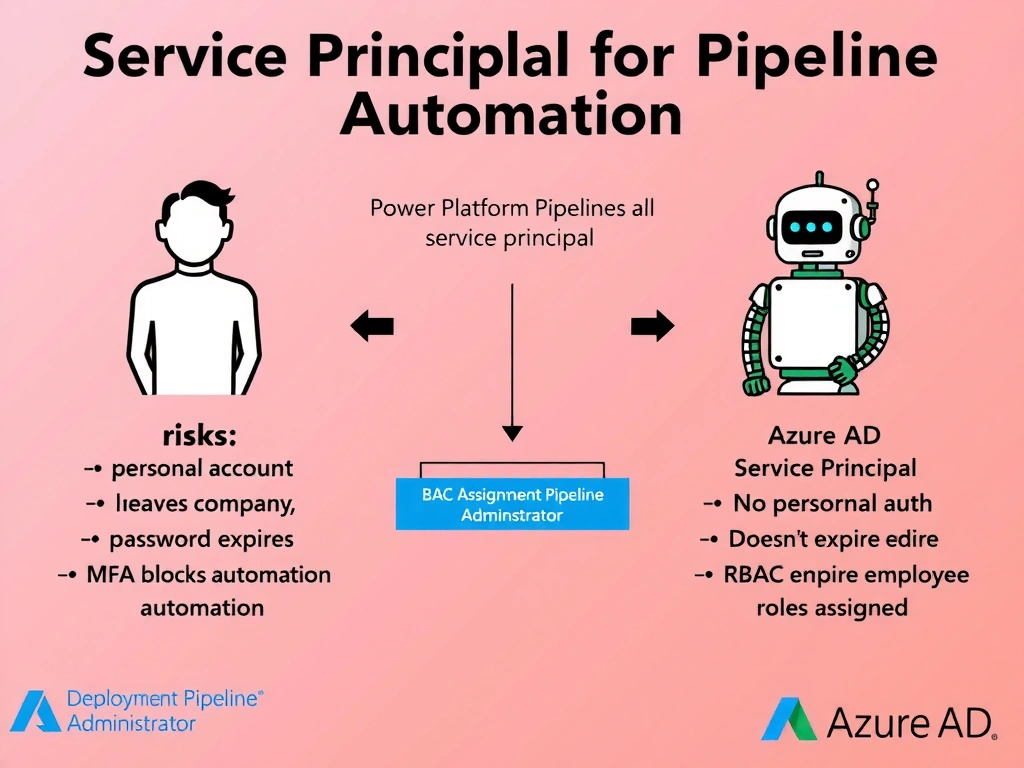
Service principals are the non-human employees of Azure AD — they exist for automated processes, don't get promoted, don't quit, and don't accidentally expire passwords at critical moments. Assign the pipeline service principal appropriate Power Platform roles and your deployments keep running regardless of personnel changes.
Full explanation below image
Full Explanation
A service principal is an Azure Active Directory identity designed for automated, non-human workloads. Unlike user accounts, service principals: don't have personal email inboxes, don't require MFA prompts (when using certificate-based or client secret authentication), don't leave the organization, and are managed independently of any individual's employment status.
For Power Platform Pipelines automation, you register an Azure AD app registration (which creates an associated service principal), generate a client secret or certificate, and grant the service principal appropriate Power Platform roles — typically the 'Deployment Pipeline Administrator' role or environment-specific Maker/Admin roles depending on the deployment scope.
Automated pipeline triggers (from Azure DevOps, GitHub Actions, or Power Automate) authenticate using the service principal's credentials to initiate deployments.
Option A (shared mailbox account) — shared mailboxes are email tools, not identity solutions. Using a shared mailbox as an identity is a security anti-pattern: no individual accountability, shared credentials, no proper RBAC integration.
Option C (guest user account from third-party IdP) — introduces cross-tenant complexity and dependency on the third party's identity infrastructure. Not appropriate for automated pipeline operations.
Option D (personal Microsoft account of admin) — ties automation to a human account. When that person changes roles or leaves, the automation breaks and may require emergency remediation.
Exam principle: automated operations = service principal identity. This applies across all Microsoft automation scenarios, not just Power Platform.