
A developer at Margie's Travel is building an agent where a user's travel preferences (seat preference, meal preference) should persist between separate conversation sessions — so the next time the user opens the agent, it remembers their preferences from last time. Which approach correctly implements cross-session persistence?
Select an answer to reveal the explanation.
Short Explanation and Infographic
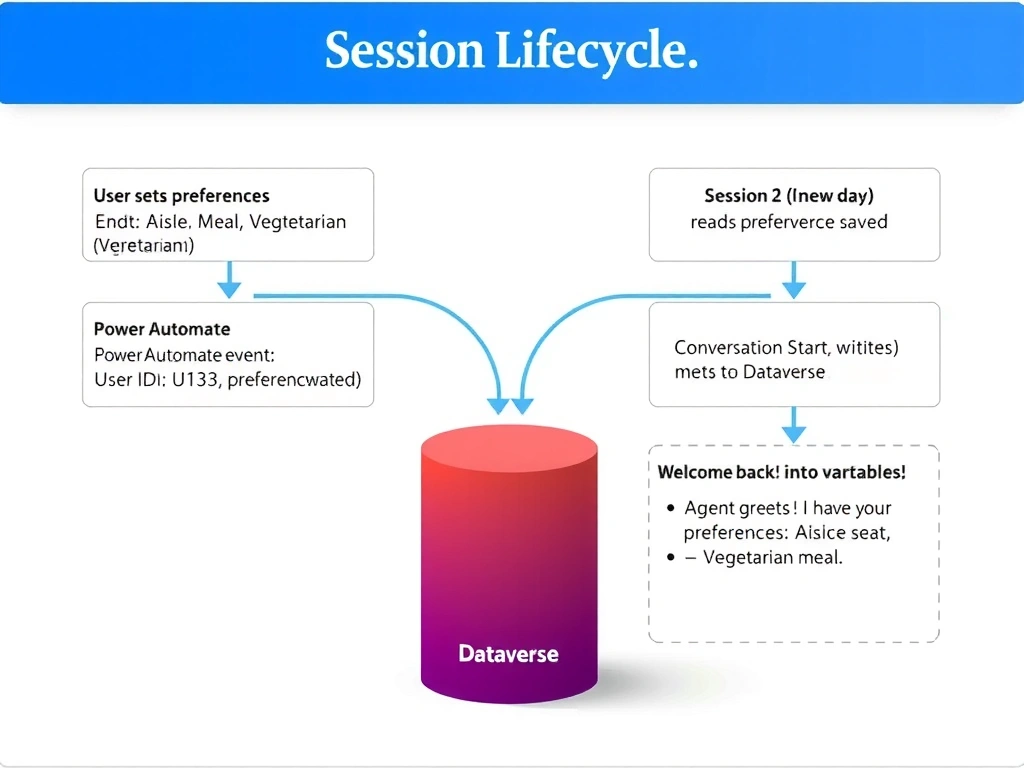
Session variables are like a hotel notepad — wiped clean at checkout. To remember preferences across visits, you write them to a database (Dataverse) at the end and read them back at the start. The correct answer is B.
Full explanation below image
Full Explanation
## Why B is Correct Copilot Studio variables — whether global, topic, or system — are all session-scoped. They are cleared when the conversation ends. To achieve cross-session persistence, you must explicitly write data to an external store (like Dataverse, SharePoint, or a custom API) at the end of the conversation, and read it back at the start of the next conversation. Power Automate flows with Dataverse connectors are the standard mechanism for this.
## Why the Distractors Are Wrong A (Global variables persist indefinitely): False. Global variables persist across topics within a single conversation session but are destroyed when the session ends.
C ('Persist between sessions' option): There is no such built-in option on Copilot Studio variables. This feature does not exist in the standard platform.
D (Agent memory feature in advanced settings): While Microsoft is developing memory capabilities for Copilot agents, as of the AB-620 exam scope, the standard approach for persistent user data is explicit read/write via connectors to an external store.
## Exam Tip If an exam question asks about within-session persistence, think variables (global). If it asks about cross-session persistence, think external data store + Power Automate read/write at session start/end.