
A solution architect at Adatum Corporation is designing a Copilot Studio multi-agent system. She needs to choose between a 'vertical' multi-agent pattern (each agent handles one domain end-to-end) and a 'horizontal' pattern (a shared orchestrator routes all domains). When is the vertical pattern preferred?
Select an answer to reveal the explanation.
Short Explanation and Infographic
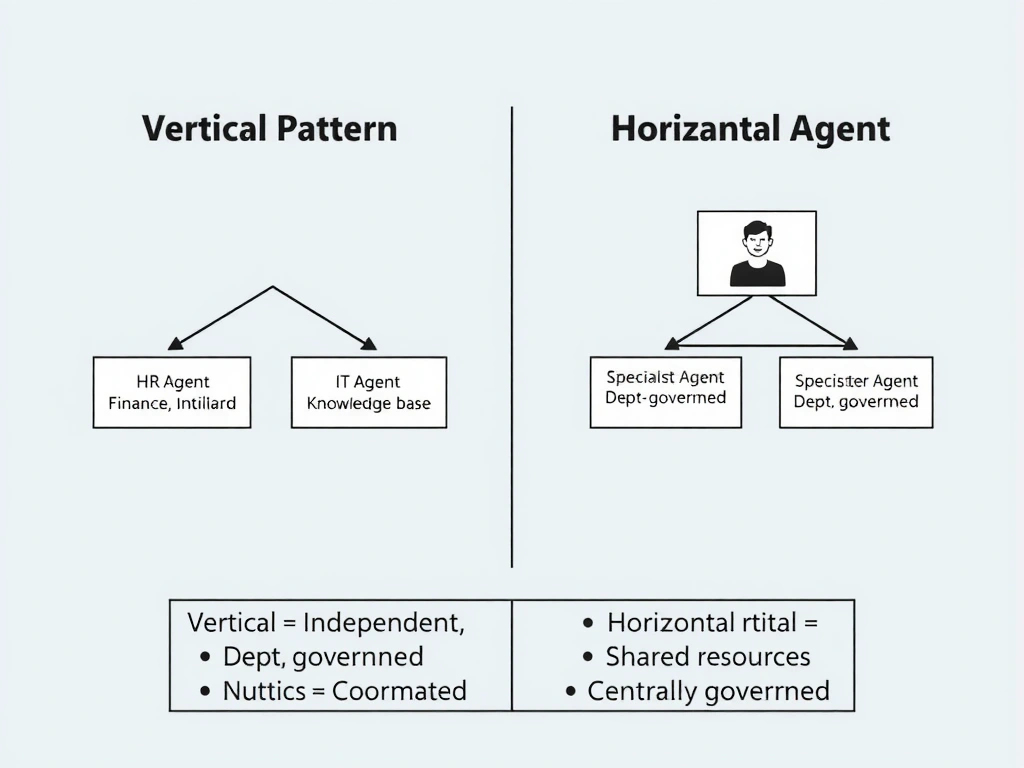
Vertical multi-agent means each agent is its own complete service — like separate department clinics vs. one central hospital. When departments have different audiences, governance, and content, separate agents keep complexity clean. The correct answer is B.
Full explanation below image
Full Explanation
## Why B is Correct The vertical pattern (multiple independent agents, one per domain) is preferred when: - Each department has its own governance team and release cadence - Audiences are distinct (e.g., HR agent for employees only, Sales agent for partners only) - Domain knowledge and topics do not overlap significantly - Department teams need autonomy to update their agent without impacting others
## Why the Distractors Are Wrong A (Overlapping domains, cross-domain questions): When users regularly ask questions that span multiple domains, a horizontal pattern with a single orchestrator is better — it can coordinate responses from multiple specialists in one conversation.
C (Same knowledge sources for all): Shared knowledge sources favor a horizontal approach where one orchestrator queries common knowledge. The vertical pattern would require each agent to separately configure the same knowledge source.
D (Single team, minimize environments): A desire to minimize environments and simplify management is an argument FOR the horizontal pattern (one orchestrator), not the vertical pattern (multiple independent agents).
## Exam Tip Vertical = autonomy and isolation per domain. Horizontal = coordination and shared resources. The exam may describe an organizational scenario and ask you to recommend the pattern.