
Trey Research is designing a Copilot Studio multi-agent solution. The orchestrator agent needs to route a user's question about clinical trial eligibility to the Clinical Trials specialist agent. In Copilot Studio, how does the orchestrator agent invoke the specialist agent?
Select an answer to reveal the explanation.
Short Explanation and Infographic
In Copilot Studio multi-agent solutions, specialist agents are wired up as plugins to the orchestrator — like registering a specialist doctor with a hospital triage system so referrals happen automatically. The correct answer is B.
Full explanation below image
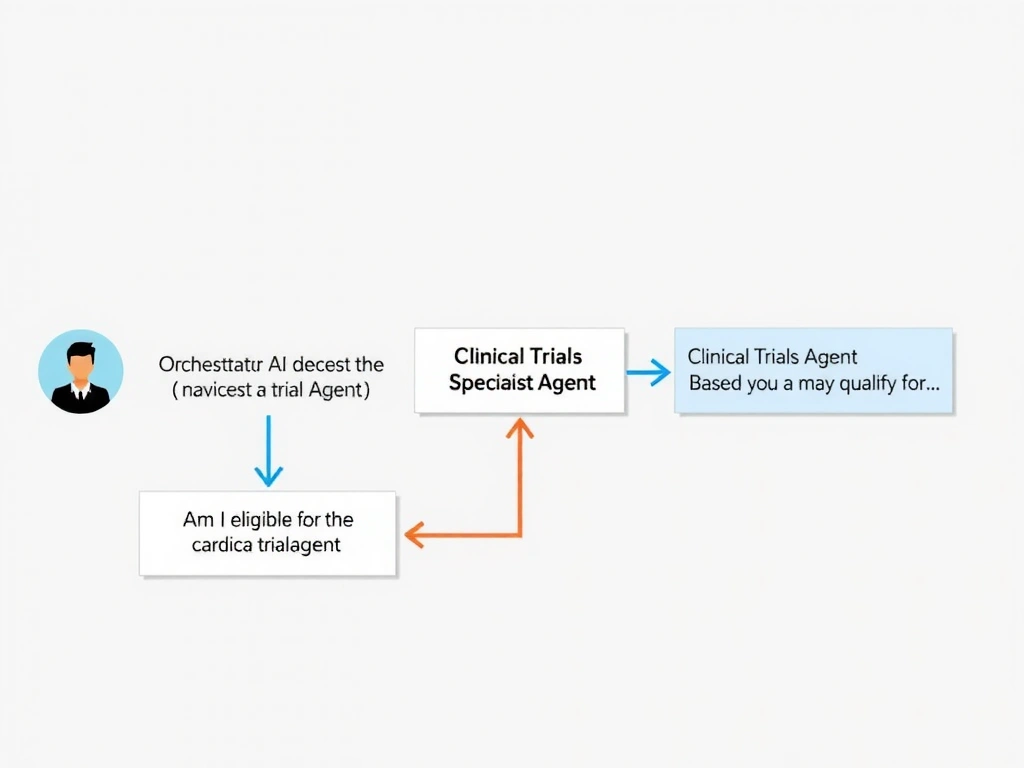
Full Explanation
## Why B is Correct In Copilot Studio's multi-agent architecture, specialist agents can be published and registered as plugins (actions) available to the orchestrator agent. The orchestrator's AI — when operating in generative orchestration mode — decides which specialist action to call based on the user's query and the plugin's description. The user's message (or a reformulated query) is passed as an input parameter, and the specialist's response is returned to the orchestrator, which synthesizes the final answer.
## Why the Distractors Are Wrong A (URL redirect): Redirecting users to another URL breaks the conversational flow and loses conversation context. This is a UI navigation pattern, not an agent orchestration pattern.
C (Email transcript): Email is asynchronous and requires manual human processing — the opposite of an automated multi-agent solution.
D (Shared topic namespace): Agents do not share topic namespaces automatically. Each agent maintains its own isolated topic list. Component libraries can share topics, but that is different from agent-to-agent invocation.
## Exam Tip Multi-agent invocation pattern: Specialist agent published as plugin → registered in orchestrator's Tools/Actions → orchestrator AI invokes it during generative orchestration. The orchestrator remains the user-facing interface throughout.