
An administrator asks a developer whether the organization's data policies, which block combining business and non-business connectors, also govern Power Apps code apps that call connectors from JavaScript. Which answer is correct?
Select an answer to reveal the explanation.
Short Explanation
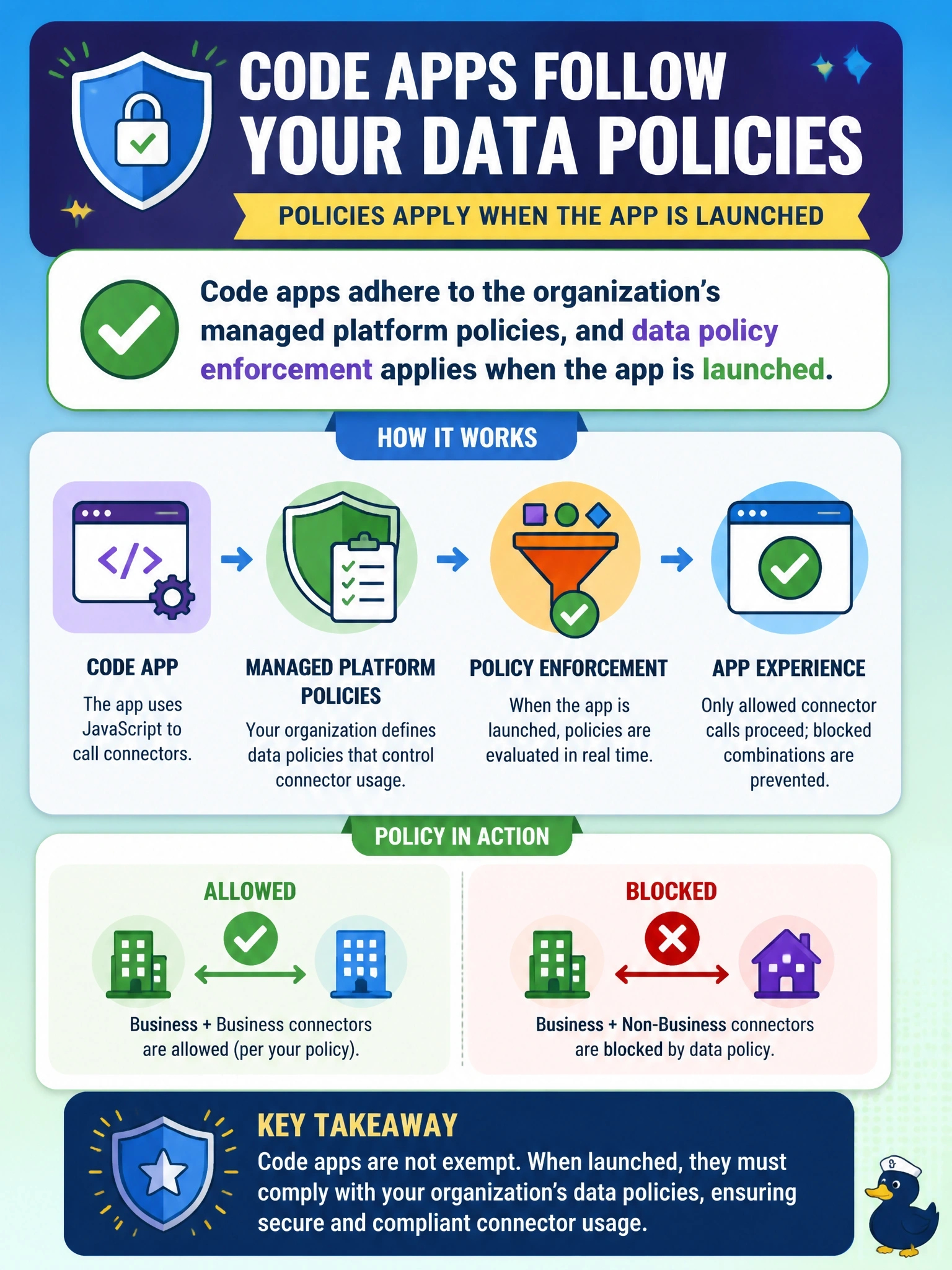
Writing the app in TypeScript doesn't get you a hall pass. Code apps live on the same managed platform as other Power Apps, so your data policies are checked when the app launches, just like the admin hoped.
Full Explanation
Power Apps code apps run on the same managed platform as other Power Apps. Microsoft's documentation lists adherence to managed platform policies, including data loss prevention, sharing limits and Conditional Access, as a key feature, and its table of supported management capabilities includes data policy enforcement during app launch. Connector calls go through Power Platform connections created for the user, so the platform knows which connectors an app uses and can block it when they conflict with the environment's data policy. Saying data policies cover only canvas apps and flows ignores the documented support, and replacing them with manual source reviews would leave enforcement to process rather than the platform. Tying enforcement only to the moment of pushing the app misstates the documented launch-time check: a policy change is applied when users next launch the app, not frozen at publish time. Running in the browser does not let JavaScript skip governance; the client library calls connectors through the platform rather than directly, which is precisely why policies apply. Exam caveat: some environment settings do not yet apply to code apps, such as the storage shared access signature IP restriction, so administrators should check the current limitations list. Operational check: place one of the app's connectors in a blocked group in a test environment's data policy, launch the app, and confirm it is blocked.