
A consultant is coaching a sales team on how to use AI-generated next-best-action suggestions in Dynamics 365 Sales responsibly, rather than following them mechanically without judgment. Which TWO practices should the consultant recommend? (Select TWO.)
Select all correct answers, then click Submit.
Short Explanation
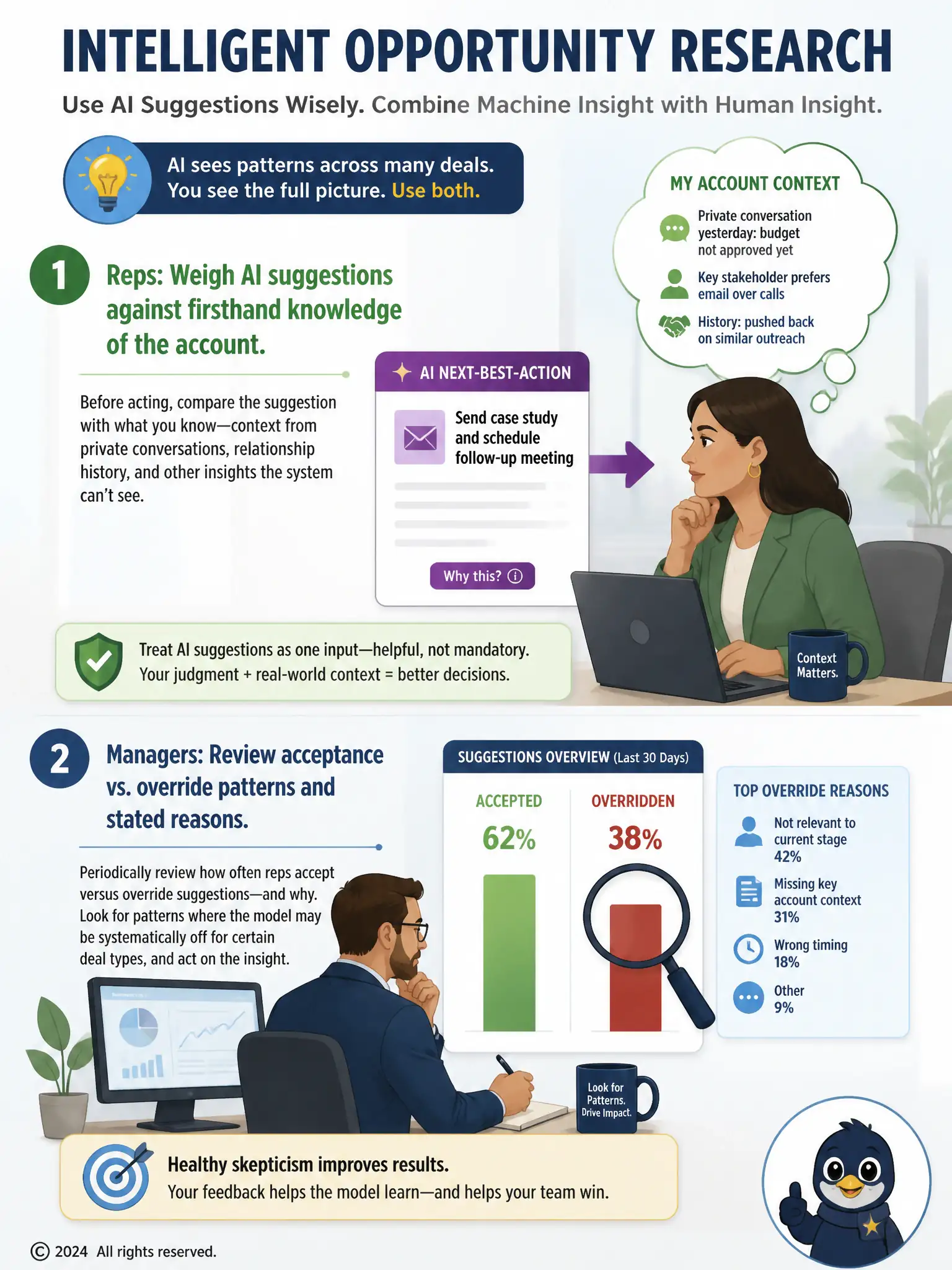
Treat the next-best-action suggestion as one input, not a command. You should weigh it against what you know about the account, and managers should review when reps accept or override suggestions and why.
Full Explanation
The recommended practices are weighing each suggestion against firsthand account knowledge and having managers review acceptance and override patterns. Next-best-action suggestions are generated from patterns across many opportunities and do not have access to context a rep may have from a private conversation, a personal relationship with a stakeholder, or knowledge of circumstances the system was never told about, so a rep weighing a suggestion against that firsthand knowledge before acting on it is exactly the kind of judgment that keeps the tool useful rather than misleading. At the team level, a manager tracking how often suggestions are accepted versus overridden, and why, surfaces patterns worth acting on: if reps consistently override suggestions for a particular deal type or industry, that is a signal the model may be systematically missing something worth investigating, not noise to ignore. The practice of always acting on the top-ranked suggestion first is incorrect because it invents a mechanical penalty, overriding a suggestion does not lower an account's relationship-health score, and treating the ranking as an instruction to follow without judgment is the opposite of responsible use. The practice of configuring the system so reps cannot dismiss or override suggestions is incorrect because removing that ability strips out the human judgment that catches cases where the model is wrong, turning a decision-support tool into a rigid mandate and eliminating the feedback that would otherwise show where the model needs improvement. Responsible use pairs the model suggestion with human context, at both the individual and team level.