
A rep pursuing a mid-size opportunity for a company's flagship hardware product opens the similar-opportunities recommendation and sees three closed-won deals cited as reference cases. Looking closer, the rep realizes all three cited deals were for a discontinued software add-on sold mostly to a different industry, not the hardware product being pursued now. What should the consultant check first?
Select an answer to reveal the explanation.
Short Explanation
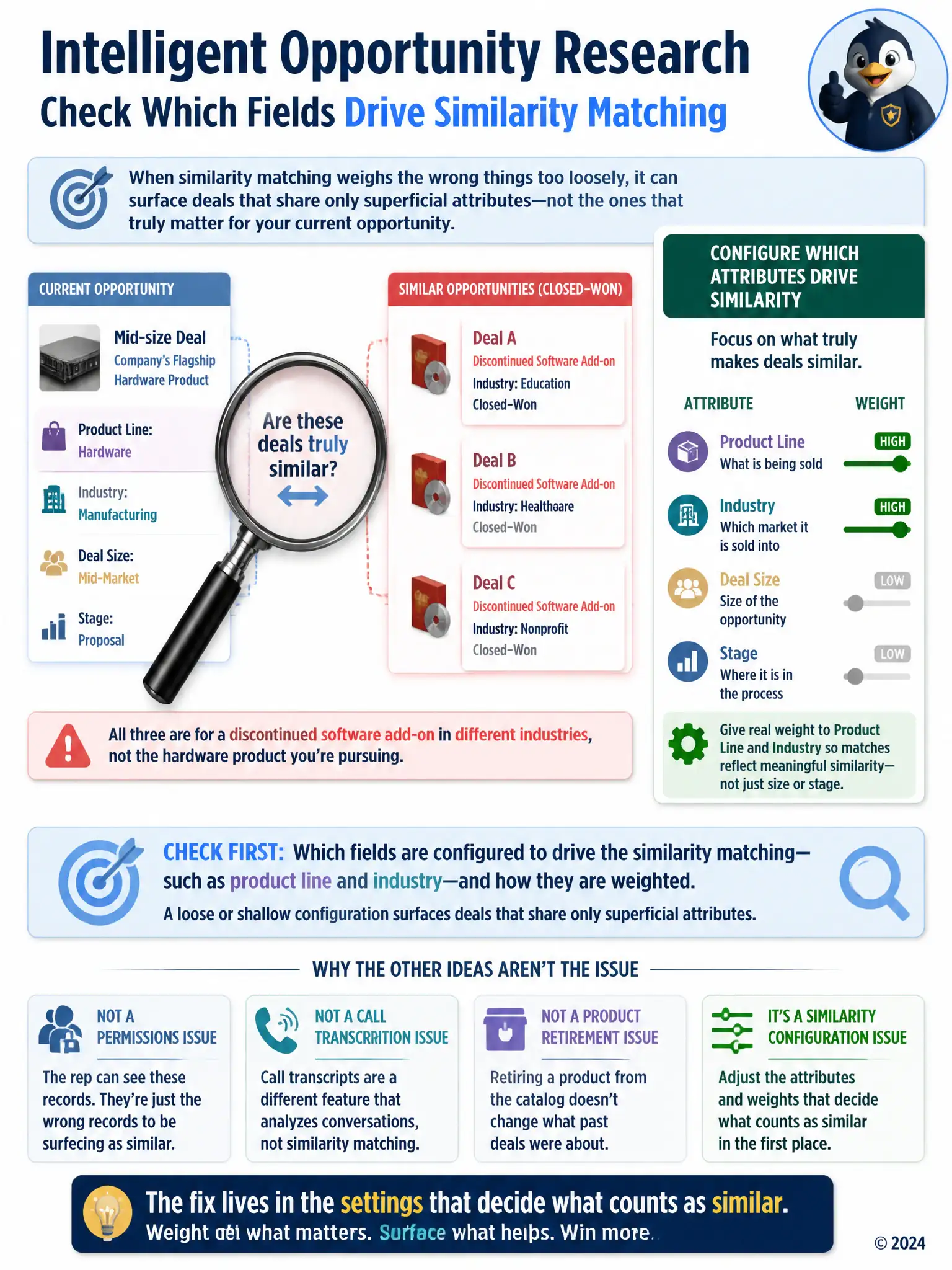
When similar-opportunities recommendations keep surfacing closed-won deals that don't really match, check the fields driving similarity first. If product line and industry aren't weighted properly, the system can latch onto shallow things like deal size or stage. That's a configuration problem, not a permissions or transcript problem.
Full Explanation
The choice about which fields are configured to drive similarity matching, such as product line and industry, is the one to check first. Similar-opportunities recommendations work by matching the current deal against past opportunities on a configured set of shared attributes; if product line and industry aren't weighted meaningfully in that configuration, the feature can surface closed deals that share something generic, like deal size or sales stage, while missing the product and market fit that actually made them useful comparisons. Checking and adjusting which fields drive the match is the direct fix for cited deals that turn out to be for a different product sold to a different industry. The choice about whether the rep has permission to view closed-won opportunities outside their own territory is incorrect because a permission problem would prevent the rep from seeing certain opportunities at all, not cause irrelevant ones to be surfaced instead; the rep here is seeing the deals fine, they are just poorly matched. The choice about whether conversation intelligence is enabled for the account is incorrect because it conflates two separate features: conversation intelligence analyzes call transcripts for keywords and sentiment, while similar-opportunities recommendations compare opportunity records, so enabling one has no bearing on the other's matching quality. The choice about whether the discontinued product line has been archived in the product catalog is incorrect because archiving a product in the catalog affects whether reps can select it on new records going forward; it doesn't retroactively strip already-closed historical opportunities out of a similarity search. The matching configuration, not permissions, transcripts, or catalog status, is what needs review.