
A consultant is designing relationship analytics for a strategic accounts team. The team wants the system to surface accounts where the primary buying contact has changed roles within the last 90 days, since a new contact often means the relationship needs to be rebuilt. Relationship analytics in Dynamics 365 Sales draws on interaction history and organizational signals already tracked in the system. What must be true for this specific signal to appear in relationship health insights?
Select an answer to reveal the explanation.
Short Explanation
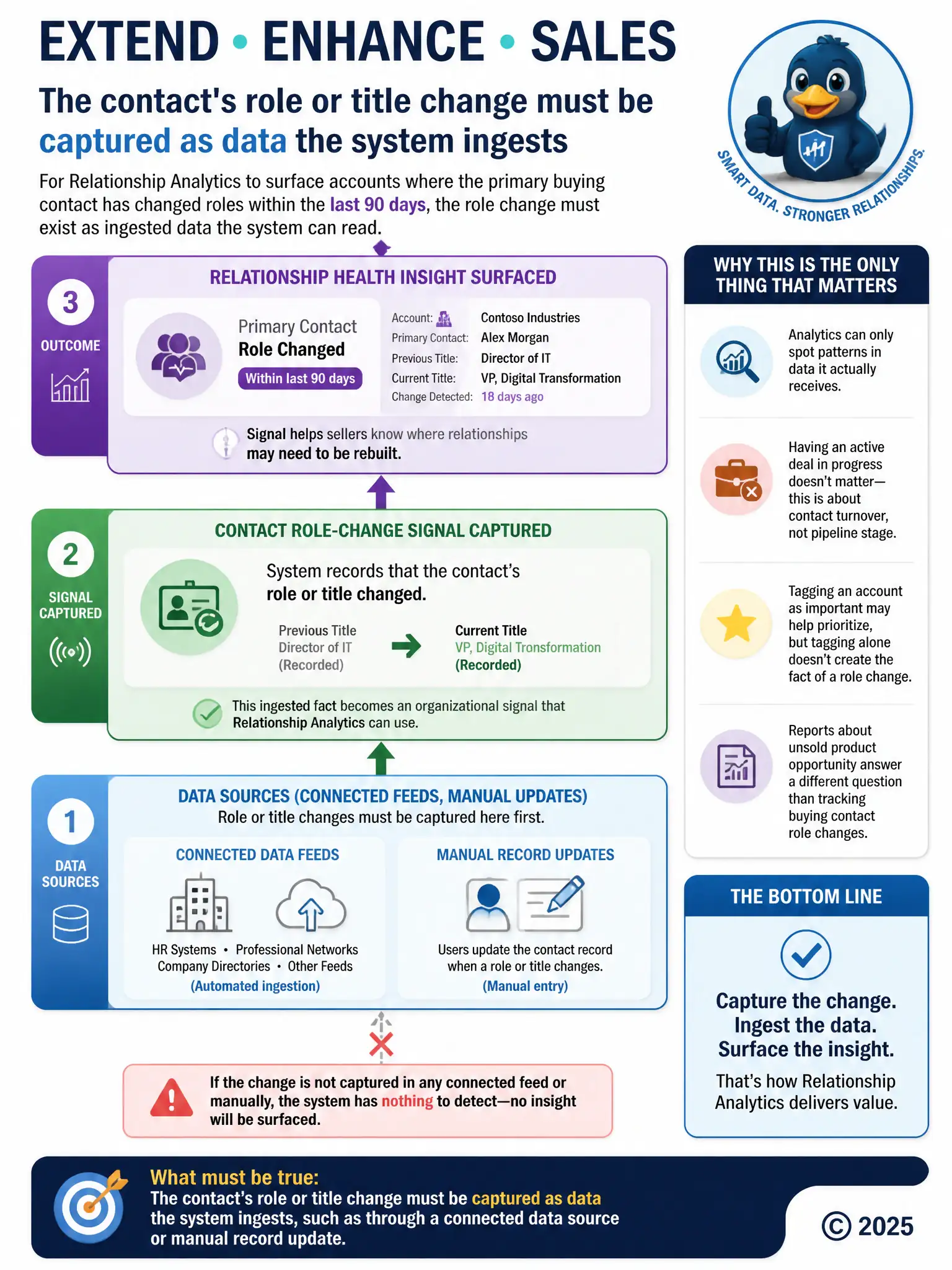
You need the role or title change to show up as data the system can read, such as a connected data source or a manual contact update. If the change isn't recorded anywhere the analytics can ingest, there's nothing to surface. An open deal, a strategic tag, or a whitespace report doesn't create that contact-turnover signal.
Full Explanation
For this signal to appear in relationship health insights, the contact's role or title change must be captured as data the system ingests, such as through a connected professional-network data source, an integration, or a manual update to the contact record. Relationship analytics can only reason about signals it can observe, so without that underlying data there is nothing for the analytics to detect, regardless of how important the change is conceptually. The account having an open opportunity currently in the pipeline is not required, because the contact-role signal is independent of pipeline stage. The account being manually flagged as 'strategic' in a custom field might help prioritize which accounts a team reviews first, but it does not create or surface the underlying role-change data itself. The sales manager requesting a whitespace analysis report for the account each quarter is also not required, because whitespace analysis addresses untapped product and cross-sell opportunity within an account, a different capability from relationship health signals about contact turnover, so requesting it does not produce this insight.