
A rep pursuing a new enterprise account needs an introduction to the VP of Supply Chain, someone the rep has never met. Reviewing the opportunity record in Dynamics 365 Sales, the rep opens the relationship analytics assistant and sees that a colleague on the customer success team has a strong, established relationship with that VP. What should the rep do with this insight?
Select an answer to reveal the explanation.
Short Explanation
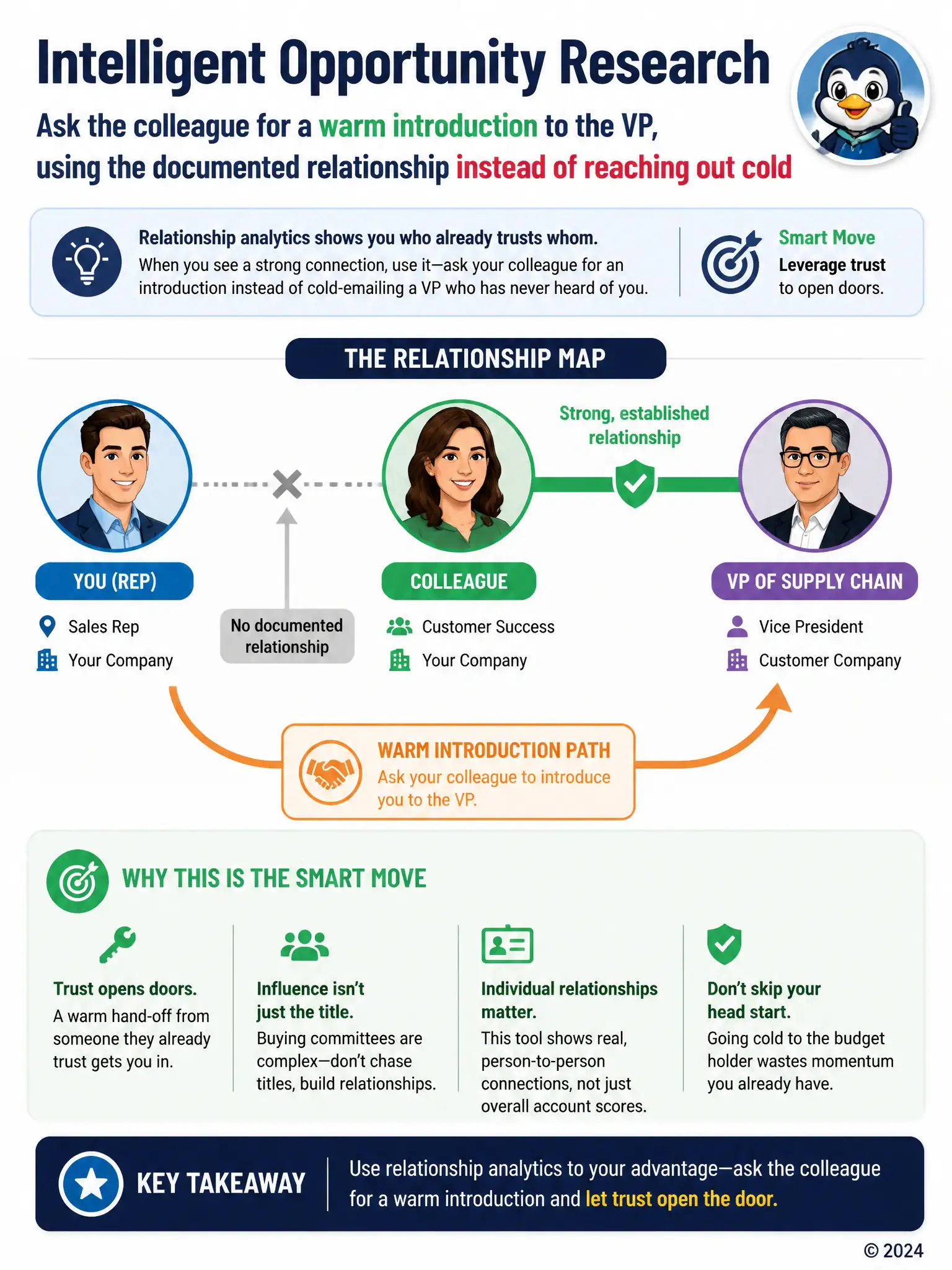
Relationship analytics shows who already trusts whom, so you should ask that colleague for a warm introduction instead of cold-emailing the VP. A trusted hand-off opens doors, and influence doesn't always match job titles.
Full Explanation
The correct choice is asking the colleague for a warm introduction to the VP, using the documented relationship instead of reaching out cold. Relationship analytics in Dynamics 365 Sales surfaces the strength of individual relationships between people at the seller's organization and a customer's contacts, and its practical value lies in letting a rep route through an existing trusted connection instead of a cold approach. Asking the colleague for an introduction to the VP puts that insight to direct use. The option to contact the VP directly without involving the colleague is incorrect because whether the VP holds purchasing authority is beside the point; a warm introduction from someone the VP already trusts improves the odds of a productive first conversation regardless of the VP's formal role, so declining to use it over an authority question wastes a useful opening. The option to disregard the connection because relationship analytics only reports engagement between the account as a whole and the company is incorrect because it misstates the feature: relationship analytics does track relationships between individual people, not only aggregate account-level engagement, which is exactly why the colleague's connection surfaced in the first place. The option to escalate directly to the account's economic buyer instead is incorrect because it presumes the VP of Supply Chain cannot be a useful influencer simply because the title is not economic buyer, dismissing a documented, workable connection in favor of an unproven direct approach to someone with no established relationship at all.