
A consultant is enabling a new agentic AI capability in Dynamics 365 Sales that can autonomously draft and send follow-up emails to leads based on triggered events, such as a lead going quiet after an initial contact. Sales leadership is supportive of the time savings but is concerned about a generated email going out with inaccurate product claims or an inappropriate tone before anyone reviews it. What configuration should the consultant apply to address this concern while still capturing the automation benefit?
Select an answer to reveal the explanation.
Short Explanation
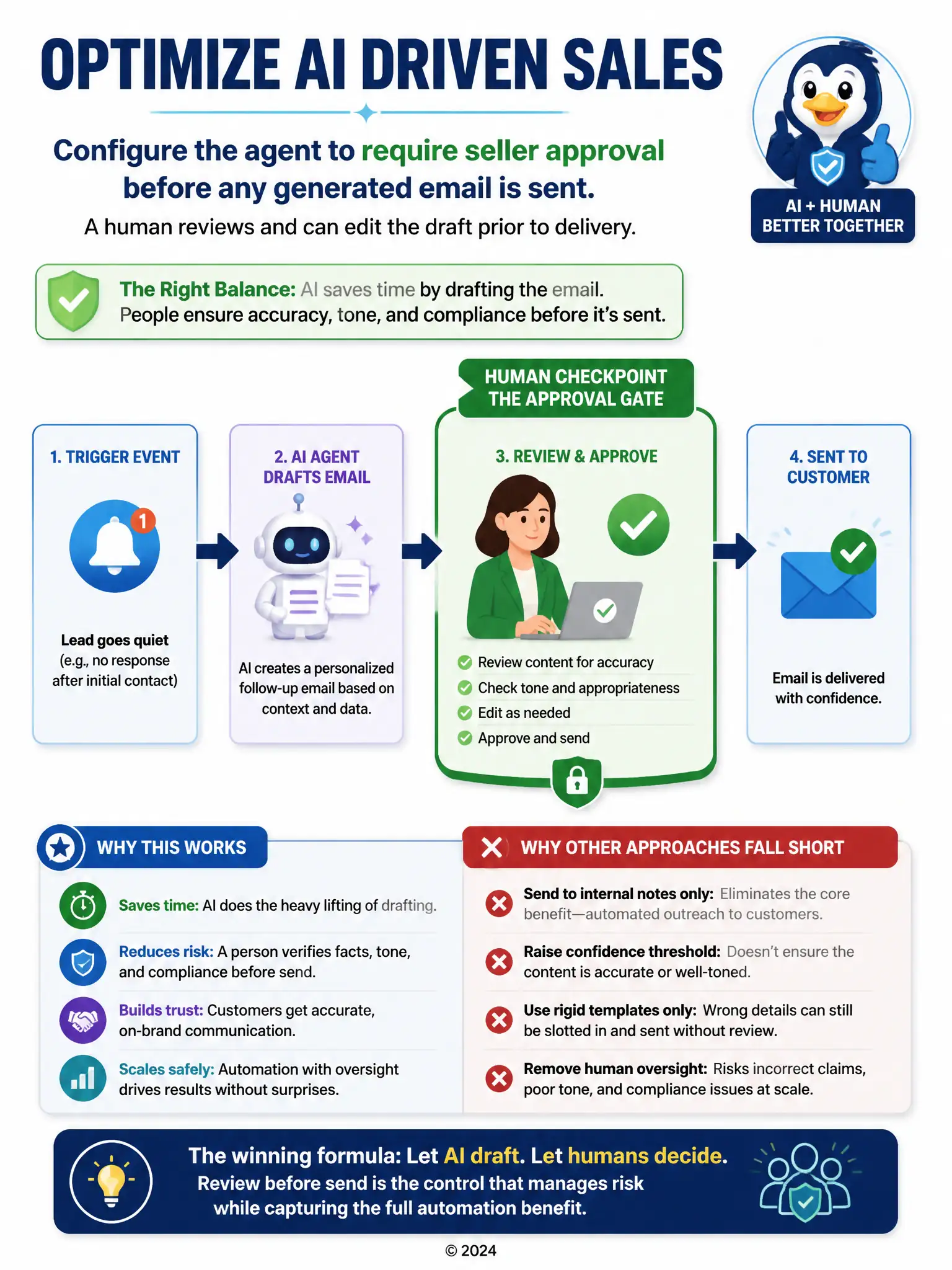
Leadership wants the time savings, but you shouldn't let a bot send customer emails unchecked. Configure the agent to require seller approval before any generated email is sent, so a person reviews and edits the draft. That keeps the automation benefit while stopping bad claims or tone before delivery.
Full Explanation
Requiring seller approval before an autonomously drafted email is sent inserts a human checkpoint that catches inaccurate claims or tone problems before they reach a customer, while still letting the agent do the drafting work that produces the time savings leadership wants to keep. Restricting the autonomous agent to internal Dataverse notes instead of email is wrong because it eliminates the customer-facing automation entirely, forfeiting the benefit the organization is trying to capture rather than managing the risk around it. Setting the agent's confidence threshold to its maximum value so it only drafts emails for leads it is completely certain about, removing the need for review, is wrong because a high confidence threshold reflects the model's certainty about when to act, not the factual accuracy or tone of the generated content, so a confidently wrong or awkwardly worded email can still be produced and sent without review. Enabling autonomous sending but limiting it to a single email template so wording cannot vary between leads is wrong because locking the agent to a single template constrains wording variety but does not prevent inaccurate dynamic content, such as incorrect product details or account references, from being inserted into that template and sent unreviewed.