
A consultant is configuring conversation intelligence for a sales team that records customer calls in Microsoft Teams. Before rollout, the sales manager asks what the team can expect it to do automatically once configured. (Select TWO.)
Select all correct answers, then click Submit.
Short Explanation
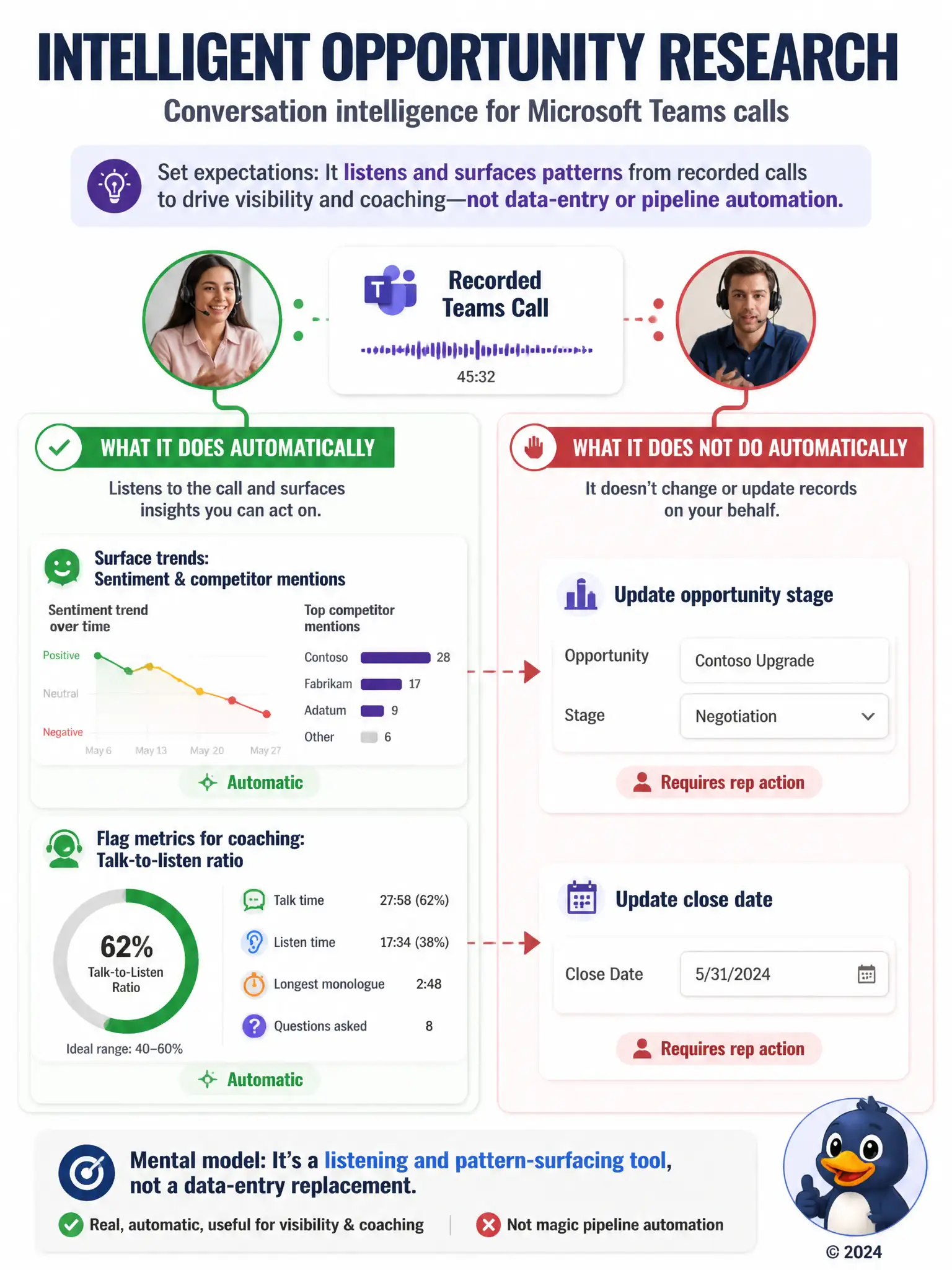
Set expectations before rollout: conversation intelligence listens to recorded Teams calls, transcribes them, and automatically surfaces patterns like sentiment, competitor mentions, and talk-to-listen ratios for coaching. It won’t move opportunity stages, change close dates, or replace reps’ notes.
Full Explanation
The correct expectations are that conversation intelligence can automatically transcribe recorded calls and flag coaching-oriented metrics such as talk-to-listen ratio, and that it can surface trends such as customer sentiment and competitor mentions across recorded calls. These capabilities work from call transcripts once calls are recorded and the feature is configured, giving the manager useful visibility into call content and rep behavior. The expectation that it will automatically update an opportunity’s stage or close date based on call content is incorrect because those record updates still require rep action or separate workflow automation, not inference from conversation content alone. The expectation that it will replace manual notes because every field on the opportunity record gets populated from the transcript is also incorrect; the feature surfaces insights and trends from calls, but reps still need to capture and structure deal details that matter beyond what transcript analysis produces. Setting accurate expectations before rollout matters because a manager who believes the feature will auto-update pipeline data or fully replace note-taking is likely to be disappointed, while understanding its actual scope, transcript-based trend and coaching insights, sets the team up to use it effectively.