
An organization is piloting an autonomous AI seller agent to send follow-up emails to leads on behalf of reps. Legal wants every email involving a deal value above $50,000 to be reviewed by the assigned rep before it is sent. Which configuration extends the agent to satisfy this requirement?
Select an answer to reveal the explanation.
Short Explanation
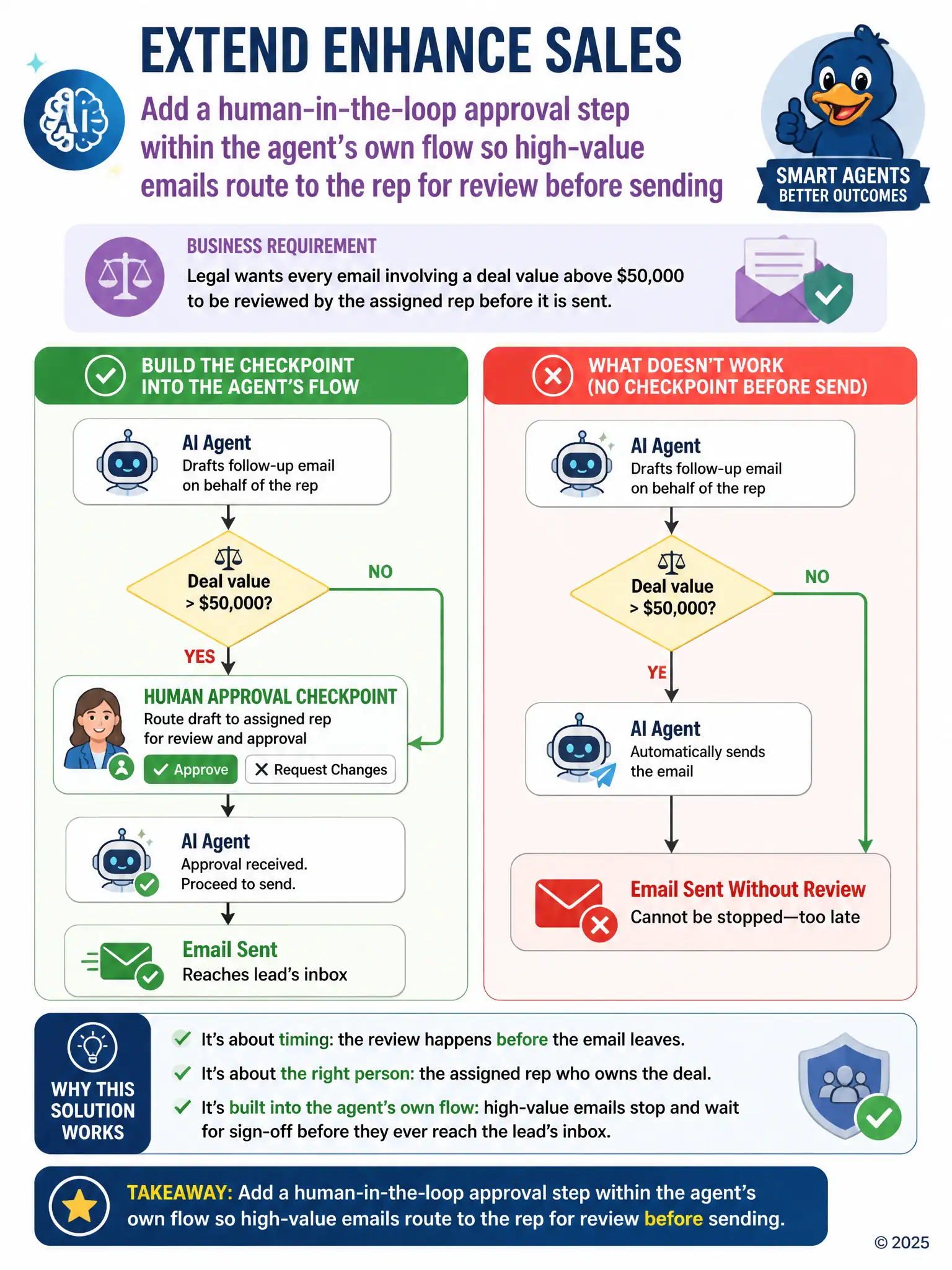
You need the review to happen before the email goes out, so build a human-in-the-loop approval step into the agent's own flow. That way, high-value drafts stop and wait for the assigned rep's sign-off before reaching the lead. Cutting off visibility, firing after sending, or hiding a send button won't stop the agent from sending unreviewed emails.
Full Explanation
The configuration that adds a human-in-the-loop approval step within the agent's own flow satisfies the requirement. The requirement is that a specific class of agent-generated action — emails tied to deals above a defined value — must pause for human review before it goes out, which is precisely what an approval step inside the agent's own process provides: the agent still drafts and initiates the email, but routes it to the assigned rep for a decision before sending when the deal value crosses the threshold. The configuration that restricts the rep's security role so they can no longer view opportunities above $50,000 is incorrect because it removes the rep's ability to view the very opportunities they are supposed to be reviewing, which works against the goal rather than enabling oversight. The configuration that creates a classic workflow on the Opportunity entity that fires after the agent sends the email is incorrect because it happens too late to serve as a pre-send review, so it cannot prevent an unreviewed email from reaching the lead. The configuration that sets a business rule hiding the send button on opportunities above $50,000 is incorrect because it has no bearing on the agent's own automated sending action, which does not go through that form control at all.