
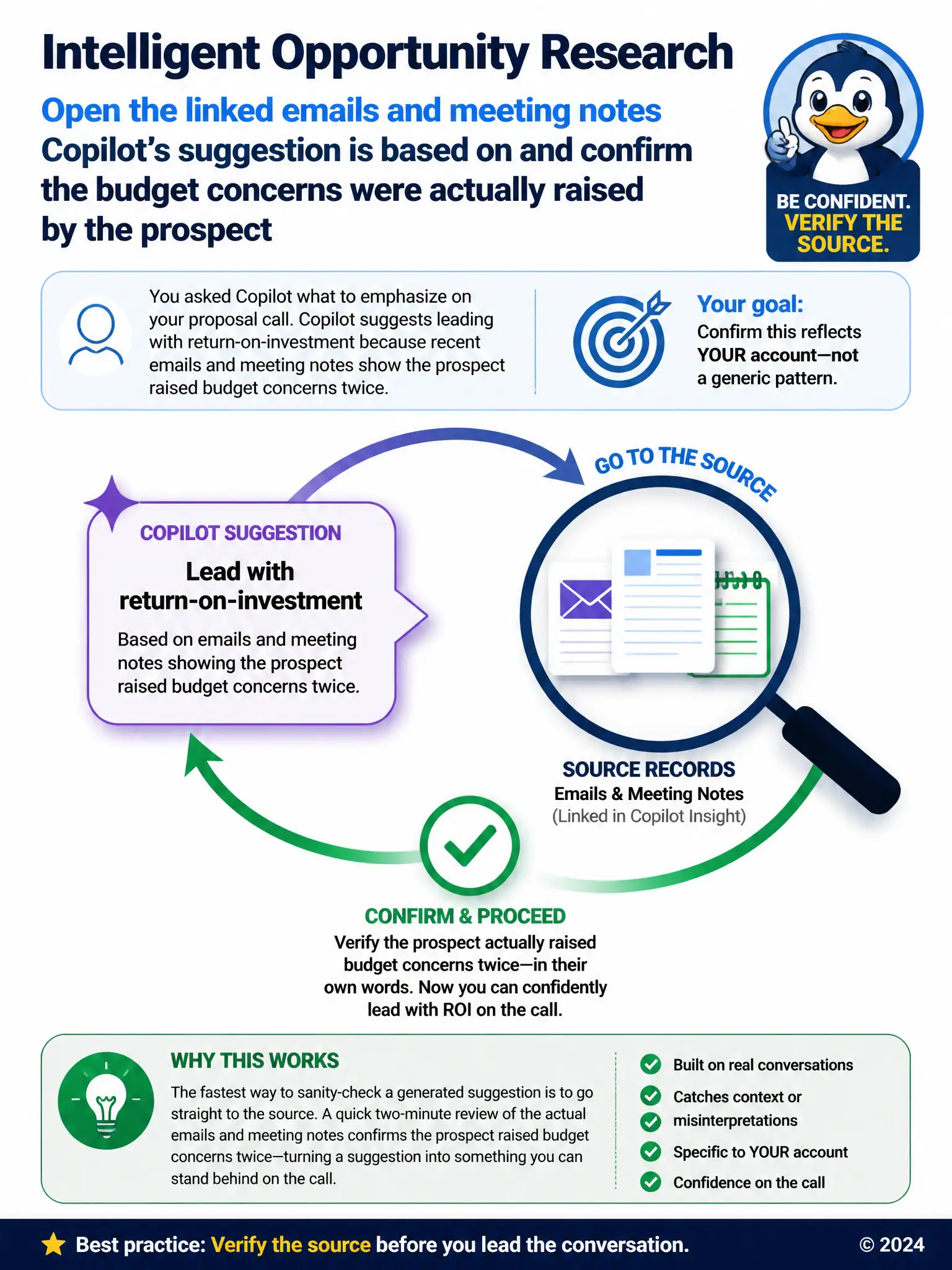
A rep preparing for a proposal call asks Copilot what to emphasize, and Copilot suggests leading with return-on-investment because recent emails and meeting notes show the prospect raising budget concerns twice. Before the call, the rep wants to confirm this suggestion actually reflects the account rather than a generic pattern. What is the most reliable way for the rep to do this?
Select an answer to reveal the explanation.
Short Explanation
Go straight to the source: open the linked emails and meeting notes and confirm the prospect actually raised budget concerns twice. That turns a generated suggestion into something you can stand behind on the call. Trusting it outright, asking another account team, or rerunning opportunity scoring doesn't prove this account's specifics.
Full Explanation
The most reliable way to confirm the suggestion is to open the linked emails and meeting notes that Copilot's suggestion is based on and verify that the budget concerns were genuinely raised by the prospect. Copilot's suggestion is generated from specific linked records, so checking those underlying records directly is the clearest way to confirm it reflects this account rather than a generic pattern. Accepting the suggestion as-is is not reliable because Copilot's output is generated from the data it retrieves and summarizes, and summaries can miss nuance or misattribute context, so a quick source check remains good practice before a high-stakes call. Asking a colleague on a different account team whether budget concerns are a common theme is also not reliable because that colleague has no visibility into this specific prospect's communications, so their answer about a common theme elsewhere says nothing about whether budget concerns were actually raised in this account's emails and notes. Rerunning predictive opportunity scoring is not reliable either because predictive opportunity scoring produces a likelihood-to-win estimate based on different signals; a score change would not verify whether a specific ROI talking point was actually discussed with this prospect.