
Midway through a six-month enterprise deal, the champion who had been the rep's primary point of contact accepts a role at a different company. Relationship intelligence in Dynamics 365 Sales flags a sharp drop in stakeholder engagement on the opportunity shortly after. What should the rep do in response to this AI-generated signal?
Select an answer to reveal the explanation.
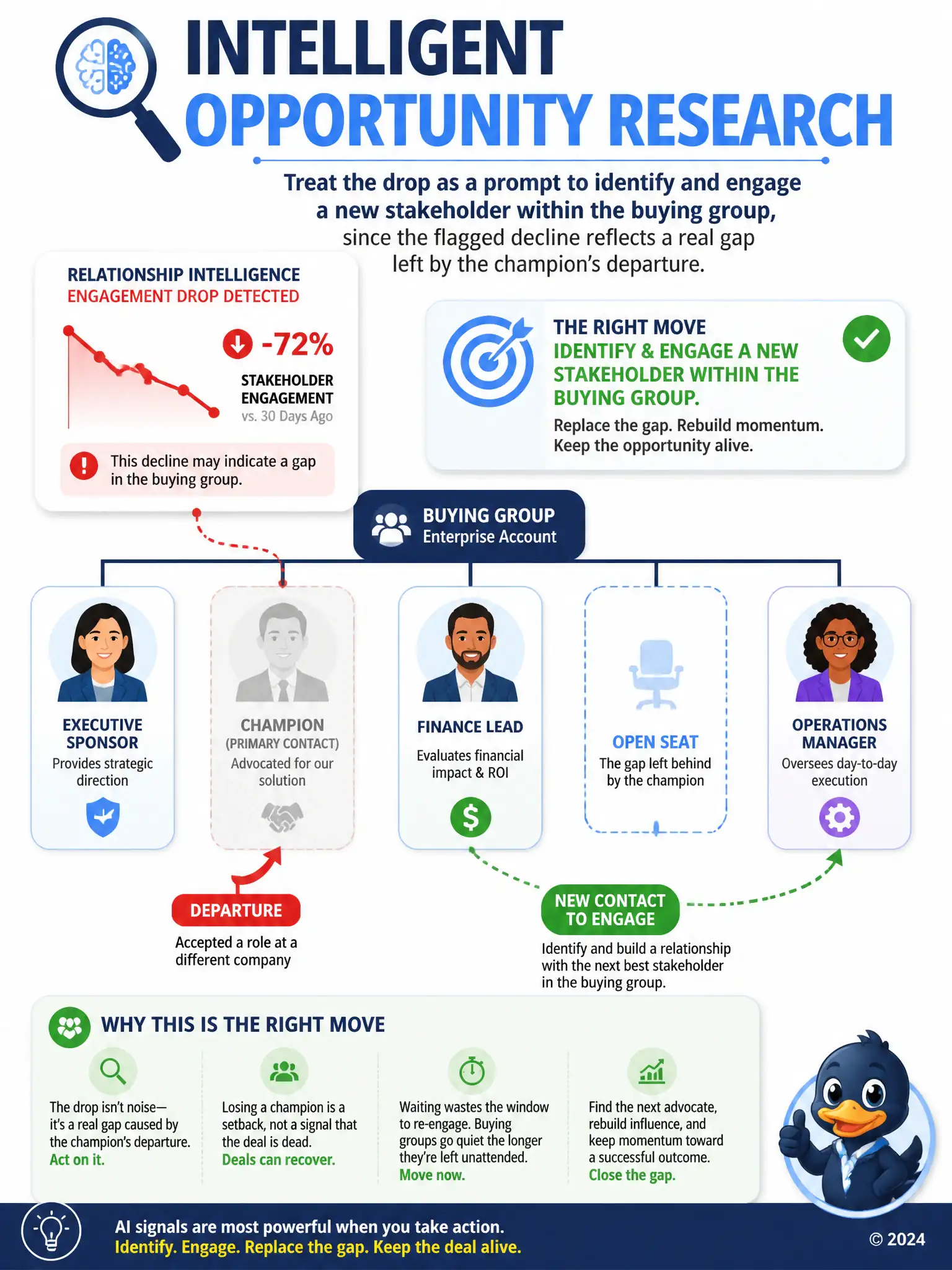
Short Explanation
When your main contact leaves, that engagement drop isn't noise—it's the gap they left. Treat the alert as a prompt to find and engage another stakeholder in the buying group, not to ignore it or write the deal off.
Full Explanation
The correct response is to treat the flagged drop as a prompt to identify and engage a new stakeholder within the buying group, since the decline reflects a real gap left by the champion's departure. The system flagged an accurate event: the loss of the champion has left a genuine gap in the buying group, and the appropriate response is to use that signal to identify who else within the account can be engaged, whether an existing stakeholder or a new contact at the champion's former role. Dismissing the alert because relationship intelligence flags are based on email metadata and do not reflect real changes in the buying group is incorrect; the flag is not a false positive to be dismissed, because it corresponds to an actual, verifiable change in the account rather than noise in email metadata, and treating it as unreliable would cause the rep to miss a real risk. Closing the opportunity as lost immediately is incorrect because closing the opportunity outright is a disproportionate reaction to a single engagement signal; a champion's departure is a setback to work around, not automatic proof the deal is unwinnable, and many such deals are recovered by engaging a new stakeholder. Waiting for the next scheduled pipeline review before taking any action is incorrect because relationship intelligence is meant to support timely action, and waiting risks letting the buying group go cold during a period when re-engagement matters most.