
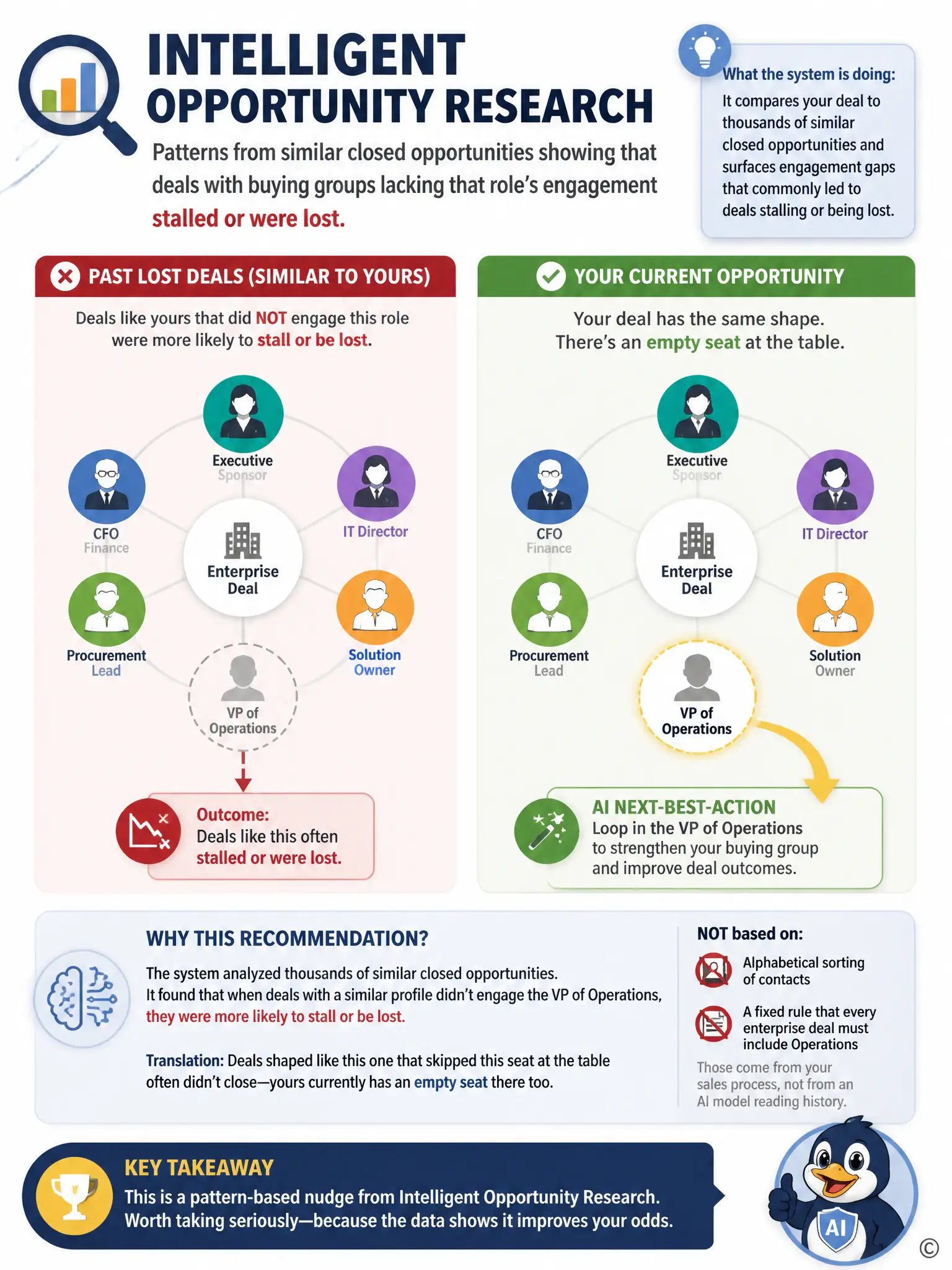
A rep working an enterprise opportunity opens the record and sees an AI-generated next-best-action suggesting they loop in the VP of Operations, a contact who has not yet been added to any calls or emails on the deal. The rep is unsure why the system flagged this particular person. What is this type of recommendation typically based on?
Select an answer to reveal the explanation.
Short Explanation
When the system nudges you toward someone you haven't engaged yet, it's pattern-matching your deal against similar past deals. If deals like yours stalled or were lost when that role wasn't involved, it's flagging the same gap now. It's not random, alphabetical, or a compliance rule.
Full Explanation
The correct recommendation is the pattern-based one: these next-best-action suggestions are generated by comparing the current opportunity's buying group composition against patterns observed in similar historical opportunities. When deals that lacked engagement from a particular role, such as operations leadership, tended to stall or lose, the model flags that gap on a current deal with a similar profile so the rep can proactively close it. The random selection recommendation is incorrect because these suggestions are model-driven from historical deal patterns, not a random sampling of the account's contact list, which would produce inconsistent and unexplainable suggestions. The alphabetical job-title ranking recommendation is incorrect because alphabetical ordering of job titles has no analytical basis and would not reasonably explain why one specific stakeholder was surfaced over any other contact on the account. The mandatory compliance rule recommendation is incorrect because there is no universal compliance requirement built into the recommendation engine mandating operations sign-off; that would be a business policy enforced separately, not something the predictive model infers from deal patterns.