
A consultant enabled predictive opportunity scoring for a sales team last quarter, and the model has generated scores reliably for existing pipeline records ever since. A rep creates a brand-new opportunity this morning for a fast-moving deal and opens the record expecting a score, but the score field shows 'Not enough data' instead of a number. The consultant confirms the rep's security role includes the AI scoring feature and that scoring is active for this pipeline. What is the most likely explanation?
Select an answer to reveal the explanation.
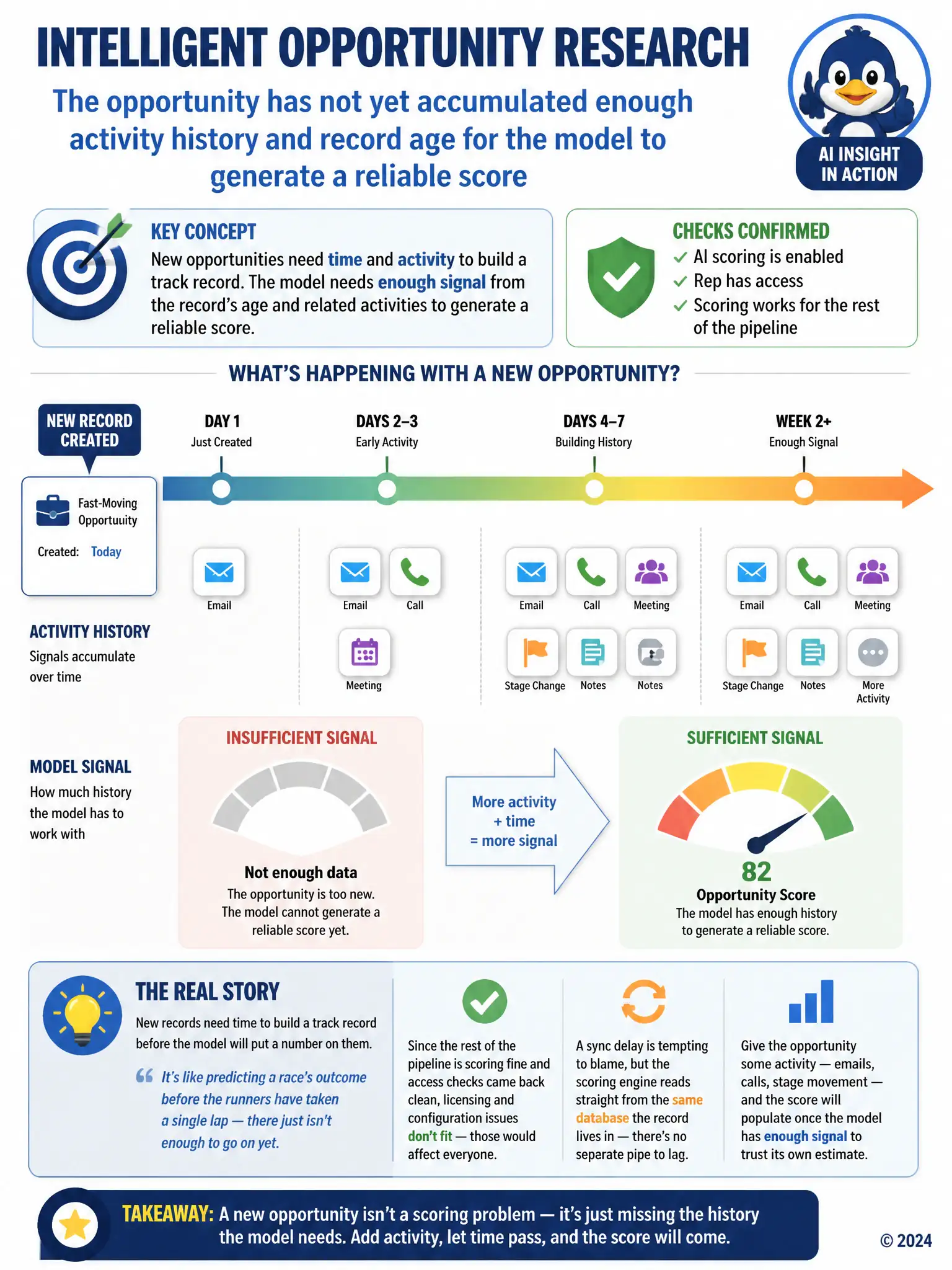
Short Explanation
You're seeing this because the new opportunity is too fresh for the model to trust. It needs activity history and record age before it can generate a reliable score. Since the rest of the pipeline scores fine and access checks passed, this is a data-maturity issue, not a licensing, scope, or sync problem.
Full Explanation
The correct explanation is that the opportunity has not yet accumulated enough activity history and record age for the model to generate a reliable score. Predictive opportunity scoring depends on the model observing enough signals, such as activity history, stage progression, and engagement, before it can produce a confident score; a record created minutes earlier simply has not generated that history yet, which is exactly what 'Not enough data' communicates. The licensing explanation is incorrect because a missing license would block artificial intelligence features across the rep's entire environment, not just this one new record, and the consultant already confirmed the role has access. The record-type scope explanation is incorrect because excluding a record type from the model's scope is an organization-wide configuration choice; it would prevent scoring for every opportunity of that type, not only newly created ones, and the team's existing pipeline is scoring normally. The Dataverse sync explanation is incorrect because Dynamics 365 Sales and its scoring model operate natively on Dataverse without a separate synchronization step, so there is no sync lag to account for; a sync problem would also produce broader symptoms across many records rather than a single new opportunity showing a data-insufficiency message.