
A regional sales manager at a manufacturing distributor reviews the pipeline dashboard and notices an opportunity in the 'Propose' stage has an AI-generated opportunity score of 22, down from 68 two weeks earlier, even though the estimated close date and deal amount have not changed. The manager wants to understand what most likely drove the score decrease before deciding whether to escalate the deal. What is the most likely explanation for the drop?
Select an answer to reveal the explanation.
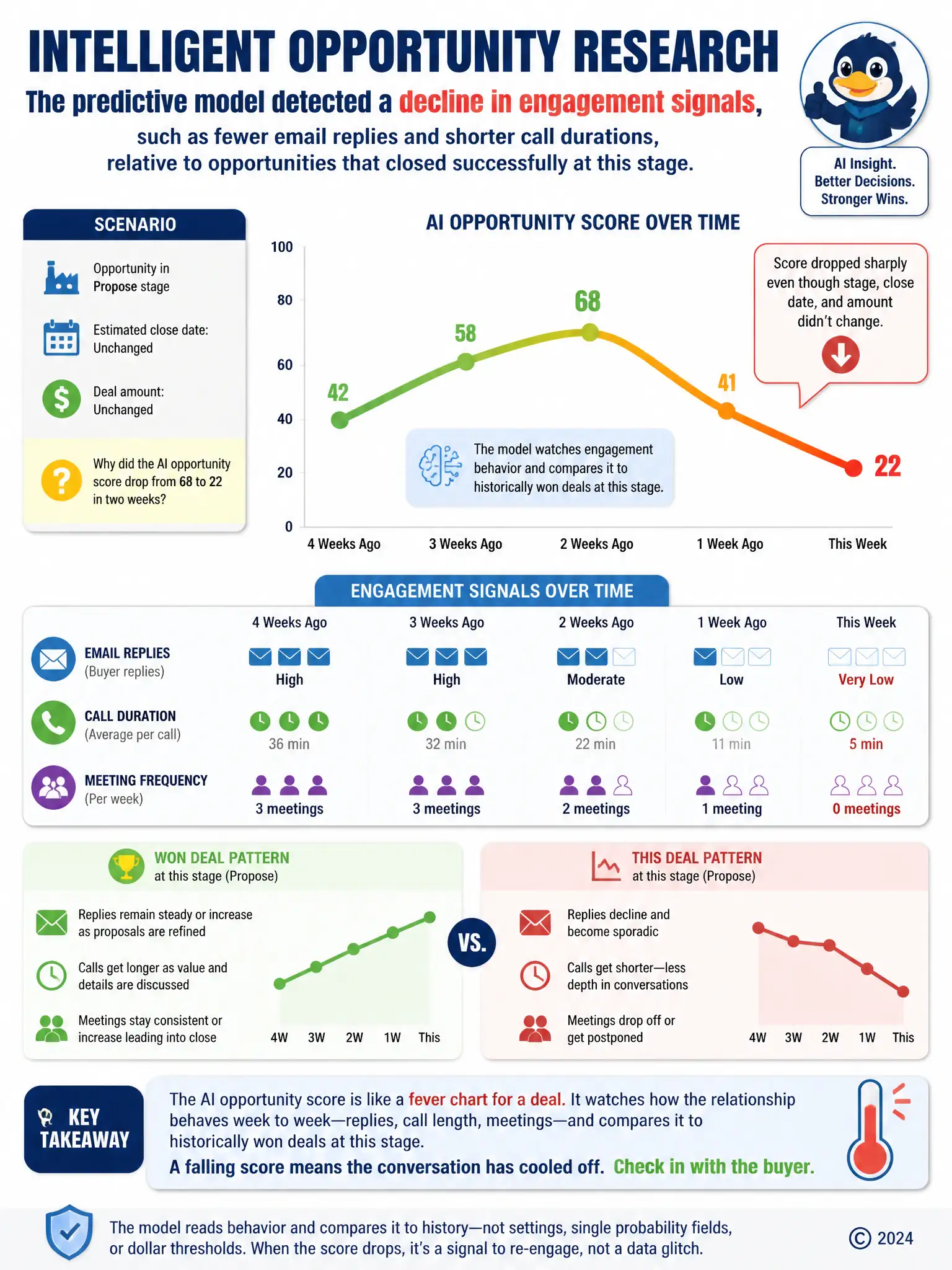
Short Explanation
Think of the AI score like a fever chart for a deal. If the score drops while the amount and close date stay the same, you should expect the model saw weaker engagement signals, like fewer replies or shorter calls, compared with deals that usually win at that stage. Don't chase a data glitch; check the relationship.
Full Explanation
The most likely explanation is that the predictive model detected a decline in engagement signals, such as fewer email replies and shorter call durations, relative to opportunities that closed successfully at this stage. Dynamics 365 Sales opportunity scoring uses a predictive model trained on historical won and lost deals, weighing engagement signals such as email response cadence, meeting frequency, and call duration alongside deal attributes. A falling score with unchanged amount and close date most likely reflects declining engagement relative to patterns seen in previously closed-won deals at the same stage, which matches the situation described. The explanation that the opportunity record was moved to a different business unit, which reset its score to the account default, is incorrect because moving a record between business units does not reset or default the AI-generated score; scores are computed per opportunity based on activity and relationship data, not organizational hierarchy. The explanation that the seller manually lowered the probability field, which the AI model uses as its sole scoring input, is incorrect because the model draws on multiple engagement and historical signals, not a single manually entered probability field, and a seller edit to probability would not by itself retrain or override the AI score. The explanation that the deal amount is below the threshold required for the AI model to generate a score, so a placeholder value was assigned, is incorrect because opportunity scoring is not gated by a minimum deal amount threshold; the model scores any opportunity with sufficient activity history regardless of dollar value, so a low amount would not produce a placeholder score.