
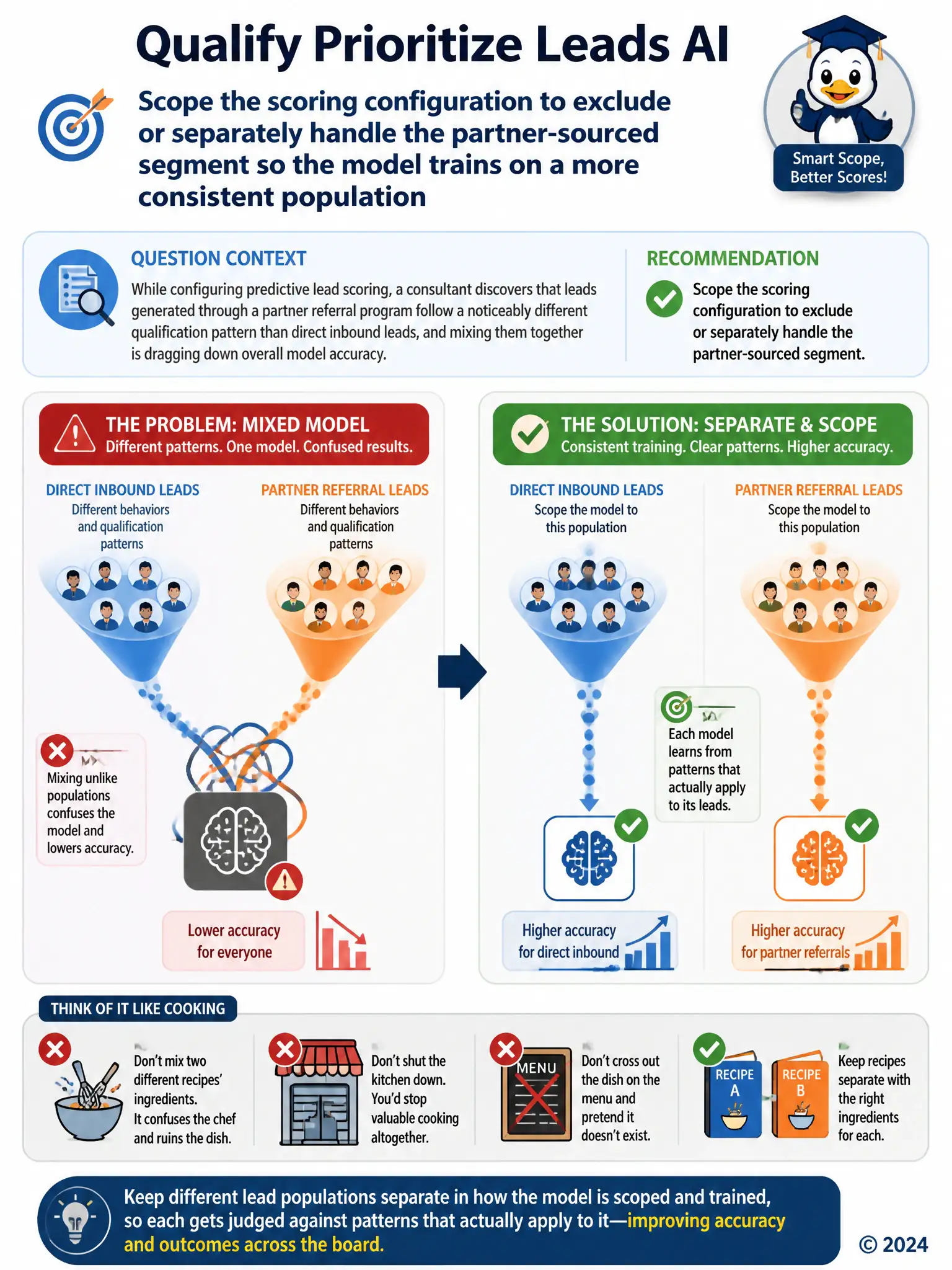
While configuring predictive lead scoring, a consultant discovers that leads generated through a partner referral program follow a noticeably different qualification pattern than direct inbound leads, and mixing them together is dragging down overall model accuracy. What should the consultant recommend?
Select an answer to reveal the explanation.
Short Explanation
If you see partner referrals behaving differently, don't throw them into the same scoring pot. Scope the model to exclude or separately handle that segment so the main population trains on consistent patterns.
Full Explanation
The correct recommendation is to scope the scoring configuration to exclude or separately handle the partner-sourced segment so the model trains on a more consistent population. Predictive lead scoring configuration supports filtering which records the model is trained on and scores, so when one segment behaves distinctly enough to distort accuracy for the rest, the right move is to scope the model to exclude or separately manage that segment rather than letting it dilute the patterns learned from the more consistent population. Disabling predictive lead scoring for the entire organization until the issue resolves itself is incorrect because it sacrifices a working, valuable signal for the majority of leads just to work around one segment's mismatch, when a targeted configuration change solves the problem without that cost. Manually overriding every partner-sourced lead's score to zero so they are ignored by sellers is incorrect because it does not fix the underlying training data issue; it just hides the symptom for sellers while the model continues learning from an inconsistent mix, and it discards any real signal partner leads might still carry. Merging the partner and direct lead records together so they share identical attribute values is incorrect because forcing dissimilar records to share identical attributes falsifies the data rather than resolving the pattern mismatch, and would further corrupt what the model learns instead of improving it.