
A university team hardcoded the largest model name into every campus bot, from a one-line room lookup to a multi-step aid appeal. What should replace that hardcoding for this mixed workload?
Select an answer to reveal the explanation.
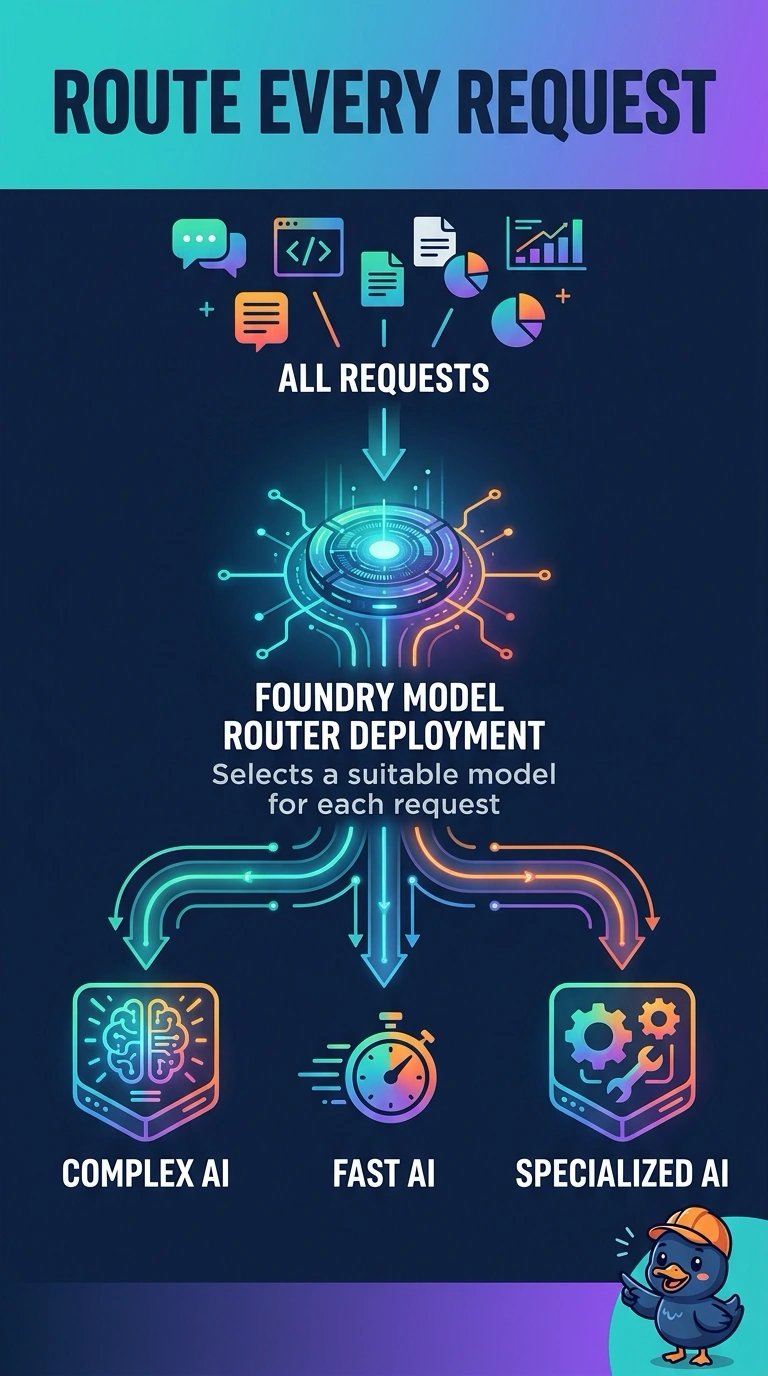
Short Explanation
Painting the biggest engine's name on every campus cart does not make a one-block errand need that engine. You replace the hardcoded model name with a Foundry model router for this mixed workload. A shared library that still calls the largest model is the same hardcoding in one file.
Full Explanation
The campus bots cover a mixed workload, from a one-line room lookup to a multi-step aid appeal, and each bot currently calls the largest model by a hardcoded name. A Foundry model router deployment replaces that hardcoding and selects a suitable model for each request, so the easy lookups are not forced onto the largest model. Moving the same largest model name into a shared library keeps every bot on that model and only changes where the name is stored. A small language model hardcoded for the multi-step aid appeals puts the hardest requests on the smallest model, which is the wrong end of the mix. A rule that sends every bot to the room-lookup model, including the aid appeals, repeats the single-model mistake with a model chosen for the easy job. Exam caveat: the router deployment still has to be evaluated on both a room lookup and an aid appeal, and removing the hardcoded name is not by itself a quality result. Operational check: inspect the bot configuration and confirm the largest model name is no longer hardcoded, then send one room lookup and one aid appeal through the router and confirm they can resolve to different models.