
Clinicians at a hospital forward a useful prompt by email, and several production agents now contain different pastes of that message. What should the architect do with the prompt?
Select an answer to reveal the explanation.
Short Explanation
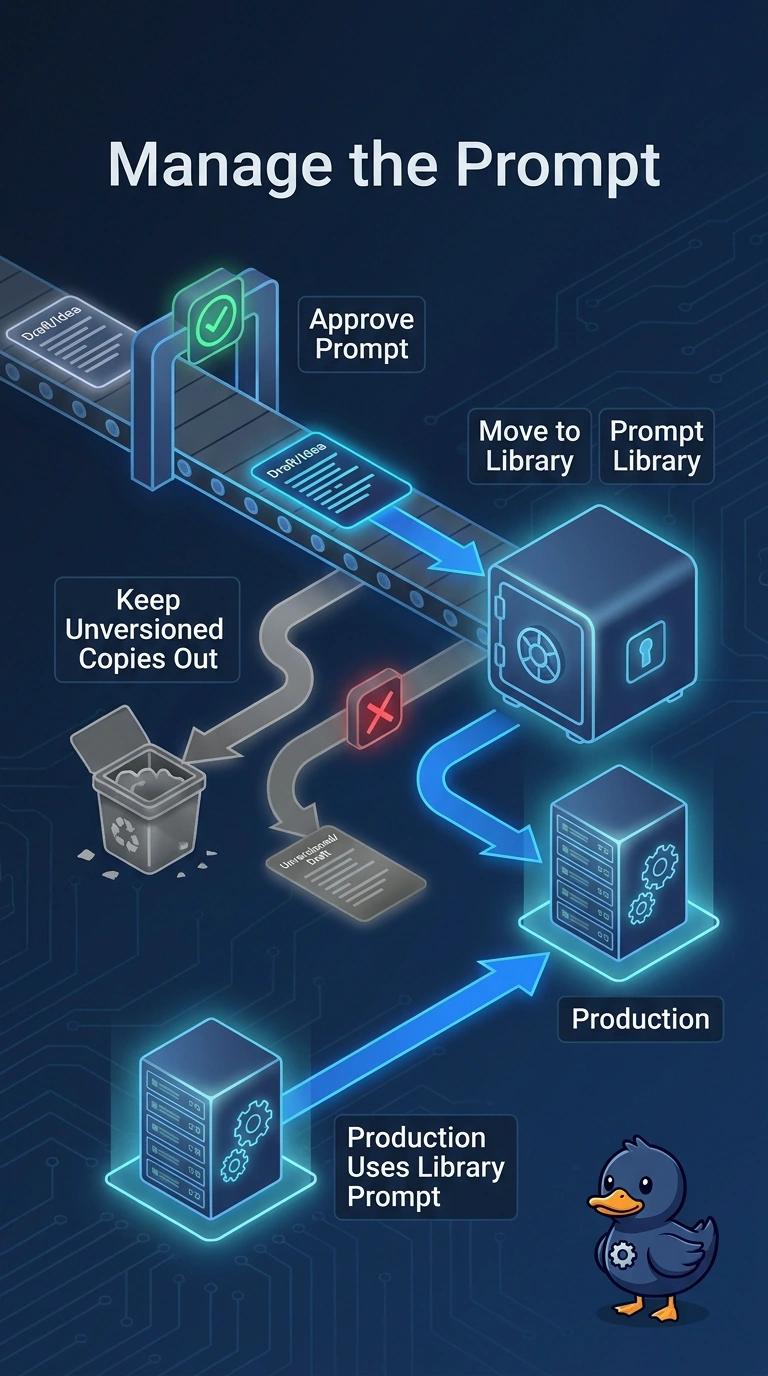
A recipe forwarded by email picks up a new ingredient in every inbox. You move the approved prompt into the library and keep unversioned copies out of production. The email thread is a draft channel, not the source agents should run.
Full Explanation
Prompt governance fails when production agents hold whatever paste arrived in mail. The architect moves the approved wording into the prompt library, where it has an owner and a version, and keeps unversioned copies out of production so the next agent cannot drift from a forwarded message. Leaving the email thread as the source of truth continues the drift, because each reply can edit the prompt. Asking clinicians to store a private unversioned copy inside a production agent multiplies the copies the rule is trying to stop. Training a custom model on the email thread freezes every draft in the thread, including the ones that were not approved, and it skips the version the library is supposed to track. Production should hold the library version, while the mail thread can keep the discussion that led to approval. Exam caveat: forbidding unversioned production copies does not forbid a clinician from drafting in mail. It forbids that draft from being what production runs. Operational check: compare the prompt text in each production agent to the library version and remove any paste that does not match that version.