
A bank wants Copilot Studio to answer questions about deposit products, and the same agent must not approve credit. When should the architect write that limit?
Select an answer to reveal the explanation.
Short Explanation
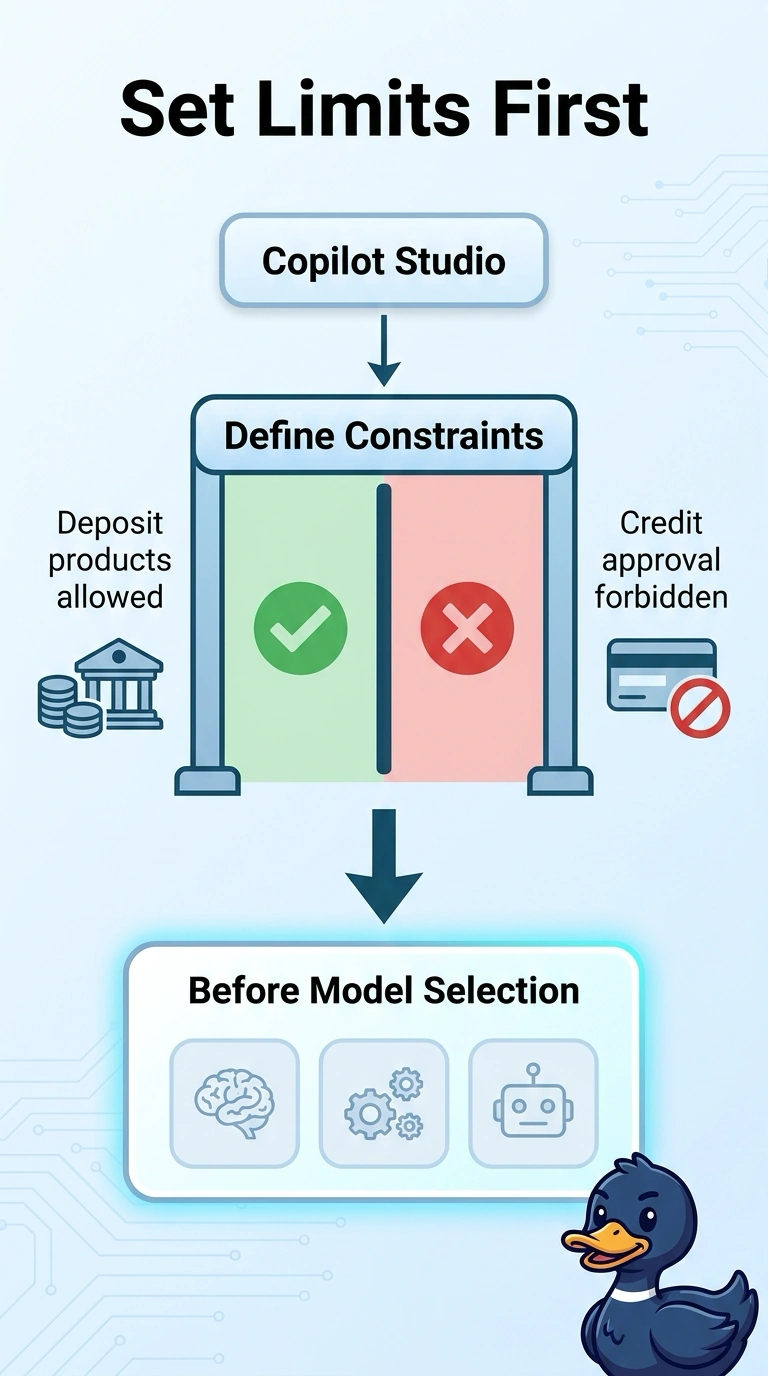
You lock the vault rules before you hire the locksmith. You write the constraint, product answers allowed and credit approval forbidden, before anyone picks a model. A longer prompt after the model is chosen is not the control that keeps a loan from being approved.
Full Explanation
Constraints describe what the agent is allowed to do, and they are an input to model choice rather than a note added after a model looks impressive. This bank may answer deposit-product questions and must not approve credit, so that pair belongs in the plan before a model is selected. Choosing the largest model first and adding a ban only if a pilot approves a loan lets the forbidden action exist during the trial. Letting the agent approve credit when an answer sounds confident treats fluency as authority, which is the failure the constraint is meant to prevent. A longer system prompt written after the model is chosen is not a control: the model can still be given a tool that approves credit. Exam caveat: the constraint is about the action, not about which product questions are in scope. A correct product answer can sit beside a forbidden credit tool if the tool list was not limited. Operational check: read the written constraint, confirm no credit-approval tool is connected, and ask a product question that tempts an approval to confirm the agent answers and does not approve.