
Insurance sellers already prepare for meetings with the prebuilt sales copilot, using the customer record and their mail. Another team wants a custom prep agent with its own brief. Sellers would then prepare in two places. What should the architect choose?
Select an answer to reveal the explanation.
Short Explanation
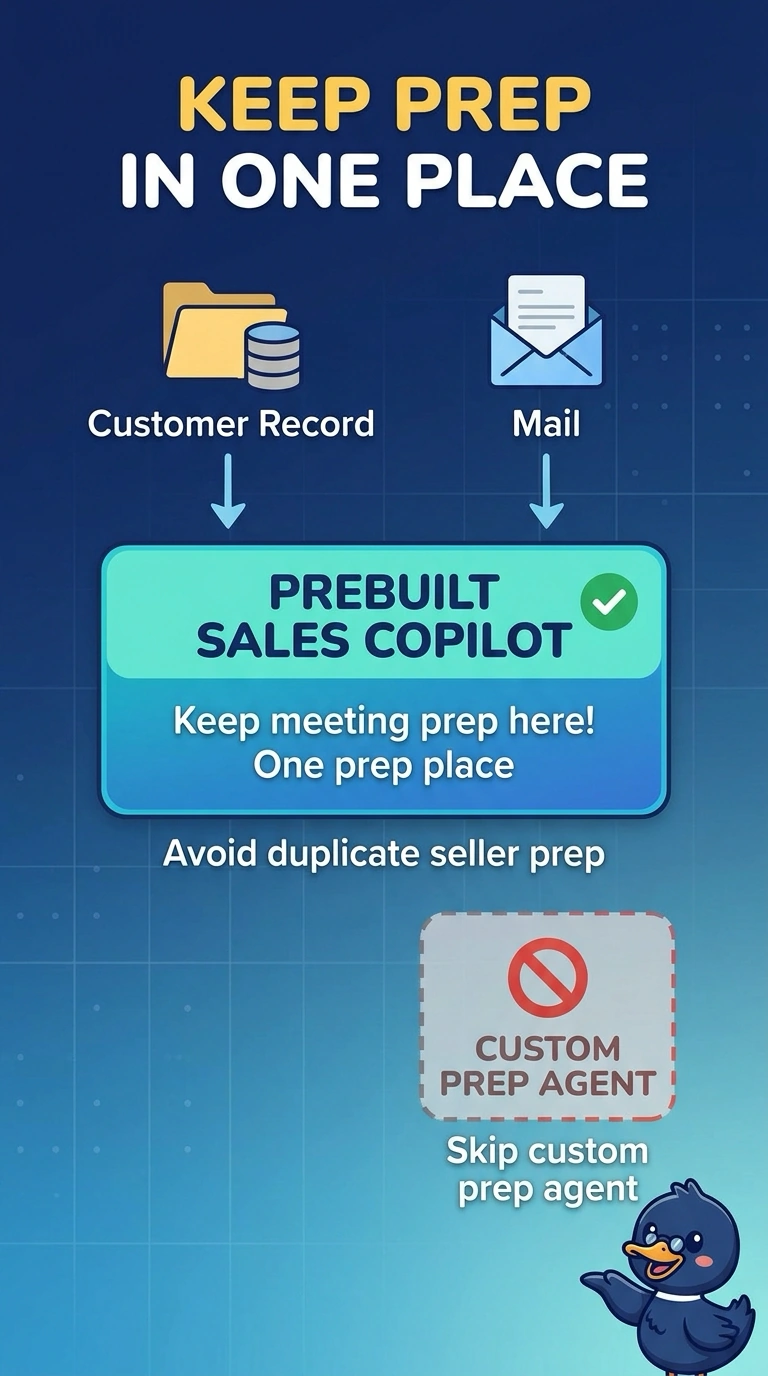
Two briefing folders mean half the team reads the wrong one. You keep meeting prep on the prebuilt sales copilot and you do not add a second agent that splits the sellers. A model trained on old invitations drops the live customer record the copilot already uses.
Full Explanation
Meeting prep from the customer record and the seller's mail is the prebuilt sales copilot's job, and the sellers already use it. A second custom prep agent would split the sellers across two briefs, so the architect keeps prep on the sales copilot and does not add that agent. Shipping the custom prep agent beside the sales copilot and letting each seller choose which brief to trust is the split the design is supposed to avoid, and the two briefs will drift. Retiring the sales copilot and training a foundation model on a year of old meeting invitations discards the live customer record and the mail the copilot already reads. Moving prep to a public website agent that asks sellers to paste the customer record before each meeting puts the paste work back on the seller and leaves the sales copilot. One prep surface is the point. Exam caveat: keeping the prebuilt copilot still means confirming it is connected to this insurer's customer data and mail. It does not mean adding a parallel brief beside it. Operational check: a seller opens meeting prep in one place, the sales copilot, and no second prep agent is published to the sales team.