
A pharmacy chain's AI strategy is a list of product and tool names and does not say what should change in the store. What should the architect require before any build is funded?
Select an answer to reveal the explanation.
Short Explanation
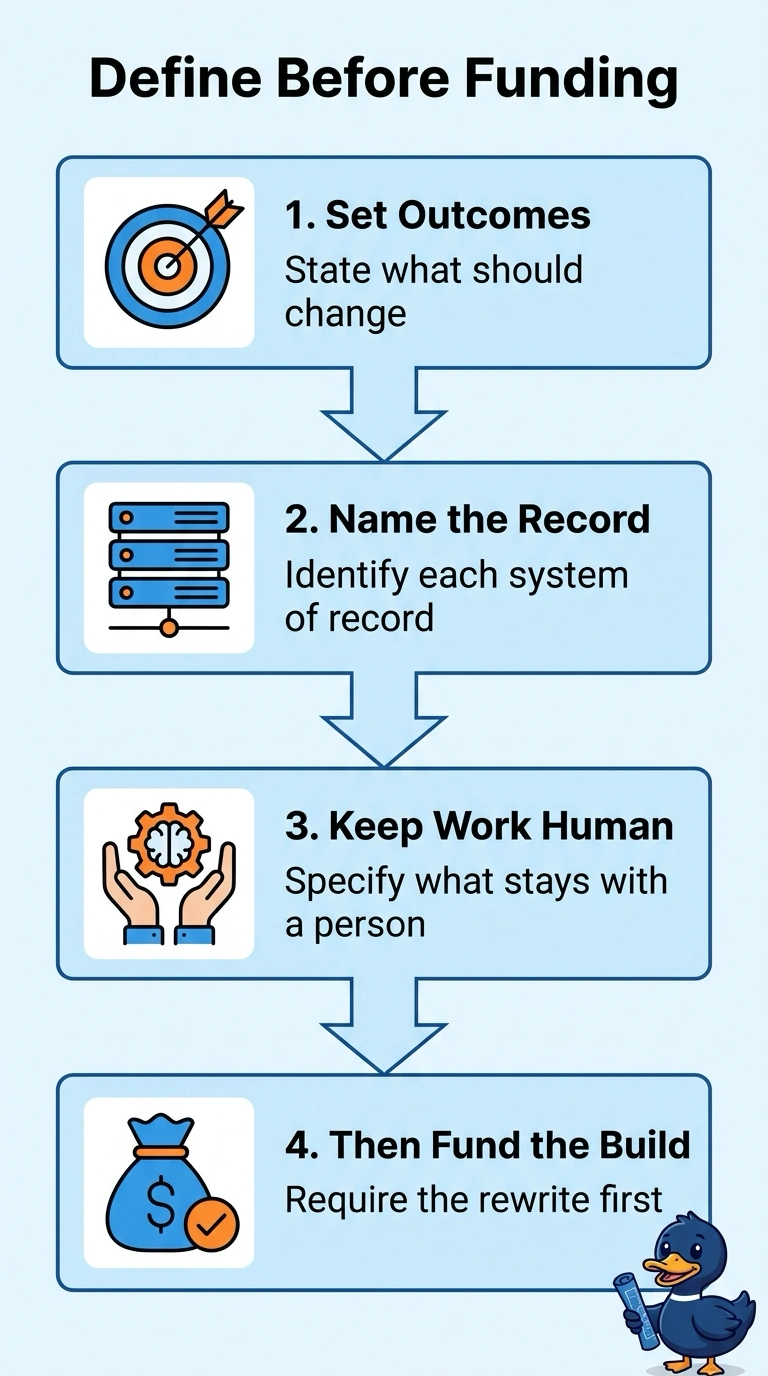
A shopping list of brand names does not say what dinner is supposed to accomplish. You send this strategy back until it states the outcomes, the system of record for each, and the work that must stay with a person. A budget next to a product name is still a shopping list.
Full Explanation
A build strategy has to say what will be different, where the authoritative record lives, and which work a person must keep. A page of product and tool names says none of those three things, so the architect should require that rewrite before funding a build. Keeping the tool list and adding a license budget beside each product name prices a shopping list and still does not name an outcome or a system of record. Starting the build on the first tool named so the strategy can be filled in during construction spends the budget before anyone has said what must not be automated, which is how a pharmacy agent ends up inside a clinical decision. Picking the product the chain already licenses most widely treats a purchase history as a strategy and can lock the chain to a tool that does not hold the record. Exam caveat: naming the system of record is not a ban on a new agent. It says which system the agent must read or write, and which decisions stay outside it. Operational check: refuse funding until each proposed use case has an outcome, a named system of record, and a line for the work a pharmacist or technician still performs.