
An insurer keeps its fraud glossary inside one agent's prompt. The claims agent and the special-investigations agent both need those terms, and access to the glossary must be reviewed in one place. What should the architect do?
Select an answer to reveal the explanation.
Short Explanation
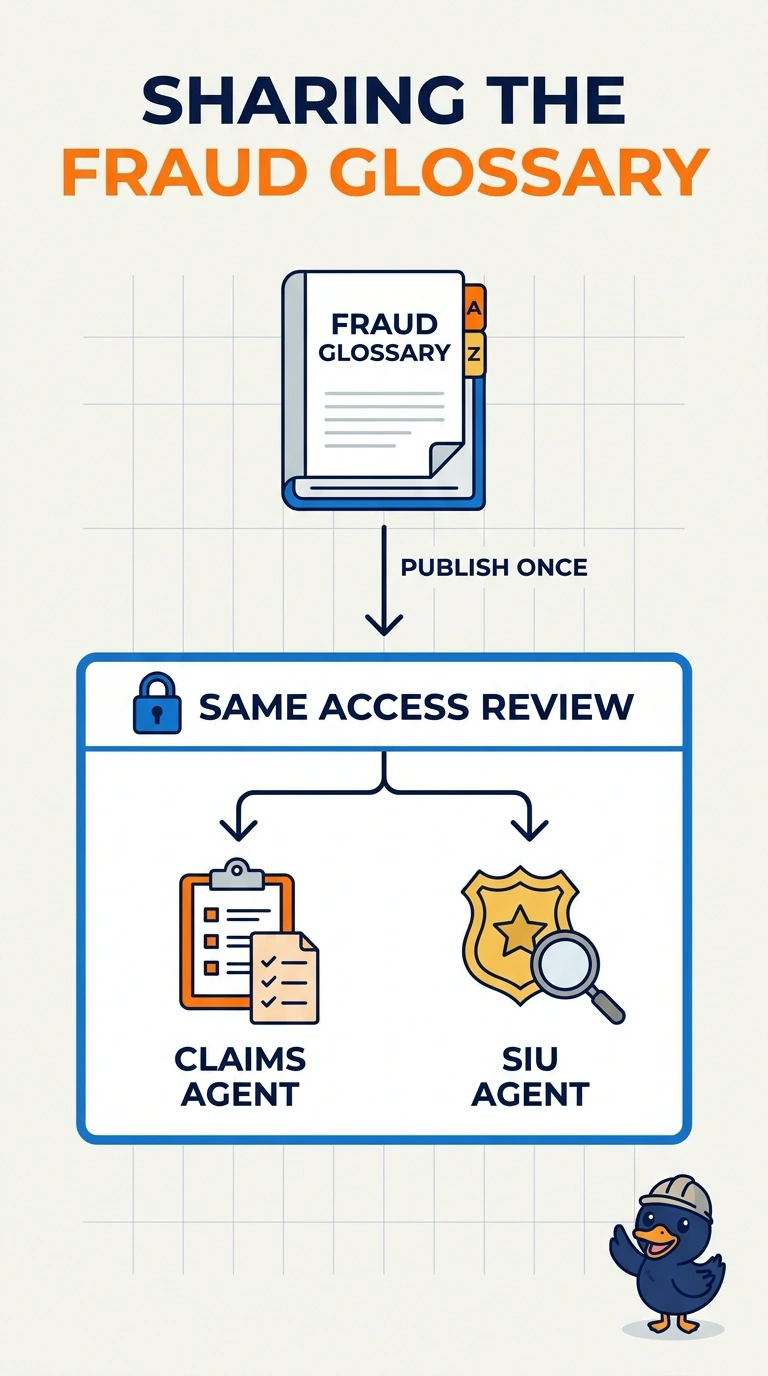
A glossary locked inside one prompt is a private notebook. You publish the fraud glossary for the claims agent and the SIU agent under the same access review. A larger model does not place those terms where both agents can be reviewed together.
Full Explanation
A glossary two agents depend on is shared business data, so it is published once and the access review covers that one source. The claims agent and the SIU agent then read the same terms under the same review, instead of one of them owning a private prompt. Leaving the glossary in the original prompt and telling the other agent to ask the owner keeps the terms local and makes the second agent wait on a person. Pasting the glossary into both prompts and reviewing each copy separately guarantees the reviews will diverge, and one paste will be updated without the other. A larger model expected to know fraud terms without a source has no glossary to review, so the access question the insurer asked cannot be answered by inspecting a publication. The prompt can still tell the agent to use the glossary. It should not be the only copy of it. Exam caveat: same access review means one decision about who may read the terms, not two calendars that happen to mention the same words. Operational check: change one definition in the published glossary and confirm both agents use it, and confirm a single review record covers that source.