
Each department at a retailer builds agents with its own data rules, and leadership cannot tell which agents exist or whether any of them paid off. There is no shared intake. What should the AI Center of Excellence establish first?
Select an answer to reveal the explanation.
Short Explanation
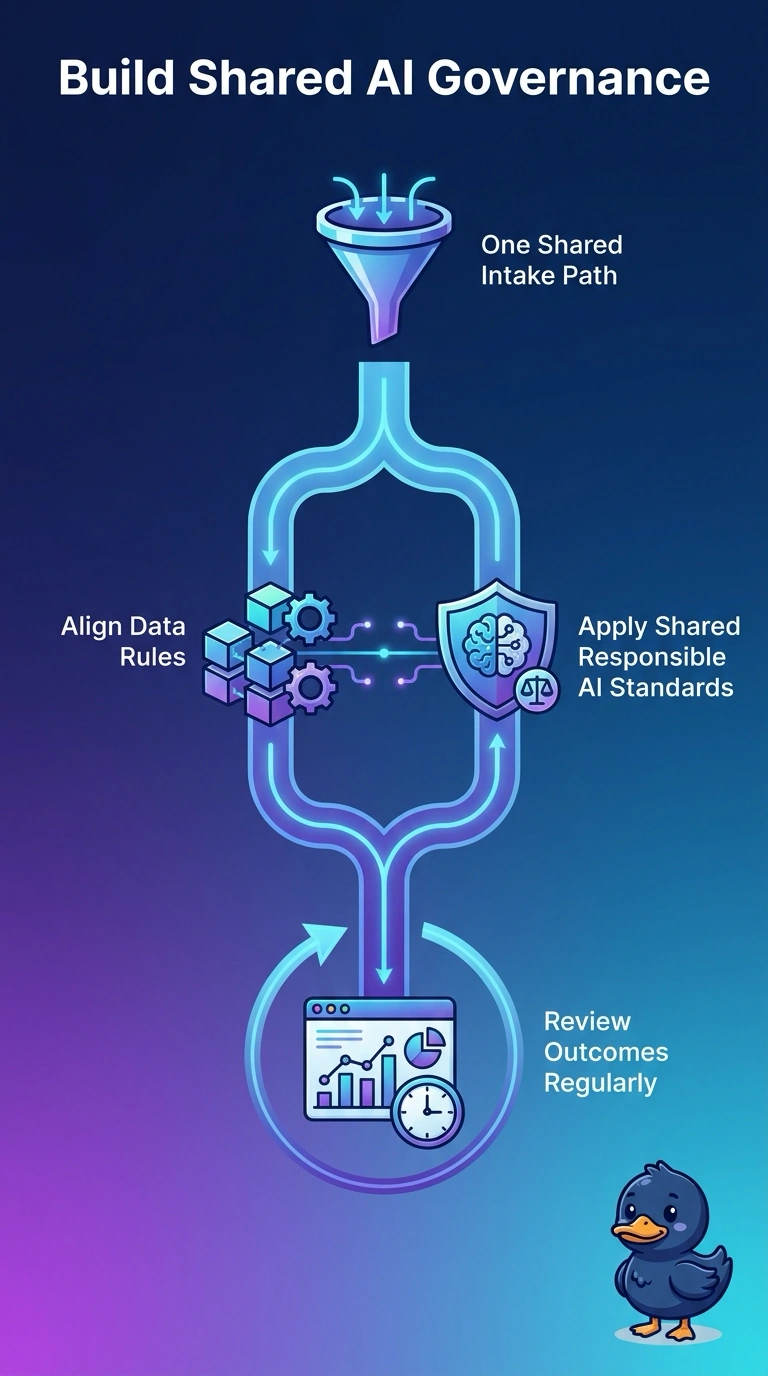
You do not get one store by letting every aisle invent its own refund policy. You give the Center of Excellence an intake path, shared rules for data and responsible AI, and a report of what paid off. A private model in every department multiplies the mess.
Full Explanation
An AI Center of Excellence earns its keep by giving the organization one front door and one set of standards, then showing whether the work paid off. This retailer has neither a shared intake nor a common data and responsible-AI rule, and leadership cannot see value, so those three are the first establishment. Departments can still build, but they enter through intake and leave with a measured outcome. Requiring a private foundation model before a request adds a technical tax the CoE article does not treat as the front door, and it worsens the split the retailer already has. A freeze until each brand has a research lab stops delivery without creating standards or a way to rank the next request. A rule that only the Center writes prompts turns the CoE into a bottleneck typing pool and abandons the skills, reusable assets, and intake workflow that let departments build safely. Exam caveat: outcome reporting is part of the same first step, because an intake with no result becomes a queue nobody trusts. Operational check: accept one new agent request through the intake, record which data standard it must meet, and schedule the first outcome report before that agent is allowed into production.