
A logistics sponsor wants a custom model trained on last month's yard photos so an agent can say which dock is free. The yard system already exposes the live dock status, and the status changes by the minute. What should the architect decide?
Select an answer to reveal the explanation.
Short Explanation
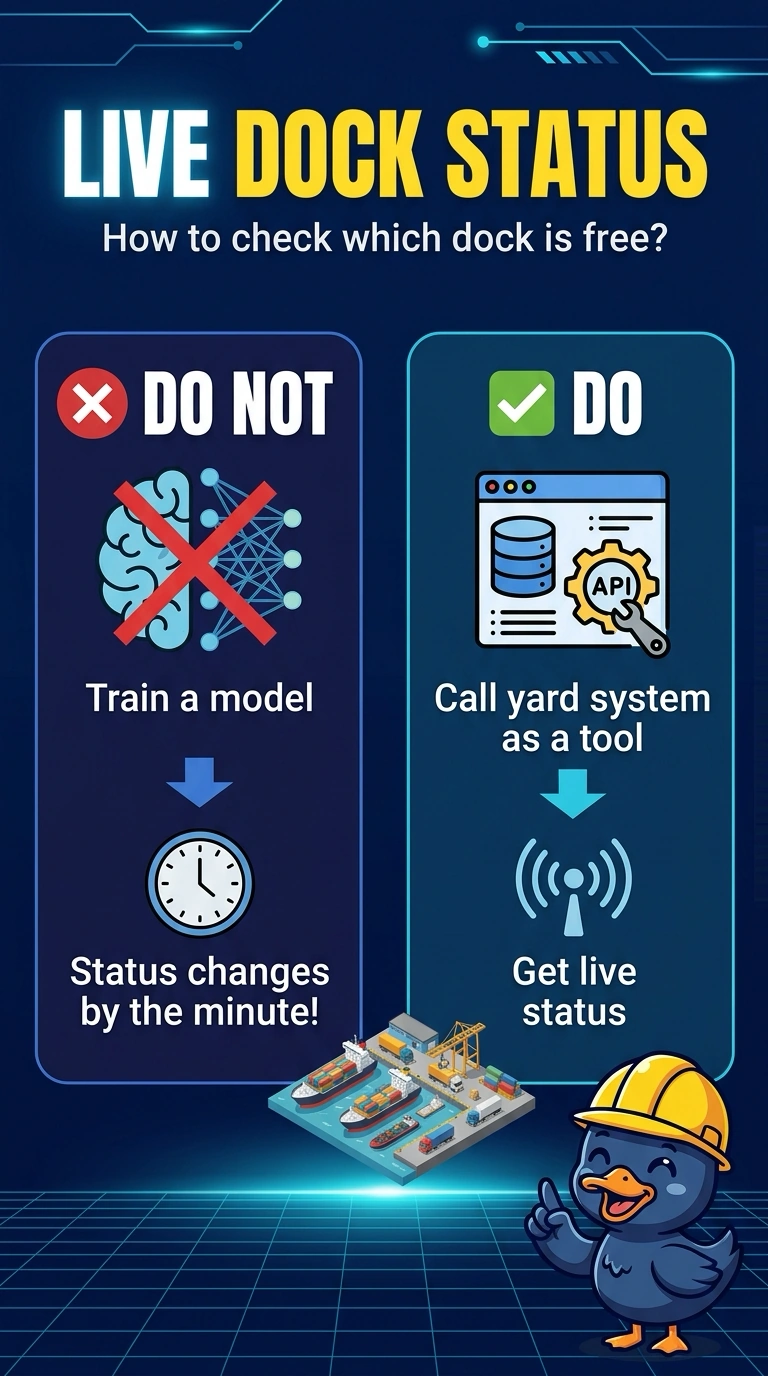
Last month's photograph will not tell you which dock is empty right now. You call the yard system that already knows, and you skip a custom model. A model is for a behavior prompting and tools cannot produce, not for a status that changes by the minute.
Full Explanation
A custom model is justified when the behavior cannot be produced by prompting, grounding, and tools, and when the team has stable labeled data for that behavior. Live dock status fails both tests. The yard system already exposes it, and a photo set from last month is stale within a minute of the next truck. The architect should give the agent a tool against the yard system and decline the training project. Training on the archive treats a changing fact as a pattern to memorize. Copying photos into the instructions freezes the same stale picture inside the prompt and bloats every call with data that is not policy. A small language model that remembers one assignment cannot track a yard, and replacing the system of record with it drops the live feed the operation already trusts. Exam caveat: tools and grounding come before custom models in the decision order. A model is not a more serious version of an API call. Operational check: change a dock's status in the yard system and confirm the agent's next answer matches the new status without a retraining step.