
A hospital wants the customer-service copilot's case summary to lead with allergies before the rest of the case. A teammate offers a second summarizer that staff would open instead. What should the architect do?
Select an answer to reveal the explanation.
Short Explanation
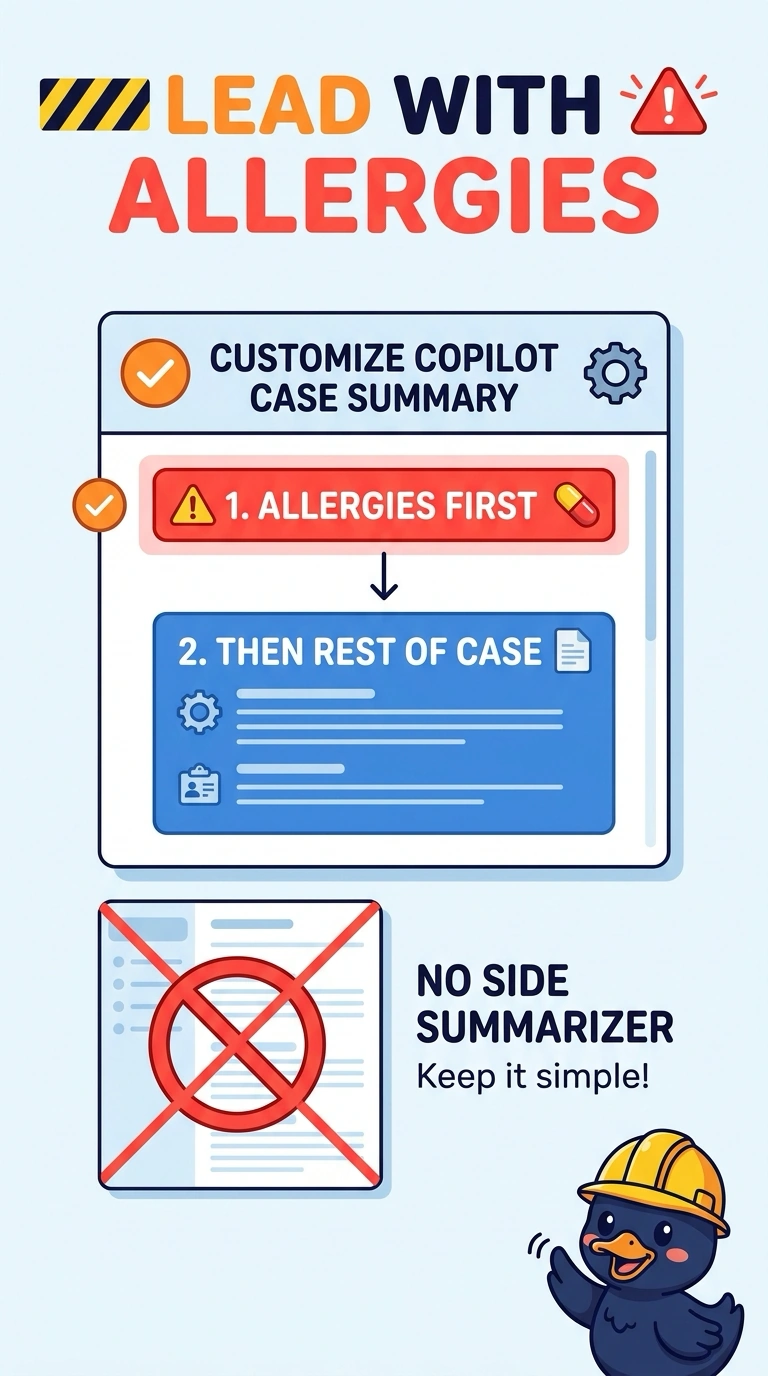
You alter the sign on the door the staff already use, rather than building a second door down the hall. You customize the customer-service copilot so the case summary leads with allergies. A side summarizer is a second door.
Full Explanation
When the in-app customer-service copilot already summarizes the case, the design change belongs on that summary. The hospital wants allergies first, so the architect customizes the copilot's case summary to lead with allergies and does not stand up a second summarizer beside it. Staff then see one summary in the place they already work. Building a second summarizer and hiding the copilot summary pulls people off the in-app copilot and creates a parallel tool to maintain. Removing allergies from the case record deletes the fact the summary was supposed to show. A custom model that replaces the copilot on every case field throws out the prebuilt summary to fix a lead-in, which is a new product rather than a customization. Exam caveat: customizing the summary does not let the copilot treat an allergy as verified if the case field is empty. The field still has to be filled by the clinical process. Operational check: open one test case that has an allergy recorded and confirm the copilot summary leads with that allergy, and confirm staff are not sent to a second summarizer.