
An insurer's sales copilot and service copilot both answer coverage questions, and they sometimes cite different policy numbers for the same customer. Which design fits?
Select an answer to reveal the explanation.
Short Explanation
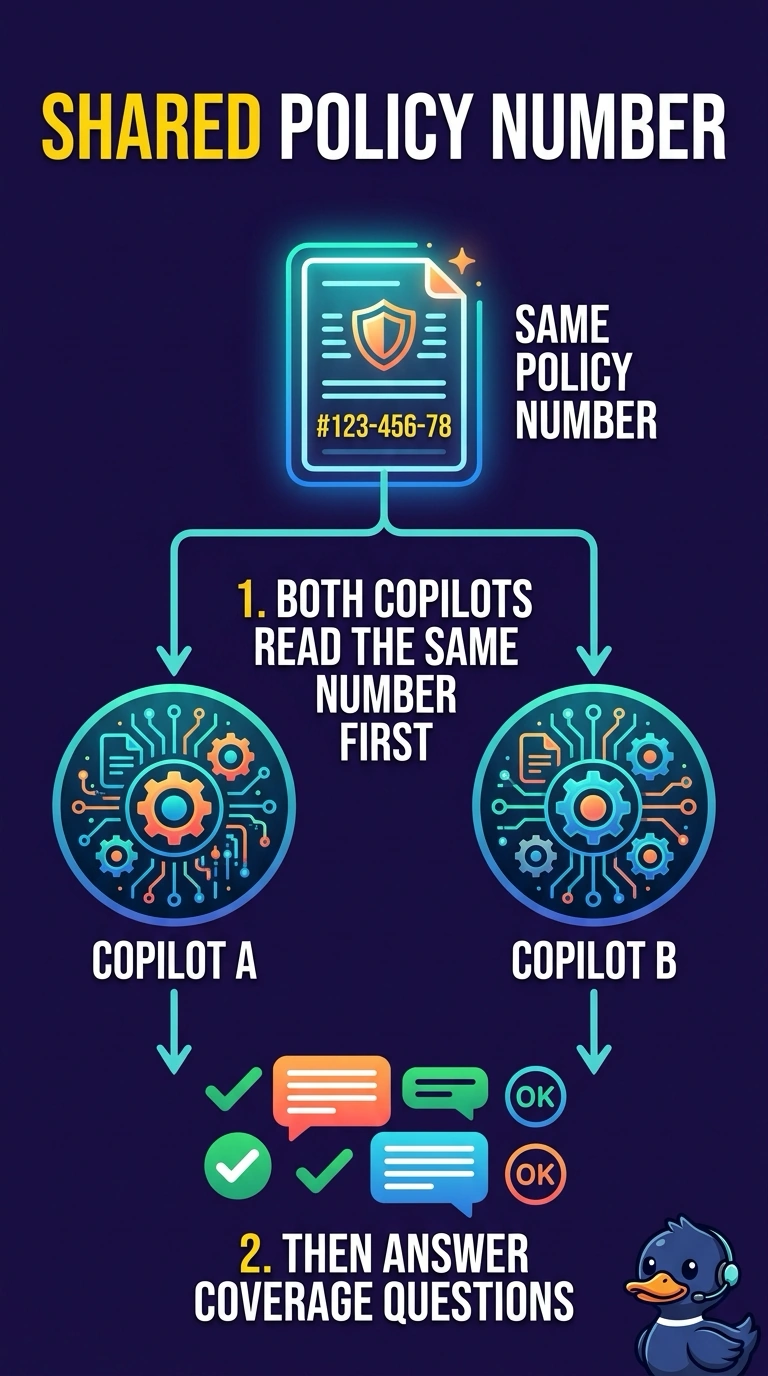
Two tellers quoting two policy numbers are describing two different contracts. You have the sales copilot and the service copilot read the same policy number before either answers a coverage question. A month-end reconcile leaves the wrong number in front of the customer until then.
Full Explanation
Coverage answers are only as good as the policy number they start from. The sales copilot and the service copilot are both customer-experience copilots at this insurer, and they have to read the same policy number on the customer before either one explains coverage. That is orchestration on the shared record, not two private memories. Letting each copilot keep its own copy and reconciling at month end guarantees a window where the two answers disagree. A third coverage bot with a private policy table that neither copilot has to read adds another source and does not force the two copilots onto the real number. Answering from each copilot's recent chat and skipping the policy record repeats whatever number was typed last, including a wrong one. Exam caveat: sharing the policy number does not by itself approve a coverage exception. It only stops the two copilots from starting at different contracts. Operational check: set a known policy number on one customer, ask both copilots a coverage question, and confirm both cite that number before the explanation.