
A pharmacy must place wholesaler orders on a portal that is web-only this quarter. The vendor has promised a connector later. How should the design treat Computer Use?
Select an answer to reveal the explanation.
Short Explanation
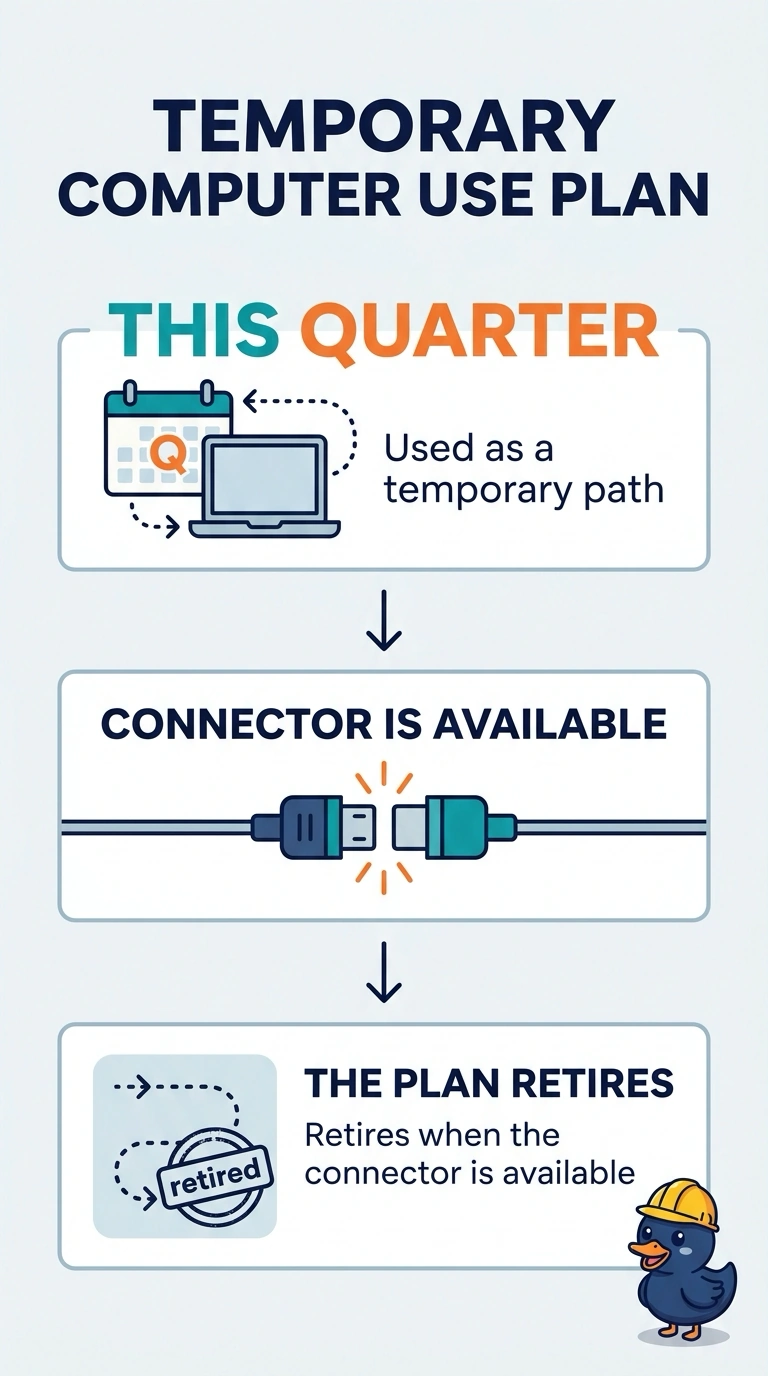
A ramp around a closed entrance is useful, and you write down that it comes down when the door opens. You may use Computer Use on this web-only portal for the quarter, and the design should say that path is temporary until the connector arrives. Calling the screen path permanent hides the better integration already on the roadmap.
Full Explanation
Computer Use fits an app or site that has no API. This portal is web-only this quarter, so Computer Use can place the orders now, and the design has to say the path is temporary and retires when the promised connector is available. Treating Computer Use as the permanent integration, and leaving the connector out of the design, locks the pharmacy to a screen path after an API exists. Waiting with no order path until the connector arrives respects the future API and fails the quarter the pharmacy still has to order. Documenting a Model Context Protocol server as the long-term integration invents a protocol the portal does not offer. The promised replacement is a connector, which is how an API is called. Exam caveat: temporary does not mean unattended. Computer Use still needs the same oversight as any screen-driving action, including a person on orders that exceed the pharmacy's limit. Operational check: record the retirement trigger in the design, name the connector as the successor, and review the Computer Use flow again on the date the vendor said the connector would exist.