
A hospital nurse line answers refill-status calls from people who are on a phone and cannot type. Which design fits the channel and the question?
Select an answer to reveal the explanation.
Short Explanation
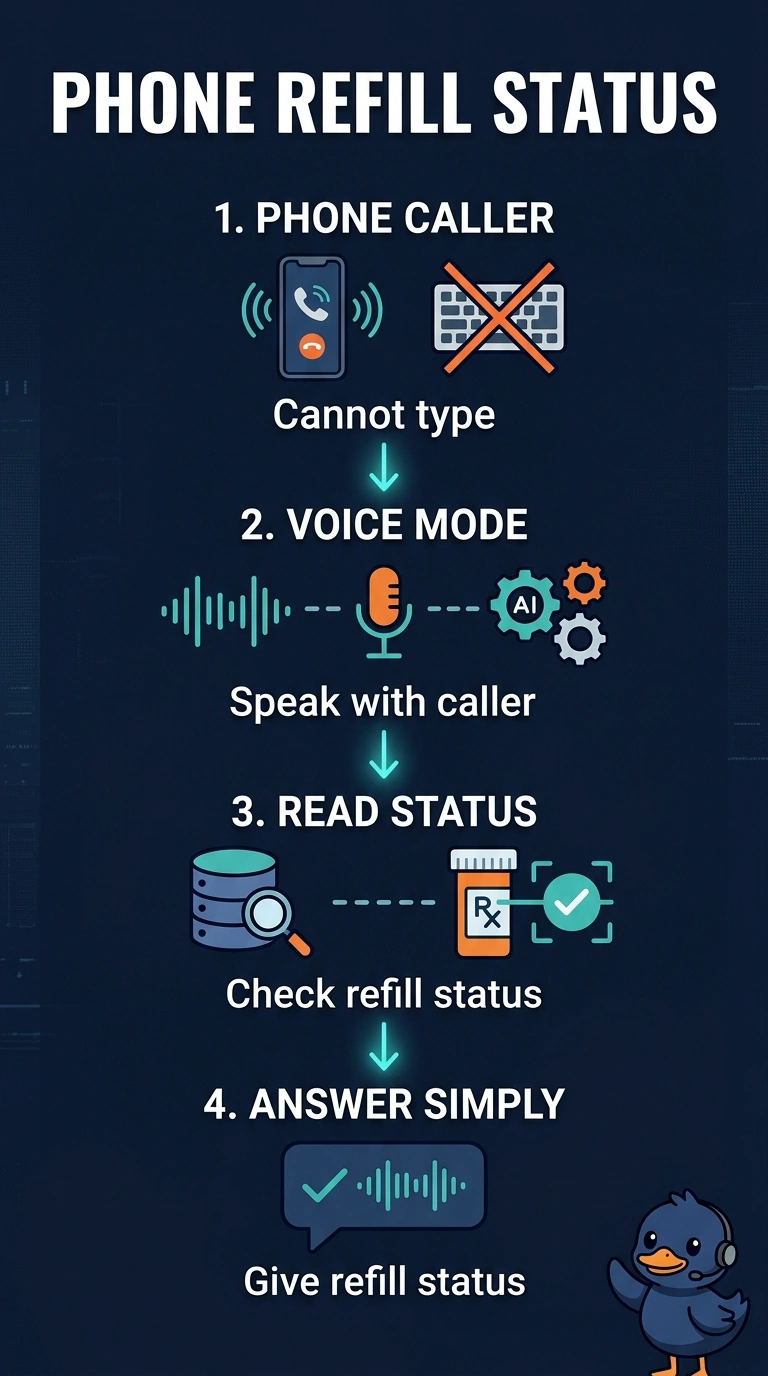
A caller who cannot type needs a voice on the line, not a keyboard. You use voice mode for this nurse line, and you keep the reasoning shallow because a refill status is a lookup, not a chart investigation. Deep reasoning makes the caller wait through an analysis the question did not need.
Full Explanation
Voice mode fits when the person is on a phone and cannot type. Deep reasoning is for a complex, multi-step analysis, and it is slower than a direct lookup, so a refill status should stay a shallow read of the status and a short spoken answer. A text-only chat asks the caller to type, which the scenario says they cannot do. Voice with deep reasoning over the full chart before any status is spoken uses the heavy path on a question that is a single fact, and the caller waits on the line for work the status lookup does not require. An email workflow that waits for a photo from a computer abandons the phone call entirely. A refill status is one field on one record, and speaking the chart history before that field adds delay and can disclose more than the caller asked. Exam caveat: shallow reasoning is not a reason to skip the knowledge source. The status still has to come from the refill record, not from a guess about a typical prescription. Operational check: place a test call, confirm the agent answers by voice, and confirm the trace shows a status read rather than a deep-reasoning pass over the whole chart.