
A retailer maps a shopper's free-text return reason to one code from a closed list. The list can sit in the instructions, and the shopper's text is the input. Which design should assign the code?
Select an answer to reveal the explanation.
Short Explanation
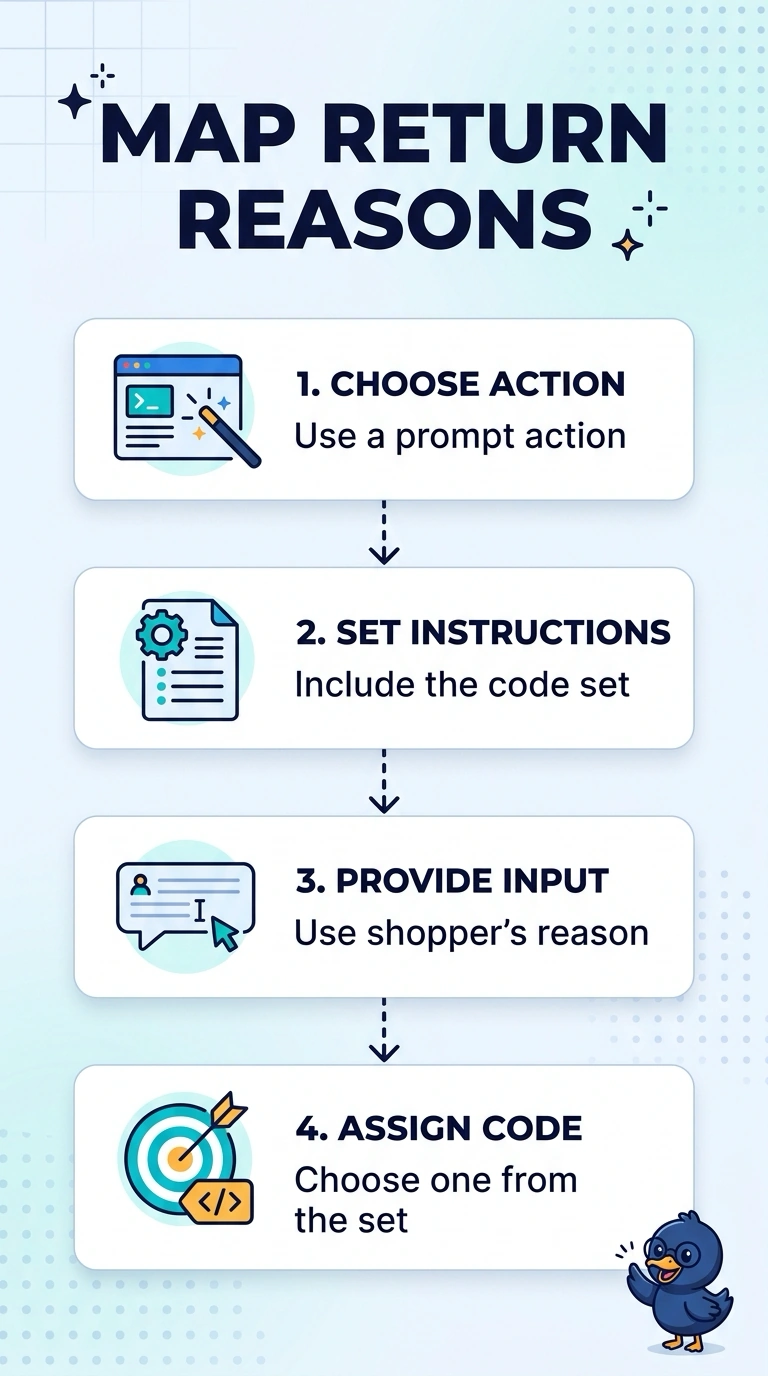
A clerk can stamp a reason code when the legend is on the stamp and the note is in hand. You use a prompt action with the code set in the instructions and the shopper's reason text as the input. A stamp with no legend will invent a code.
Full Explanation
A prompt action assigns the code when the closed list is part of the instructions and the shopper's reason text is the content the model classifies. That is a model judgment over the retailer's closed list, which is what that prompt action is for. An agent flow that maps the free text to a code with no model and no code list in the design has neither the judgment nor the list, so it cannot read an unstructured reason. A custom Foundry model trained to invent reason codes before anyone tries a prompt with the list skips the condition that makes a prompt action enough and asks a model to create codes the retailer did not publish. A prompt action that sees only the reason text and is told to make up a code if none is supplied is a prompt action aimed at the wrong job, because the code set is missing and the model is invited to extend the list. Exam caveat: the code set in the prompt has to be the retailer's closed list, not a sample of three codes with permission to add more. Operational check: submit two reasons that map to different published codes and confirm both outputs are members of that list, then submit a reason that matches none and confirm the action does not invent a new code.