
A retail department wants agent logging turned off for a promotion week so the agent can go faster. What should governance decide?
Select an answer to reveal the explanation.
Short Explanation
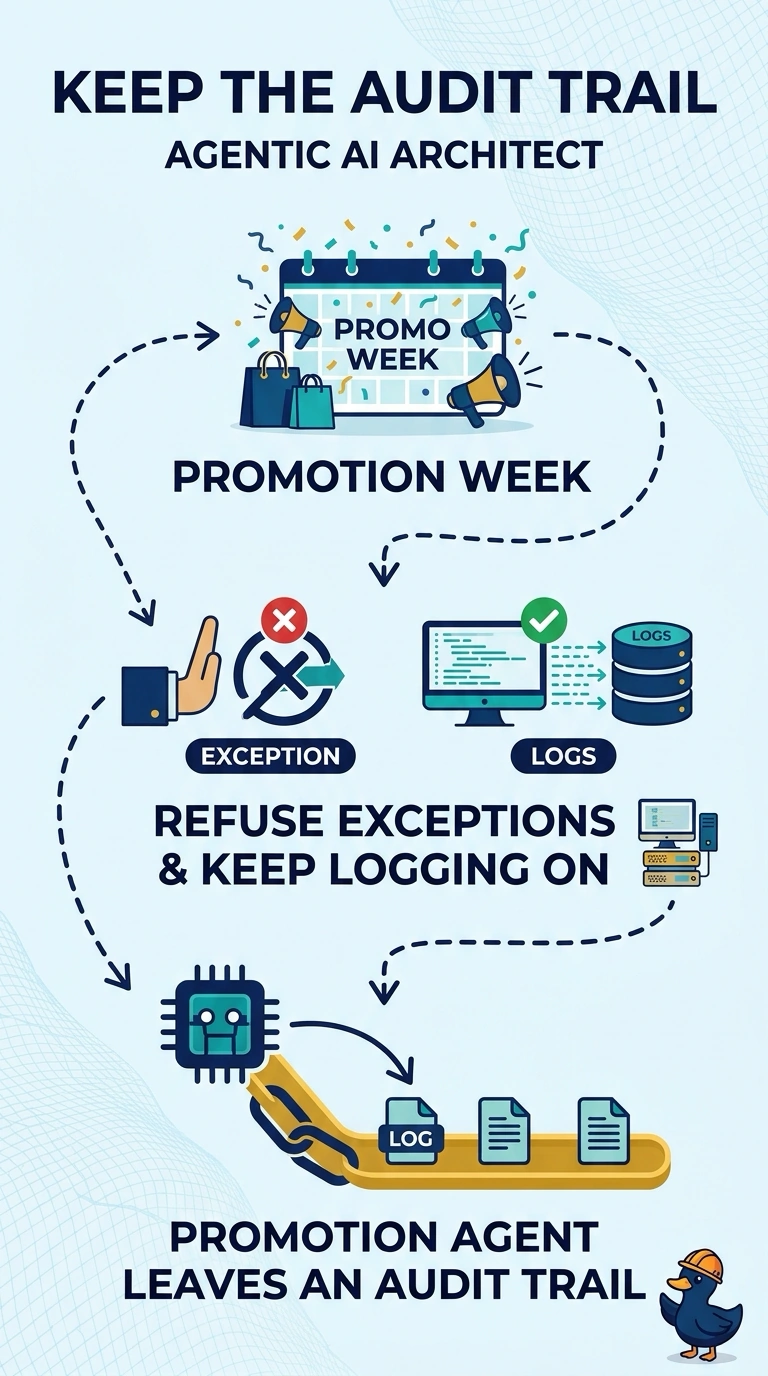
You should refuse the exception and keep logging on so the promotion agent still leaves an audit trail. Reconstructing its actions from memory in a weekly meeting is not a record of what it did.
Full Explanation
Governance of an agent includes an audit trail of what it did. A faster promotion week is not a reason to drop that trail, so you should refuse the exception and keep logging on for the promotion agent. Allowing logging to stay off during the week creates a gap exactly when the agent is busiest; turning it back on when the campaign ends cannot reconstruct the missing days. Moving the agent to a channel that stores no logs is the same exception under another name, and describing that move as the faster design does not make it approved. Dropping the log and reconstructing the agent’s actions from memory in a weekly team meeting depends on what people recall and gives an auditor nothing written at the time of the action. The promotion week is exactly when someone may ask what the agent changed, so the trail must be written then. If logging is slow, the team should tune what is captured rather than switch capture off to buy speed. Exam caveat: a slow log is a logging-design problem; the fix is how the trail is written, not whether the trail exists. Practical check: confirm each promotion-agent run still writes a log entry, and reject any release that ships with logging disabled.