
A bank's agent reads every customer's file through one service account, and those reads are not written to an audit log. What should security require?
Select an answer to reveal the explanation.
Short Explanation
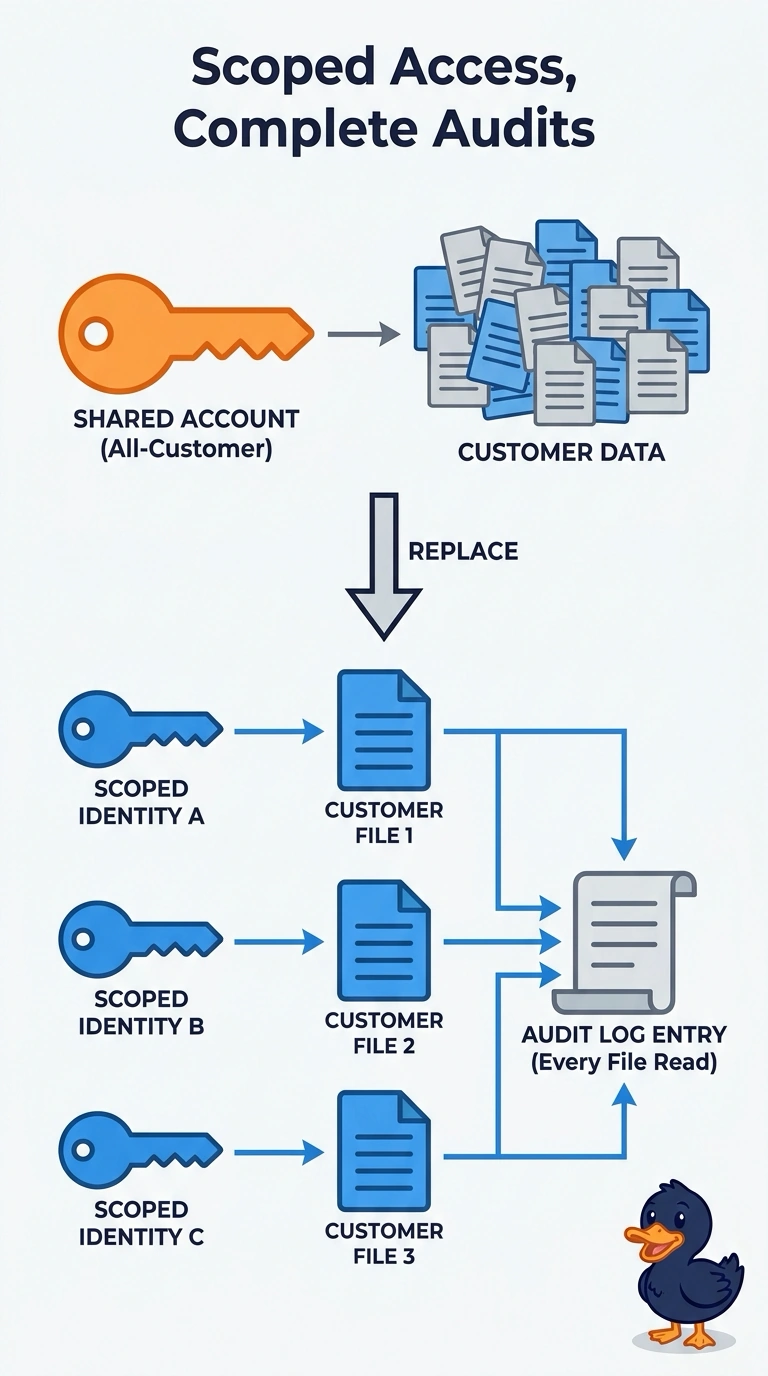
One master key and a visitor book with blank pages will not tell you who opened which office. You replace the all-customer service account with scoped identities and log every file read. Sharing that password with the team spreads the master key.
Full Explanation
One service account that can read every customer's file, with no audit log, hides both the blast radius and the trail. Security should replace that single account with scoped identities, so the agent does not hold every file by default, and should write a log entry for every customer-file read. Keeping the single service account and recording the audit decision on a slide leaves the access unchanged and produces no log when a file is opened. Sharing the service account password with the whole review team multiplies who can use the all-customer identity and still adds no per-read log. Removing customer-file access entirely stops the agent from doing work that legitimately needs a file, instead of narrowing who can read what and recording the read. Exam caveat: scoped identities and the log solve different failures; a narrow identity with no log still leaves a silent read, and a log on an all-customer account still leaves the wide key. Operational check: perform one authorized file read with the agent identity and confirm the log shows that identity, the customer file, and the time, then confirm the identity is denied a customer outside its scope.