
A hospital scheduling agent signs in with a shared personal account that can open charts, payroll, and the booking calendar. What should replace that sign-in?
Select an answer to reveal the explanation.
Short Explanation
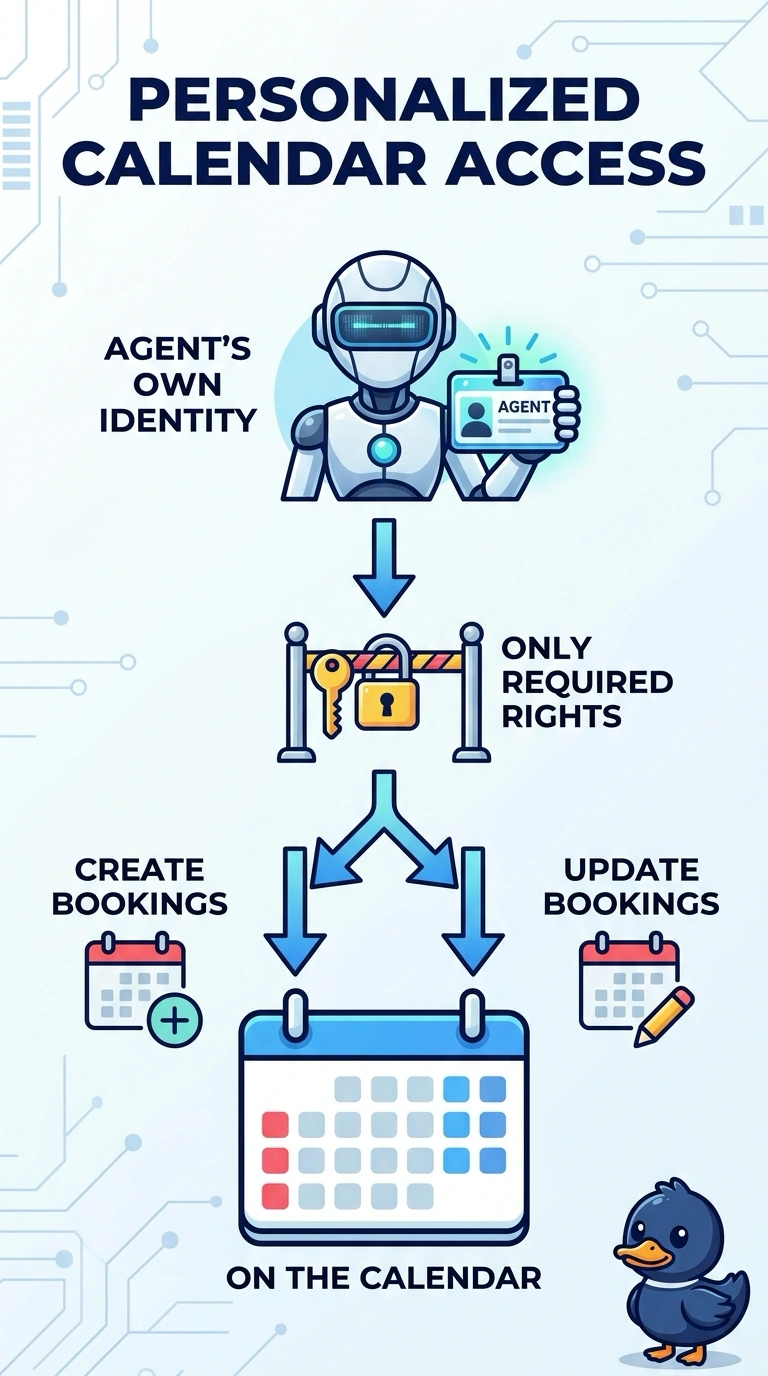
A badge that opens every wing is a bad badge for a clerk who only books rooms. You give the scheduling agent its own identity and only the rights required to book. Posting the shared password on the ward makes the extra access easier to abuse.
Full Explanation
An agent should sign in as itself, with only the rights the job needs. This scheduling agent uses a shared personal account that can also open charts and payroll, so the replacement is the agent's own identity granted only the rights required to create and update a booking. Keeping that shared personal account and posting the password on the ward spreads a human identity and the extra access to every clerk. A vendor employee's personal account that stays active after the project leaves repeats the shared-person pattern and ties hospital access to someone who should be gone. An anonymous connection that writes bookings with no sign-in removes the identity entirely, so there is no accountable principal and no way to limit the write to booking. Exam caveat: booking rights can include the create and update the calendar requires; they do not include charts or payroll because those tables are not the scheduling job. Operational check: sign in as the agent identity, confirm a booking succeeds, and confirm a read of a chart and of payroll is denied.