
A hospital's test environment and its production environment call the same model deployment. A test prompt changes answers that clinicians already see on the live floor. What should the architect change?
Select an answer to reveal the explanation.
Short Explanation
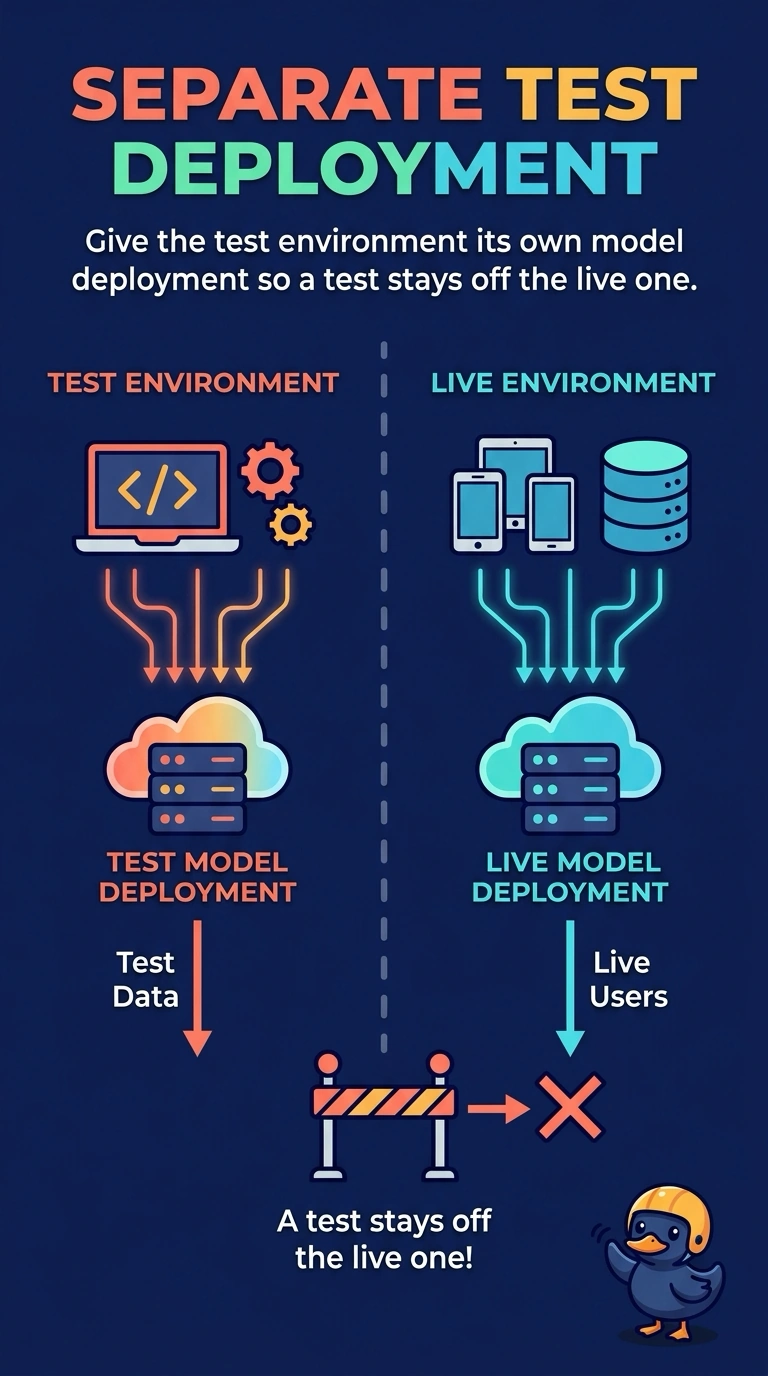
A fire drill should not ring the alarm on the occupied floor. You give the test environment its own model deployment so a test prompt stays off the one clinicians use. Sharing one deployment makes every test a live change.
Full Explanation
Model lifecycle isolation fails when test and production call one deployment. A prompt or a version change then shows up on the live floor, which is what this hospital is seeing. The architect gives the test environment its own model deployment so tests run against that deployment and production keeps the one clinicians already use. Leaving the shared deployment and asking testers to avoid clinic hours depends on a schedule, and one prompt outside that window still hits the live answers. Pointing the live floor at a personal notebook that testers edit removes any environment boundary and lets an unreviewed change reach patients' workflows. Deleting the model and comparing drafts by email abandons the deployment instead of isolating it, so there is nothing left to promote later. Exam caveat: a separate deployment isolates the test. It does not by itself prove the model is good enough to promote. Operational check: call the test deployment and the production deployment by name, send a marked test prompt, and confirm the live floor's answers do not change.